文物/wén wù

Pronunciation: /wɛn wu/
Language: Mandarin
Contributors: JIA PENG
Also known as: Cultural good, Bien culturel

Description

The term 文物/wén wù is defined in the modern Chinese language dictionary (教育部國語推行委員會 2021) as all objects of value that attest to the history and development of human society, such as buildings, everyday utensils, and works of art.

The earliest occurrence of 文物 can be found in the historical work Zuo Zhuan (左丘明, 公元前770-476年), written during the Warring States period. At that time, the term mainly referred to objects and instruments associated with ritual and musical functions (礼乐/lǐ yuè). During the Tang dynasty, the meaning of 文物 gradually broadened beyond ritual and funerary objects. Writers of the time, such as Du Mu and Yan Shigu, were already using the term to refer to the historical remains of earlier dynasties, an approach more akin to the modern meaning of the word (顏师古, 618-907).
In the early twentieth century, the meaning of 文物 continued to evolve: in 1930, the nationalist government enacted the Antiquities Preservation Act (古物保存法), officially broadening the concept of 文物 to include all archaeological and historical remains. In 1935, the publication of the Brief Survey of the Cultural Remains of the Ancient Capital (旧都文物略) further expanded the concept of文物 with the inclusion of ancient buildings and cultural sites. That same year, the Beiping Cultural Relics Restoration Committee (北平文物整理委员会) was founded to undertake systematic work to research and protect the文物 (李晓东 2005).

Since 1949, the term文物 has become a legal concept in the People’s Republic of China. It now encompasses a wide range of cultural property and relics, from historical monuments to objects of heritage interest (李晓东 2005).

Read more
Date of entry: March 31, 2025
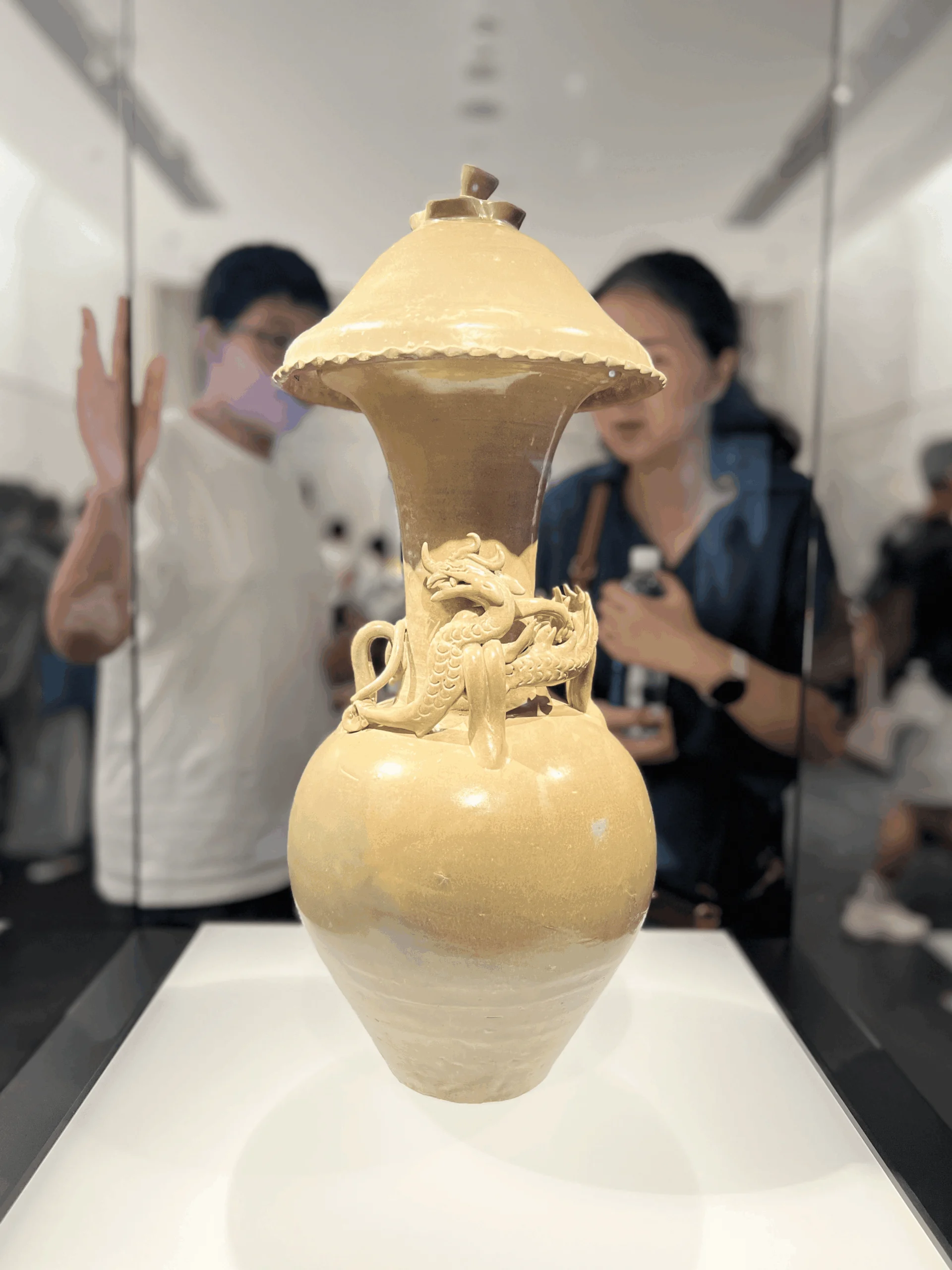
Figure 2: Tang Dynasty celadon vase, classified as a 文物 (heritage object). Shanghai Museum, December 21, 2024, by Jia Peng.
The name you would like to be credited with for your contribution.
The word you wish to contribute
Your email for contact and updates regarding your submission.
The language you are contributing the word in
Maximum file size: 3 MB
Maximum file size: 5 MB
By proceeding, I acknowledge and agree to GloCo's Legal notice and Terms of use
and the Guidelines for Contributors *

Related Words

P1080718_Louvre_salle_711_rwk
Conservation Washing
English

Since 2023, I have developed the concept of "conservation washing", which exploits the vulnerability of heritage and art to argue against the relocati...

MAK_t-6907_lotto-teppich_1-1
Lotto-Teppich
Deutsch

Als Lotto-Teppiche werden geknüpfte Wollteppiche bezeichnet, deren typisches Muster aus gelben, geometrisierten Ranken auf rotem Grund besteht. Sie wu...

Wien-Museum-Online-Sammlung-M-10120
Reformkleid/Künstlerkleid
Deutsch

Als Reformkleid wird ein Kleid bezeichnet, das lose von den Schultern herabhängt, bequem weite Ärmel hat und ohne Korsett getragen werden sollte. Vora...

IMG_3281
Restorative Justice
English

In the heritage sector, Restorative Justice encompasses improving conservation conditions while collections are held in Western institutions and conne...

masticated-work
Masticated Work (Hairwork)
English

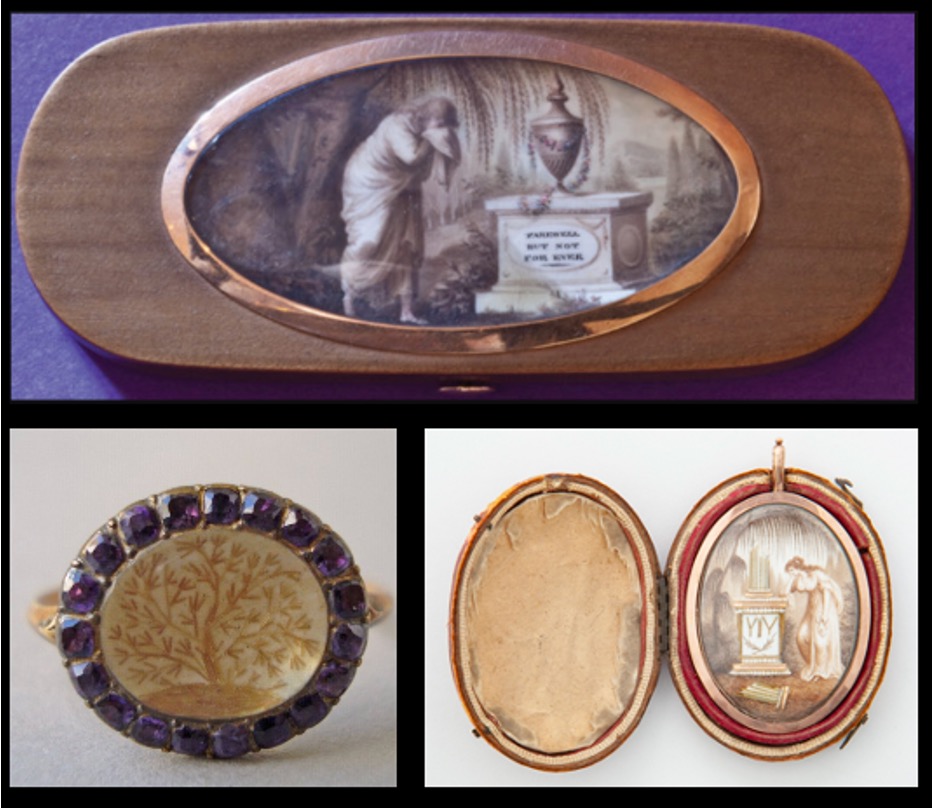
Masticated work, sometimes called cut work or sepia work, is a hairwork technique in which hair is finely chopped or ground into a powder, mixed with ...

table-work
Table Work (Hairwork)
English

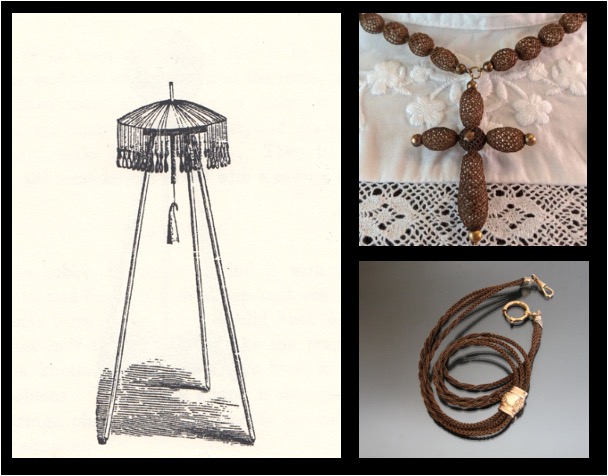
Table work refers to a wide range of hairwork techniques that involve braiding and weaving hair into a jewelry. The name comes from the apparatus at t...

palette-work
Palette Work (Hairwork)
English

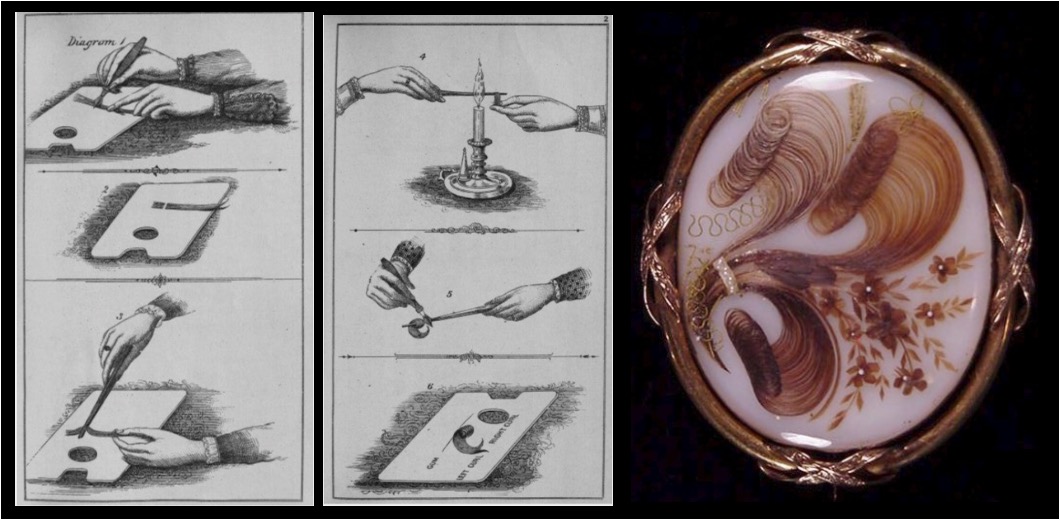
Palette work is a hairwork technique that involves flattening a lock of hair onto a piece of glass, covering it with gum tragacanth (sometimes referre...

gimp-work
Gimp Work (Hairwork)
English

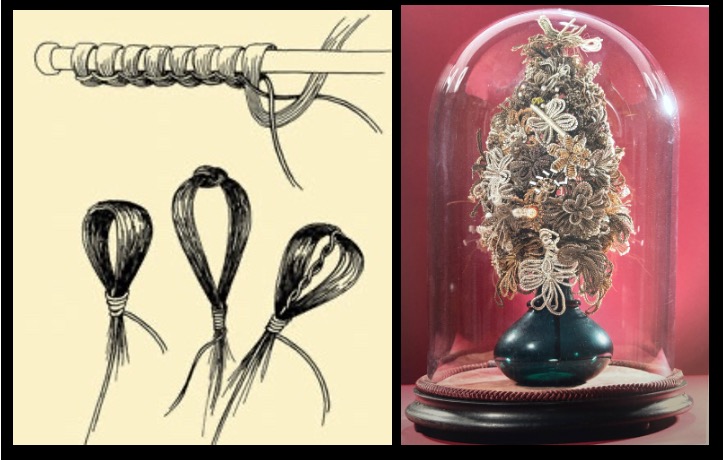
Gimp work (sometimes called wire work) refers to an extremely intricate form of hairwork that involves looping strands of hair around a pin or wire to...

Picture1
Hairwork
English

Hairwork refers to the long and varied tradition of crafting objects, images, and keepsakes from the hair of loved ones. While the practice is now mos...

IMG_4762
Luminarias
English, Spanish

Luminarias are a type of paper lantern used to decorate backyards, walkways, and roofs (particularly on flat, adobe-style buildings) in New Mexico and...

error: