
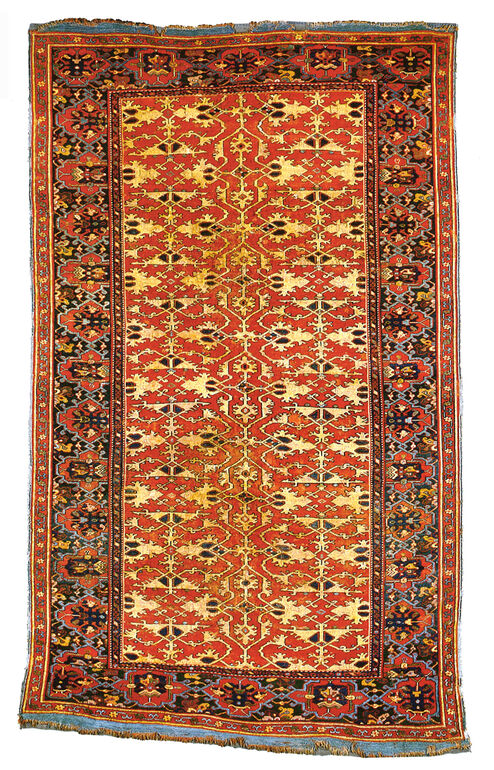
Als Lotto-Teppiche werden geknüpfte Wollteppiche bezeichnet, deren typisches Muster aus gelben, geometrisierten Ranken auf rotem Grund besteht. Sie wurden vom Ende des 15. bis ins späte 18. Jahrhundert an verschiedenen Orten und in unterschiedlicher Qualität hergestellt. Häufig wird das westanatolische Textilzentrum Uschak als Herstellungsort angenommen, Anatolien gilt als eine der produktivsten Teppichregionen. Für spätere, kleinformatige Exemplare werden auch kleinere Orte in Westanatolien vermutet, die These einer Herstellung in Rumänien ist dagegen nicht belegt. Im osmanisch regierten Anatolien wurden damals Teppiche auch für den europäischen Markt geknüpft, in England und den Niederlanden entstanden Imitationen. Nach Schätzung Erdmanns sind weltweit über 500 Lotto-Teppiche erhalten.
Handelsmetropolen wie Venedig spielten beim Import „orientalischer“ Teppiche eine zentrale Rolle. In Europa galten diese als kostbarer Besitz von Herrscherhäusern, Adel und reichen Kaufleuten und fanden auch Eingang in Kirchen. Auf europäischen Gemälden erscheinen Lotto-Teppiche ab dem frühen 16. Jahrhundert: zu Füßen der Madonna, auf Tischen in Kaufmannsporträts, über Betpulten oder unter Verstorbenen auf ungarischen Funeralporträts. Sie zeigen dort Rang und Wohlstand an, lenken den Blick und stellen die Materialität des kostbaren Gewebes zur Schau.
Ihr Name geht auf diese Bilder zurück. Julius Lessing veröffentlichte 1877 ein Musterbuch mit Teppichmustern, die er aus europäischen Gemälden übernommen hatte und legte damit einen Grundstein dafür, Teppichtypen nach Malern zu benennen, etwa „Holbein“ oder „Memling“. Die Bezeichnung nach dem Venezianer Lorenzo Lotto (um 1480–1556), der das Muster in zwei Gemälden darstellte, ist erst seit Mitte des 20. Jahrhunderts gebräuchlich. Wilhelm von Bode sprach 1902 noch vom „kleinasiatischen Wollenteppich“. Die früheste bekannte Darstellung stammt zudem nicht von Lotto, sondern von Sebastiano del Piombo (1516). Weil es kaum Anhaltspunkte für die zeitliche Entwicklung der Teppiche gibt, wurden sie anhand europäischer Gemälde datiert. Das ist nur mit Unsicherheiten möglich, zumal schon Lessing bezweifelte, dass die Maler die Muster genau wiedergaben.
Lotto-Teppiche sind Objekte mit vielen Leben. Am Wiener Hof dienten Teppiche aus dem östlichen Mittelmeerraum laut habsburgischen Inventaren meist nicht als Bodenbelag, weil sie zu wertvoll waren, sondern lagen auf Tischen und Bänken. Im islamischen Kontext wurden Teppiche dagegen am Boden verwendet, etwa in Moscheen oder Zelten. In Moscheen wurden sie von Gläubigen gestiftet, übereinandergelegt und nur mit gewaschenen Füßen betreten. Am zahlreichsten erhalten sind Lotto-Teppiche heute in Siebenbürgen, viele davon in protestantischen Kirchen. Auch der Zustand solcher Teppiche erzählt von ihren vielen Leben: Sie weisen oftmals Abnutzungen durch Gebrauch oder Lichtschäden durch „gewagte“ Ausstellungspraktiken auf, die in der Restaurierung etwa unterlegt oder eingeknüpft werden. Das MAK in Wien, 1863 als Mustersammlung für Künstler*innen, Entwerfer*innen und Handwerker*innen gegründet, sammelte „orientalische“ Teppiche zunächst als Vorbilder. 1907 kaufte es zudem Teppiche aus dem k.k. Handelsmuseum an (siehe Oriental Museum (Vienna)). Heute besitzt das MAK zwei Lotto-Teppiche, das größere Exemplar wurde 1908 in Sibiu/Hermannstadt angekauft.
Lotto carpets are hand-knotted woollen carpets whose typical pattern consists of yellow, geometric arabesques on a red ground. They were produced from the late 15th to the late 18th century in various places and of varying quality. The western Anatolian textile centre of Uşak is often assumed to be their place of production and Anatolia is considered one of the most productive carpet regions. Smaller towns in western Anatolia have also been suggested for later, small-format examples, whereas the theory that they were made in Romania remains unsupported by evidence. In Ottoman Anatolia, carpets were also knotted for the European market at the time and imitations were made in England and the Netherlands. According to Erdmann’s estimate, more than 500 Lotto carpets survive worldwide.
Trading hubs such as Venice played a central role in the import of “oriental” carpets. In Europe, these were treasured possessions of ruling houses, the nobility and wealthy merchants and also found their way into churches. From the early 16th century onwards, Lotto carpets appear in European paintings: at the feet of the Madonna, on tables in merchants’ portraits, draped over prayer desks or beneath the deceased in Hungarian funerary portraits. There, they signal rank and wealth, guide the viewer’s gaze, and display the materiality of the precious textile.
Their name derives from these images. In 1877, Julius Lessing published a pattern book of carpet designs taken from European paintings, laying the groundwork for naming carpet types after painters, such as “Holbein” or “Memling”. The term referring to the Venetian painter Lorenzo Lotto (c. 1480–1556), who depicted the pattern in two paintings, has only been in use since the mid-20th century; in 1902, Wilhelm von Bode still referred to an “Asia Minor woollen carpet”. Moreover, the earliest known depiction is not by Lotto but by Sebastiano del Piombo (1516). Because there is little evidence for how the carpets developed over time, they were dated by means of European paintings, an approach that remains uncertain, not least since Lessing himself doubted that painters reproduced the patterns accurately.
Lotto carpets are objects with many lives. According to Habsburg inventories, carpets from the eastern Mediterranean were usually considered too valuable to be used as floor coverings at the Viennese court and were placed on tables and benches instead. In Islamic contexts, by contrast, carpets were used on the ground, for instance in mosques or tents. In mosques, they were donated by the faithful, layered on top of one another, and walked on only with washed feet. Today, Lotto carpets survive in the greatest numbers in Transylvania, many of them in Protestant churches. The condition of such carpets also tells of their many lives: they often show wear from use or light damage from “daring” display practices, which conservators may, for instance, underlay or re-knot. The MAK in Vienna, founded in 1863 as a model collection for artists, designers and craftspeople, initially collected “oriental” carpets as models. In 1907, it also acquired carpets from the Imperial-Royal Trade Museum (see Oriental Museum (Vienna)). Today, the MAK holds two Lotto carpets; the larger one was purchased in Sibiu/Hermannstadt in 1908.
Hanke, Eva/Kregeloh, Anja: Lotto-Teppiche, in: Kregeloh, Anja (Hg.), Anatolische Teppiche aus Bistritz/Bistrița. Die Sammlung der Evangelischen Stadtkirche A.B. im Germanischen Nationalmuseum Nürnberg, Heidelberg 2023, S. 140–183.
Karl, Barbara: Der Teppich zwischen Ost und West, in: Thun-Hohenstein, Christoph/Karl, Barbara (Hg.), MAK/Guide. Teppiche/Carpets (Ausst.-Kat. MAK – Museum für angewandte Kunst, Wien), München 2014, S. 10–16.
Kim, David Young: Lotto’s Carpets. Materiality, Textiles, and Composition in Renaissance Painting, in: The Art Bulletin 98, 2016, S. 181–212.
Teece, Denise-Marie: Through the Renaissance Frame. Carpets and the Beginnings of “Islamic Art” in Nineteenth-Century Vienna and Berlin, in: The Textile Museum Journal 44, 2017, S. 46–69.
Völker, Angela: Die orientalischen Knüpfteppiche im MAK, Wien 2001.
Völker, Angela: Die Geschichte der Wiener Orientteppich-Sammlung, in: Thun-Hohenstein, Christoph/Karl, Barbara (Hg.), MAK/Guide. Teppiche/Carpets (Ausst.-Kat. MAK – Museum für angewandte Kunst, Wien), München 2014, S. 22–32.
Mündliche Quelle: Diskussion mit der MAK-Kustodin und Sammlungsmitarbeiter*innen im Rahmen der Exkursion „Islamische Kunst im österreichischen Kontext“, Universität Wien, Sommersemester 2024.
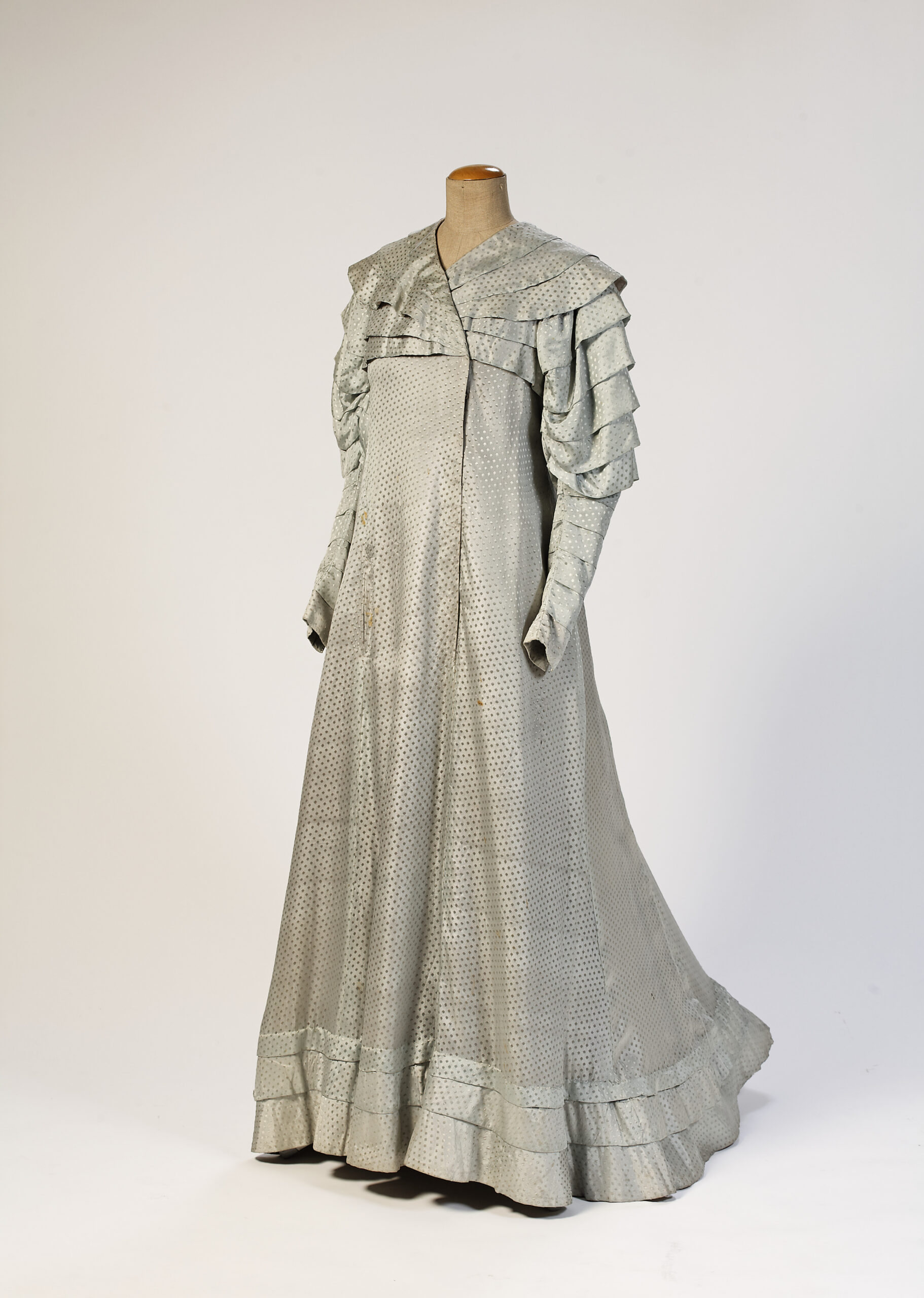
Als Reformkleid wird ein Kleid bezeichnet, das lose von den Schultern herabhängt, bequem weite Ärmel hat und ohne Korsett getragen werden sollte. Vora...
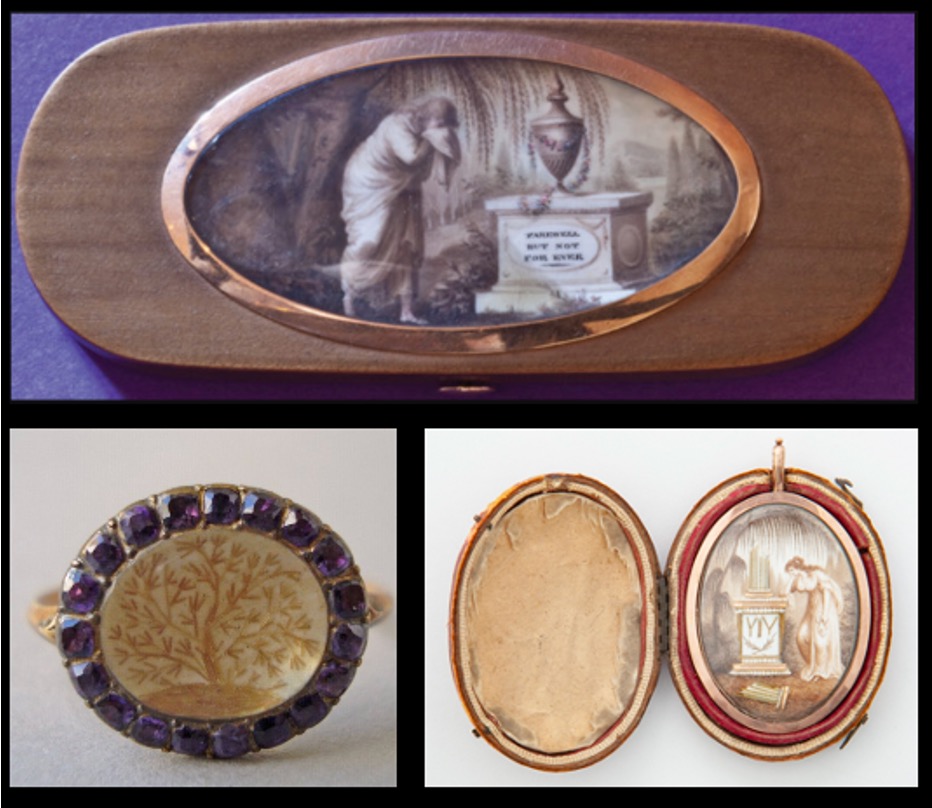
Masticated work, sometimes called cut work or sepia work, is a hairwork technique in which hair is finely chopped or ground into a powder, mixed with ...
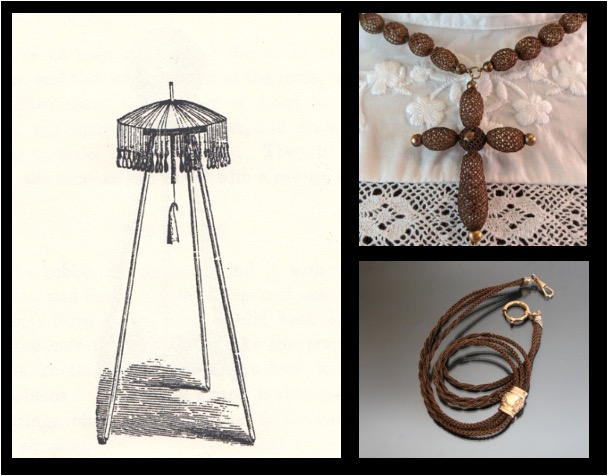
Table work refers to a wide range of hairwork techniques that involve braiding and weaving hair into a jewelry. The name comes from the apparatus at t...
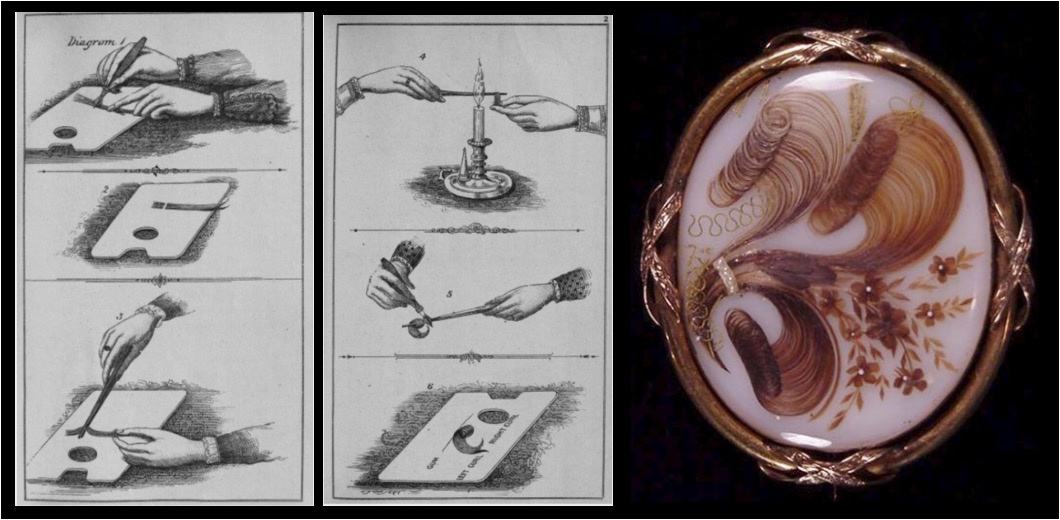
Palette work is a hairwork technique that involves flattening a lock of hair onto a piece of glass, covering it with gum tragacanth (sometimes referre...
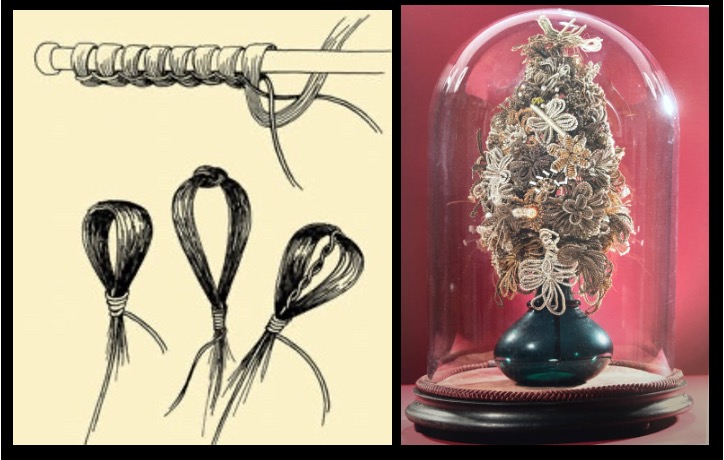
Gimp work (sometimes called wire work) refers to an extremely intricate form of hairwork that involves looping strands of hair around a pin or wire to...
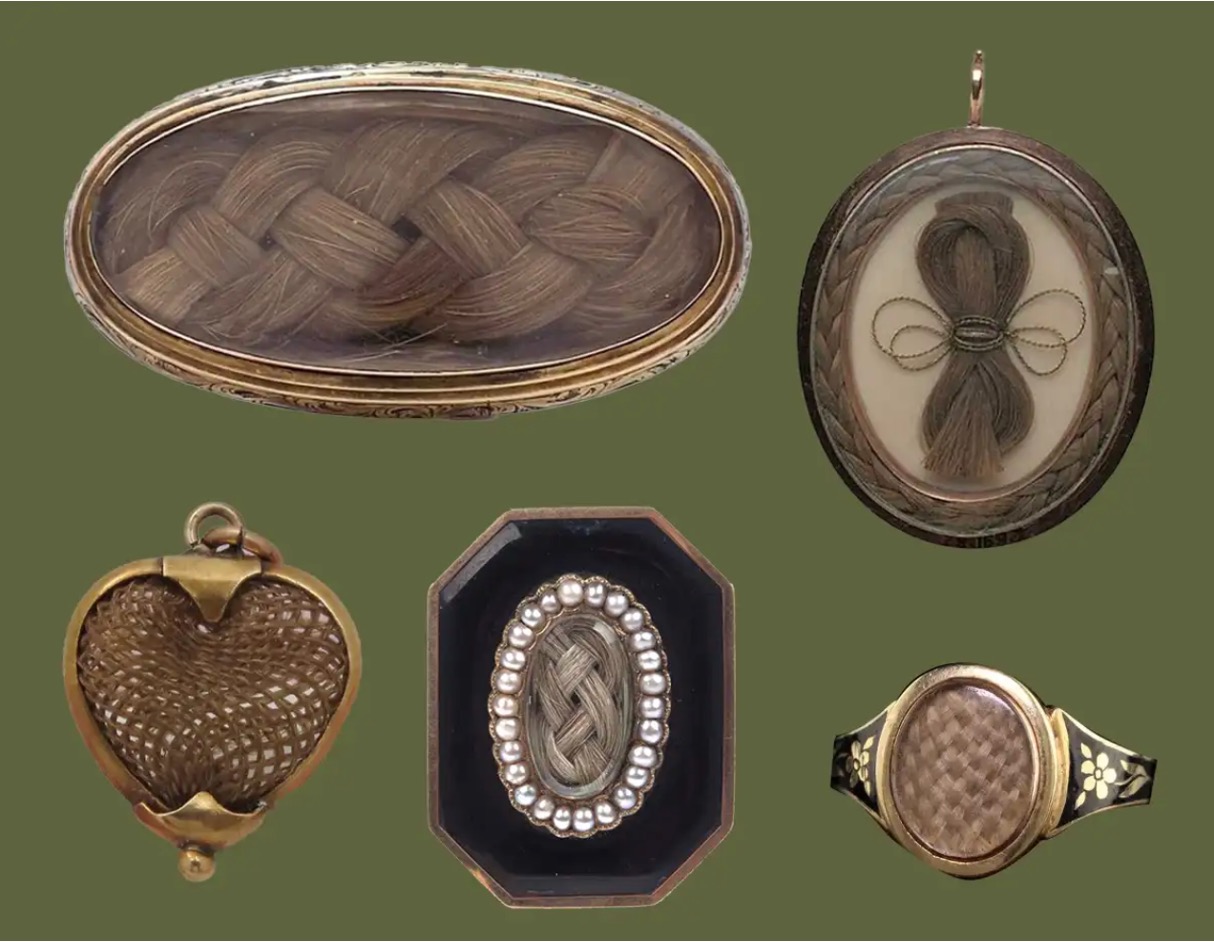
Hairwork refers to the long and varied tradition of crafting objects, images, and keepsakes from the hair of loved ones. While the practice is now mos...
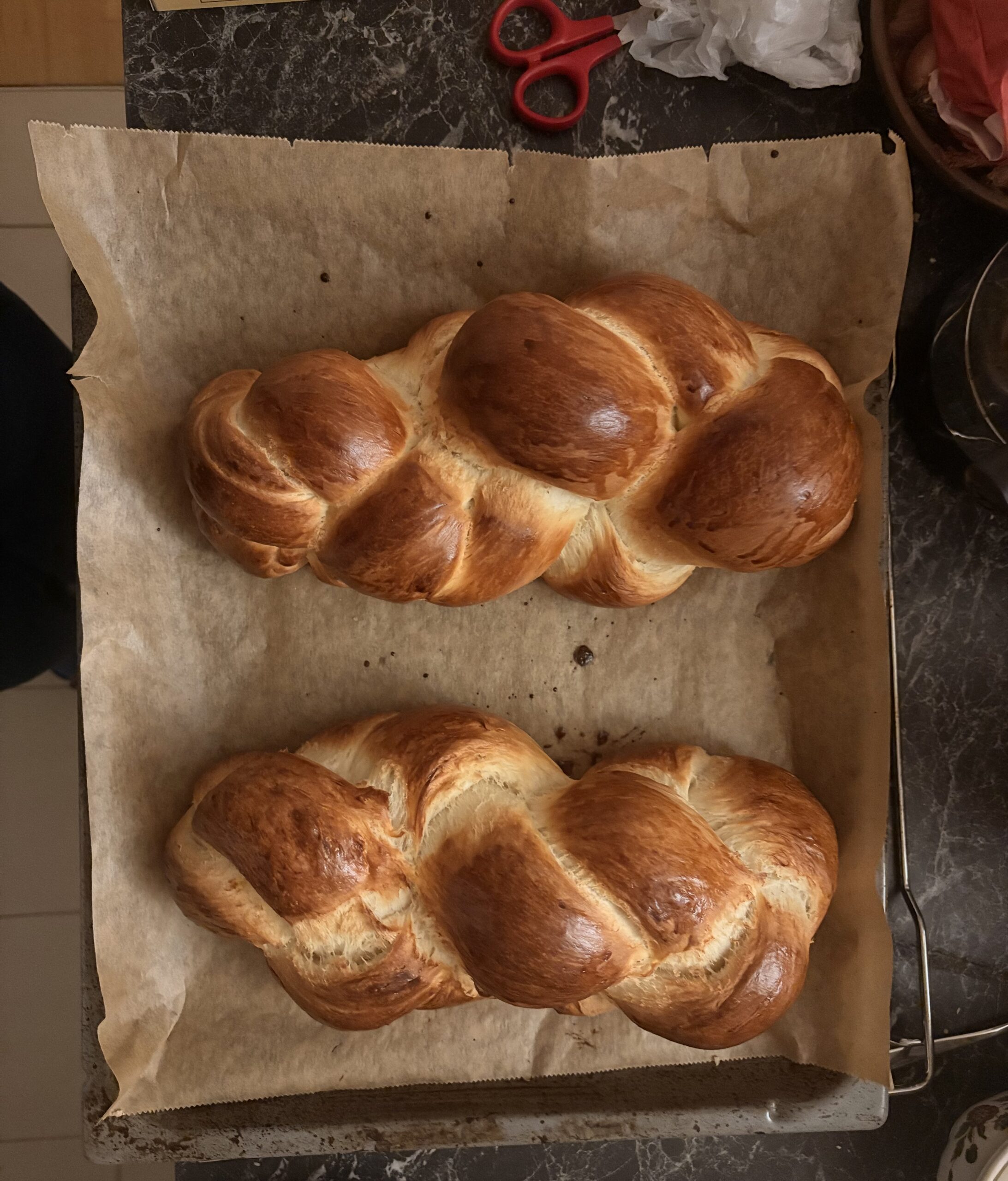
Butterzopf (Standard German) is a braided loaf of bread typically made from flour, milk, butter, yeast, and salt and brushed with egg before baking, a...

Eine Erweiterung des Vergleichs von Sammeln mit Jagd (zb. bei Donna Haraway). Hier wird extern ein Rahmen vorgegeben und die zu sammelnden Bilder etc....
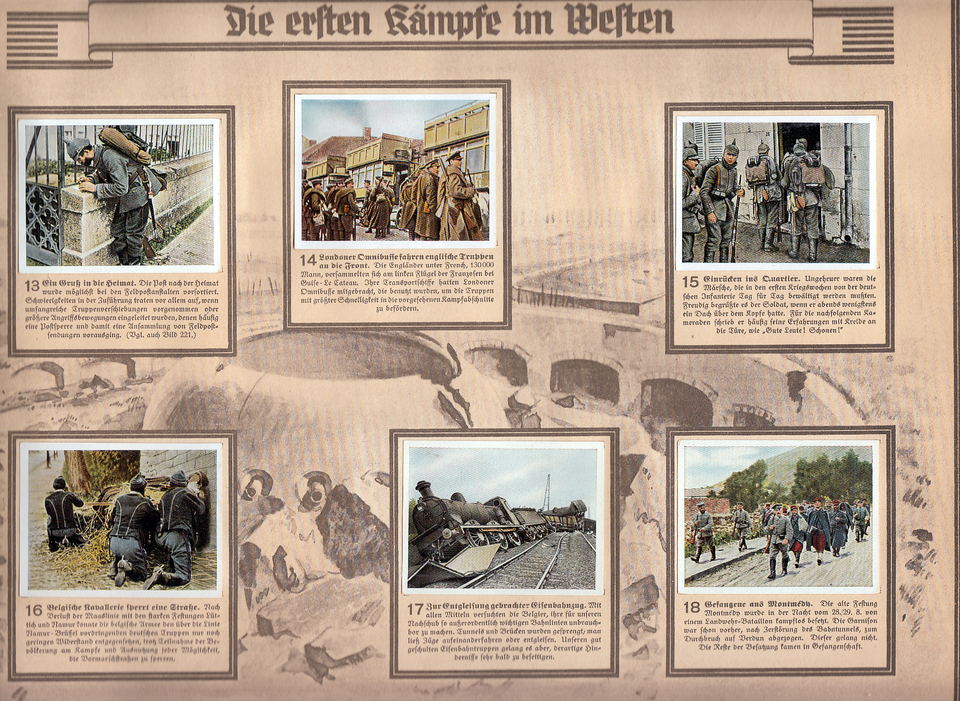
Bei Zigarettenschachteln wurden aus Werbe- und Propagandazwecken Bilder beigelegt. Besonders bekannt und eine der ersten waren Baseballcards in den US...
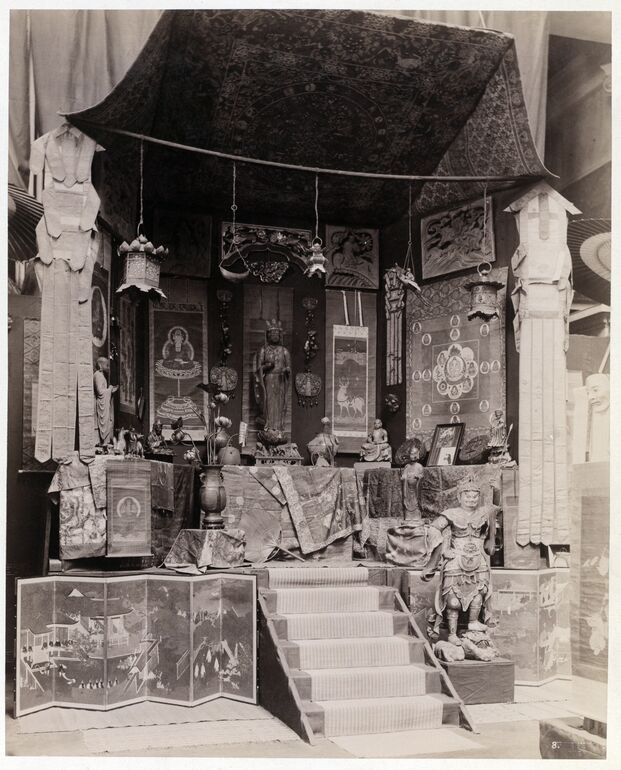
The Oriental Museum in Vienna was a museum dedicated to promoting trade relations between the Austro-Hungarian Empire and the countries of the so-call...
This website uses strictly necessary cookies to function. We would also like to use functional and analytical cookies to improve your experience. You can choose to accept or decline.