The Oriental Museum in Vienna was a museum dedicated to promoting trade relations between the Austro-Hungarian Empire and the countries of the so-called Orient and East Asia. The term Orient referred not only to all regions east of Europe as far as East Asia, but also included the Maghreb states and certain countries in Eastern Europe, such as Bosnia in particular. The idea for the museum was conceived during the Vienna World Exhibition of 1873, where the premises of the Cercle Oriental served as a meeting place for representatives of Austrian industry and trade and guests from the so-called Orient and researchers. A collection of exhibits considered most important for Oriental studies, raw materials and art objects, was also displayed there. After the Vienna World Exhibition ended, it was decided to preserve these objects and display them to the general public in the newly founded Oriental Museum.
This Oriental Museum was opened in 1874 and was originally located at Renngasse 12. In 1879, it moved to the new stock exchange building at Schottenring 1. Arthur von Scala, director of the Cercle Oriental, was appointed director of this state-funded institution. The Oriental Museum served as a center of knowledge about the so-called Orient. However, promoting commercial interests remained the primary goal of the museum, where exhibitions displayed imported objects as well as European products that had proven to be successful commodities in Asia and North Africa.
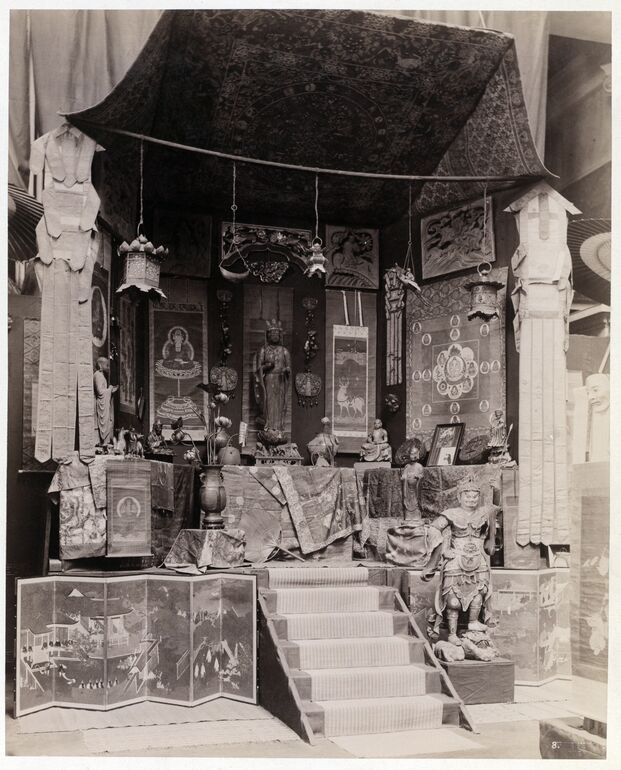
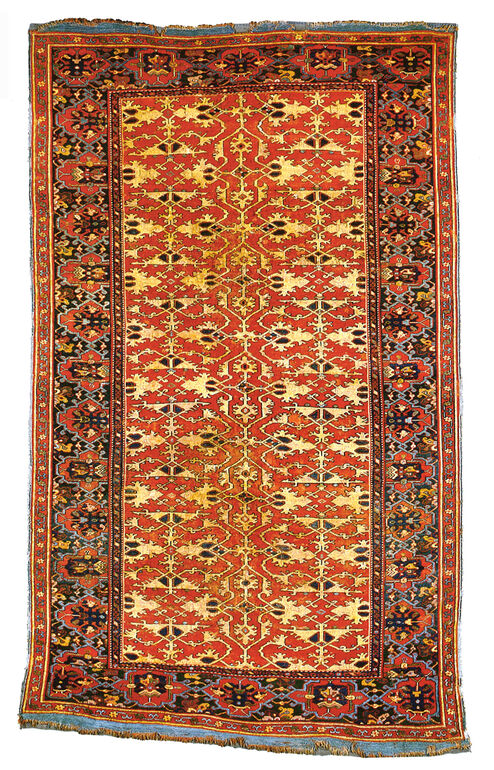
After ten years of existence, the museum’s economic situation made it necessary to expand its geographical scope. As a result, the Oriental Museum was renamed the Trade Museum in 1886. The museum’s collection was steadily expanded, not least through purchases made on research trips by the museum director Arthur von Scala and through donations. The only exhibition at the Trade Museum for which photographs exist is the exhibition of the collection of Count Karl Lanckoronski in 1890, a member of the museum’s board of trustees who had acquired more than 1000 decorative arts and ethnographic objects on his travels to India, China, and Japan. The photos document a presentation of the exhibits reminiscent of the cabinets of curiosities of the early modern period: Eurocentric stereotypes were reinforced through the deliberate staging of the foreign, which was particularly popular with contemporary audiences. Particularly noteworthy, however, is the Great Oriental Carpet Exhibition, which in 1981 featured 400 carpets from the collections of the Habsburg Household, the Museum of Art and Industry, the South Kensington Museum and the India Museum in London, from German museums and numerous international and Austrian dealers and aristocrats and even the Shah of Persia. This exhibition attracted both curious onlookers and renowned carpet experts alike and its selection and description of the carpets on display in the catalog has shaped carpet research to this day.
When Arthur von Scala left the Oriental Museum in 1897 to take over as director of the Museum of Art and Industry, the museum’s collection activities came to an end. In 1907, Arthur von Scala succeeded in having the Museum of Art and Industry take over the Asian collection of the Trade Museum. The museum, whose collection had thus been considerably reduced, continued to exist until the fall of the monarchy. The archives of the Museum of Commerce are now lost.