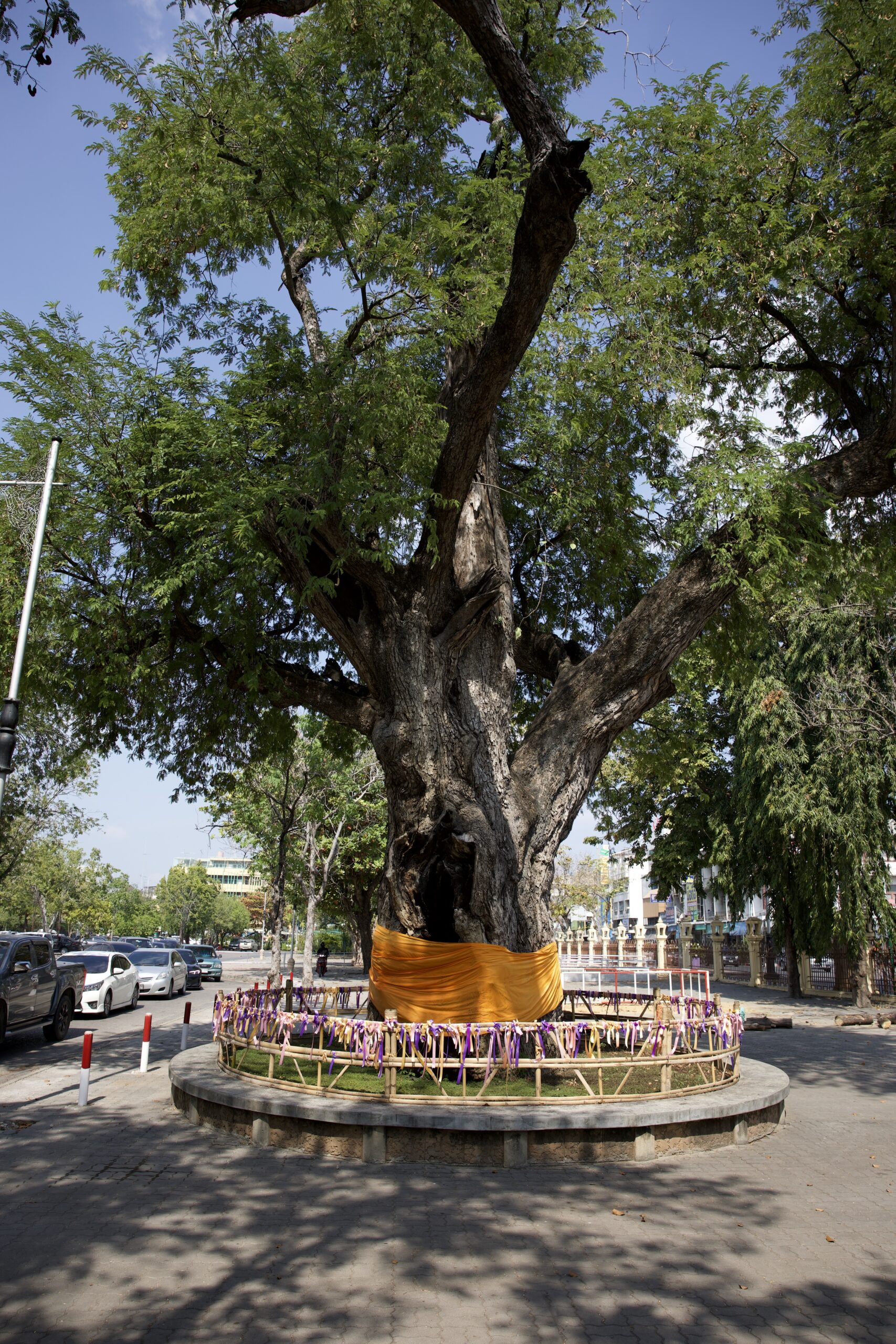
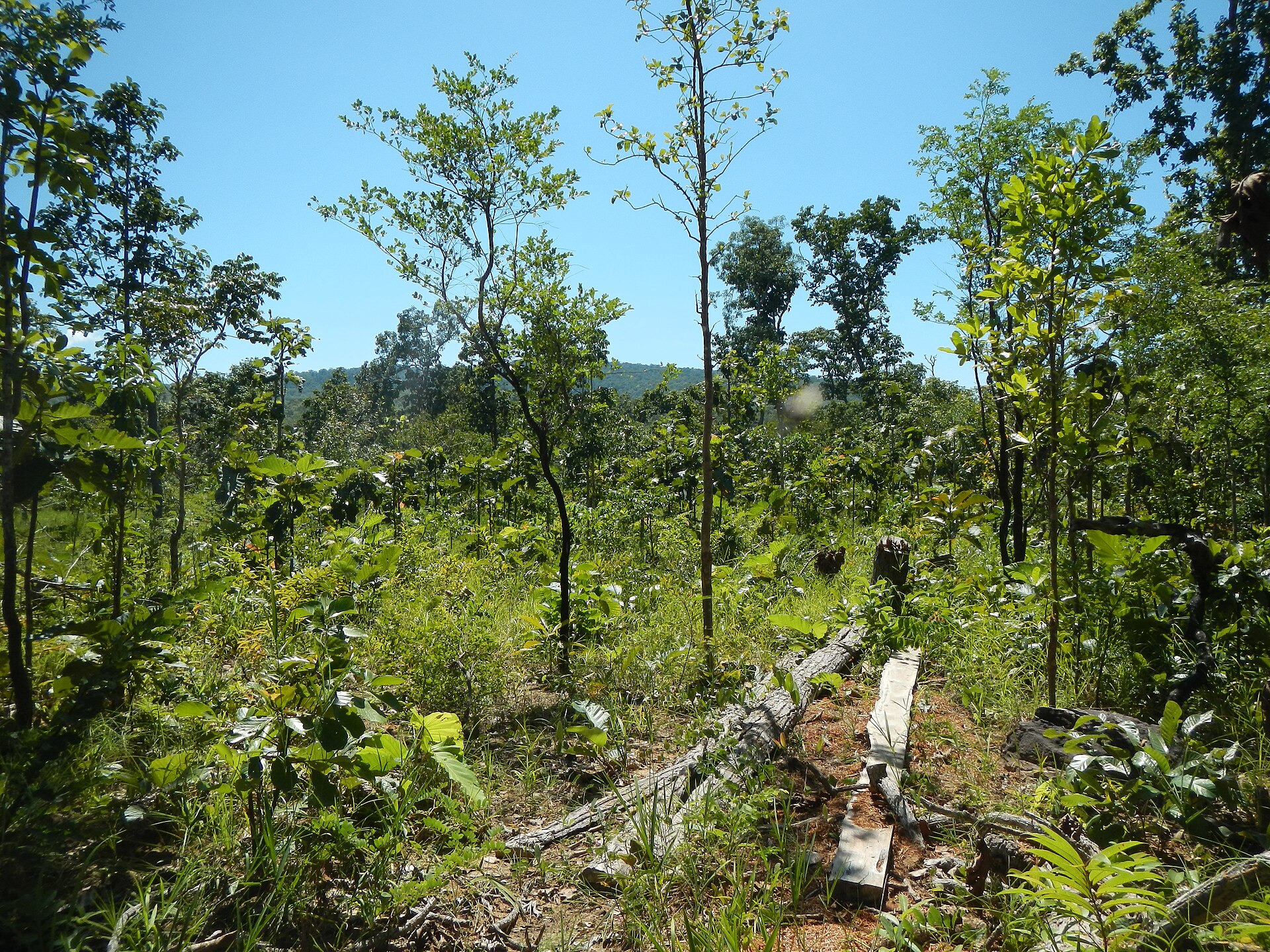
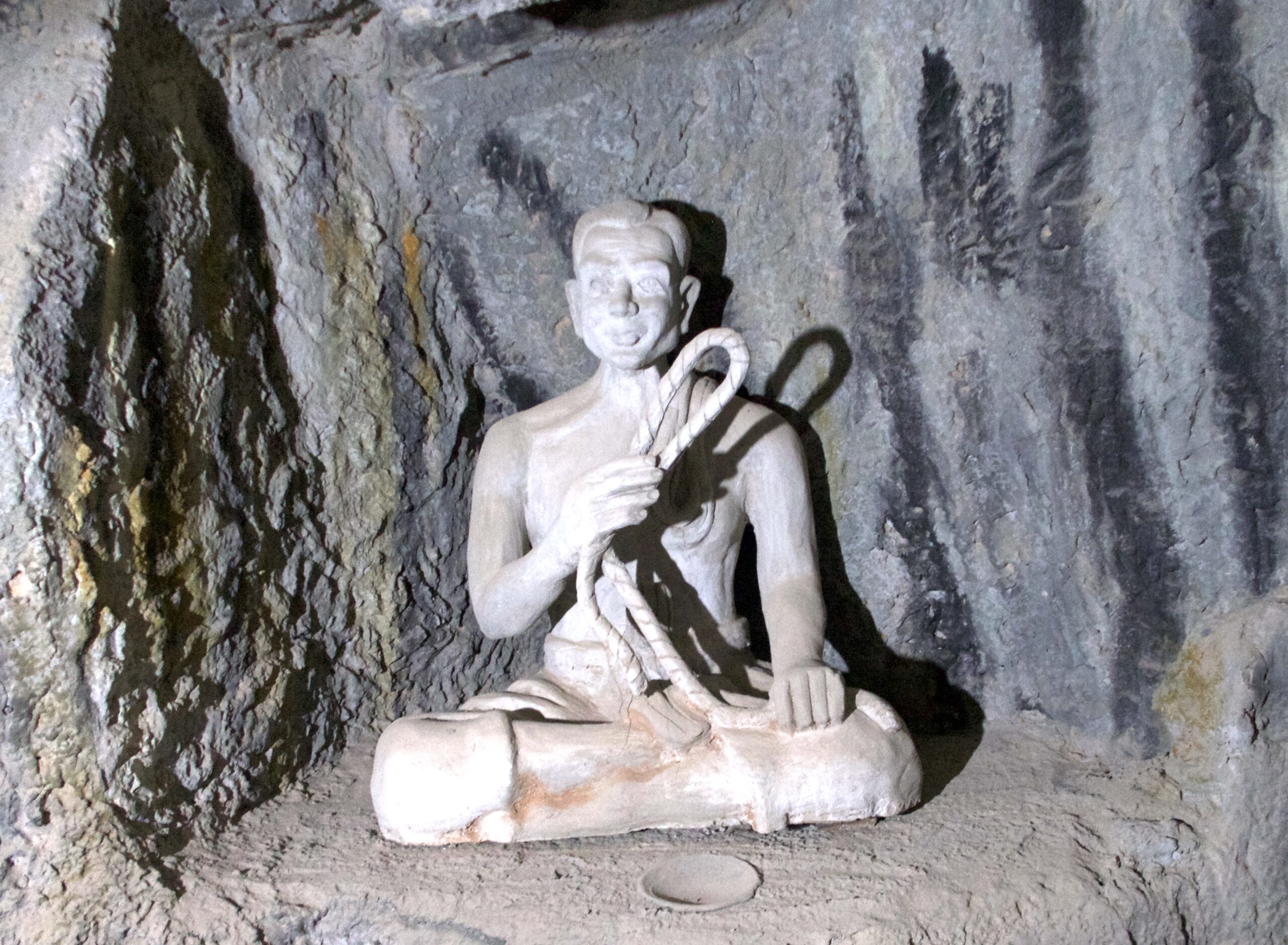
บวชต้นไม้/buat ton mai, also known as ‘tree ordination’, is a method of conserving trees in Thailand rooted in Buddhism. The practice emerged as a response to deforestation in Thailand.
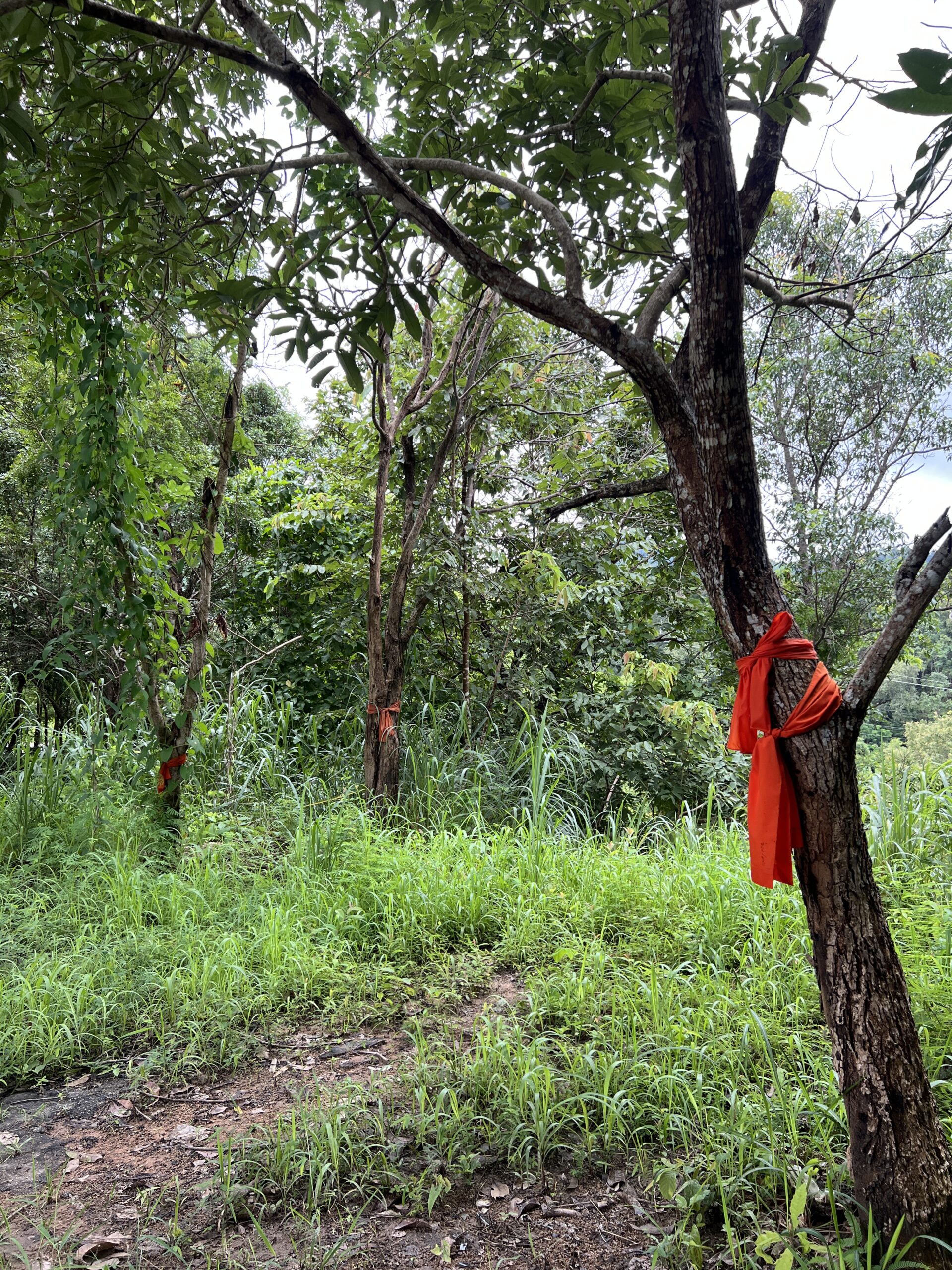
Buat ton mai involves wrapping saffron monk robes around trees – similar to Buddhist ordination, when someone enters the monkhood. Accordingly, the tree ordination is presided over by monks. In addition to draping them in the cloth, the monks also consecrate the trees with holy water.
The act of ordaining the trees renders the forest a sacred area and deters people from cutting the trees down. The ceremony ties the protection of the forest to achieving good merit/good karma, which impacts not only life in the present, but also rebirth (Darlington 1998).
This practice is associated with พระป่า/phra pa (forest monks) also known as พระนักอนุรักษ์/phra nak anuraksa (ecology or conservation monks).
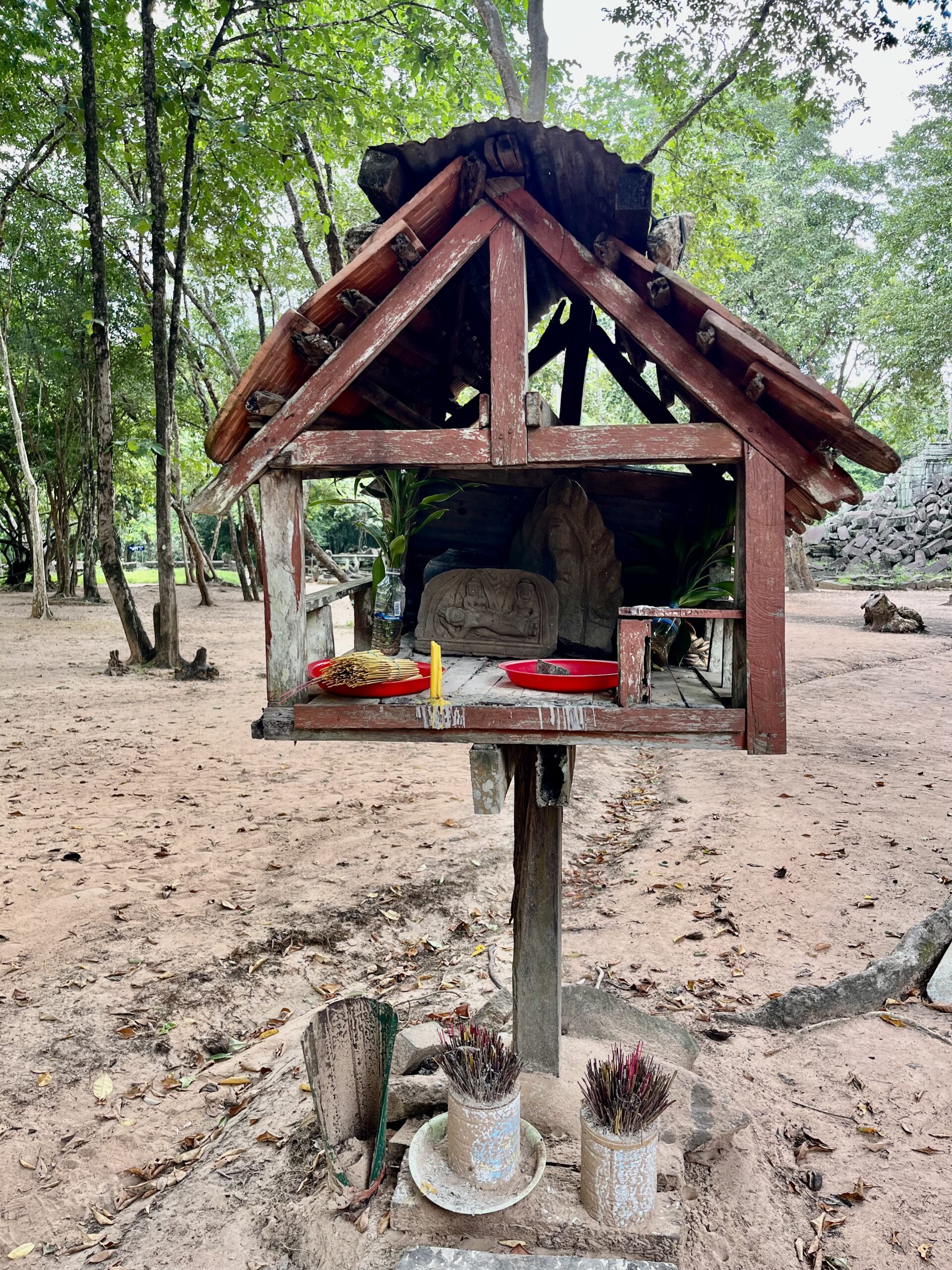
Alongside the Buddhist component, some tree ordination rituals also involve animist elements to account for tree and forest spirits.
One account (Openbase 2008) from Northern Thailand, for example, notes that the ceremony also involves the construction of a small shrine for the tree spirits and preparation of sticky rice, banana, betel nut and betel leaves as offerings. Before the Buddhist ceremony, a ‘ปู่อาจารย์’ (Grandfather Teacher) presents the offerings and performs a ritual to inform the spirits and แม่ธรณี/Mother Earth, and also prays “for misfortune to anyone who cuts down the trees or destroys the forest.”

Openbase. 2008. พิธีกรรมภาคเหนือ – พิธีบวชต้นไม้. Available at: https://www.openbase.in.th/nodhttps://www.seub.or.th/bloging/into-the-wild/blessing-trees/e/8274.
Darlington, S. M. (1998). The ordination of a tree: The Buddhist ecology movement in Thailand. Ethnology, 1-15.
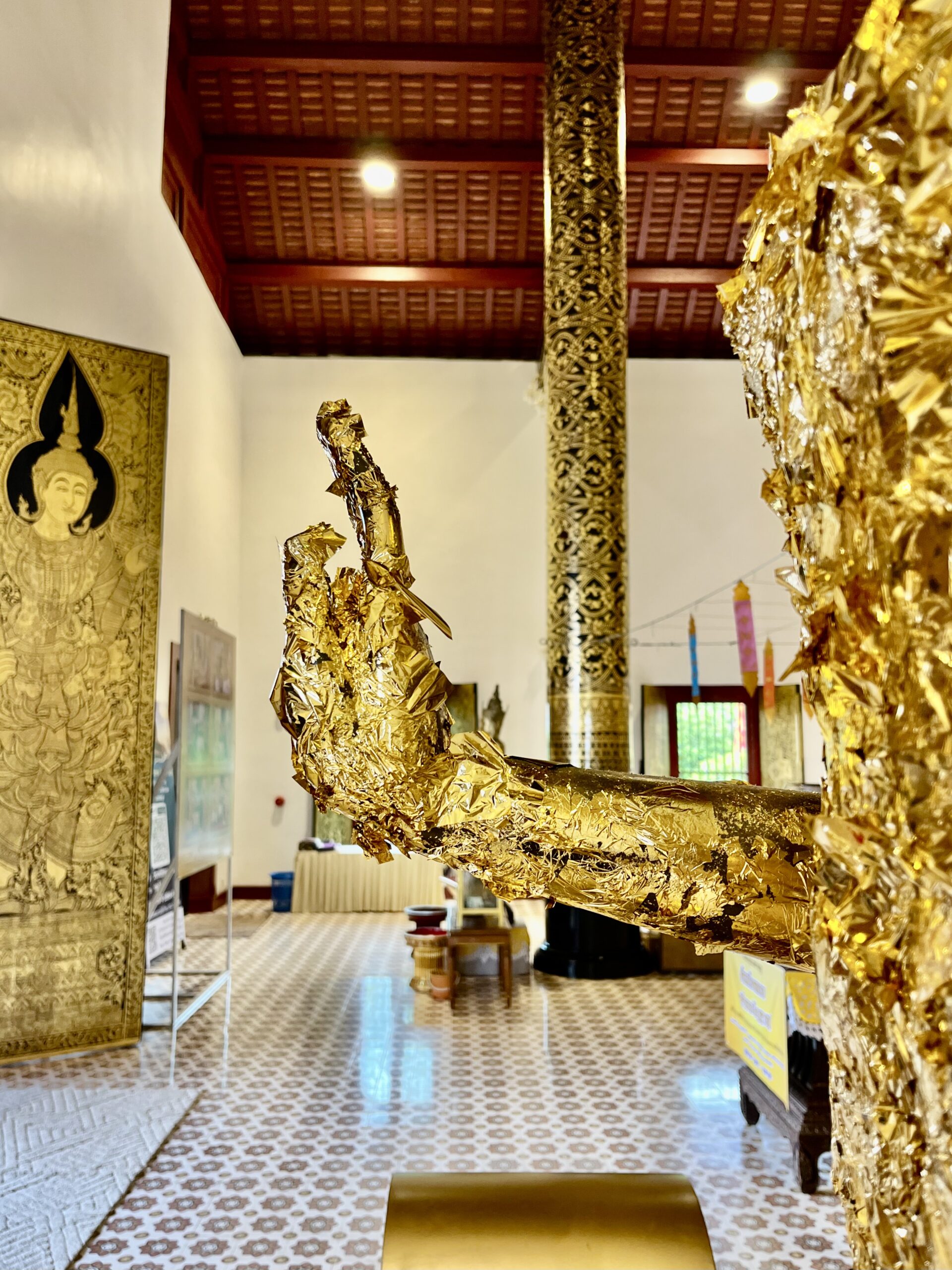
ลงรักปิดทอง/Long Rak Pit Thong, or ‘lacquering and gilding’, is both a Thai conservation technique and an act of worship and a way of making merit wit...
គេតែងតែគោរពពពួកអស់នឹង ព្រោះពពួកអស់នឹងគេតាមបីបាច់ថែរក្សាយើង ហើយខ្លះទៀត ពេលណាដែលម្ចាស់ផ្ទះមានគ្រោះ មានភ័យ មានអន្តរាយអ្វីមួយកើតម...
អញ្ចឹងពពួកភូមិទេវតា តាមការពារ និងថែរក្សាម្ចាស់ផ្ទះនឹង ទាល់តែម្ចាស់ផ្ទះនឹងជាអ្នកមានទាន មានសីល មានសេចក្តីល្អ ប្រព្រឹត្តសេចក្តីល្អដែរ...
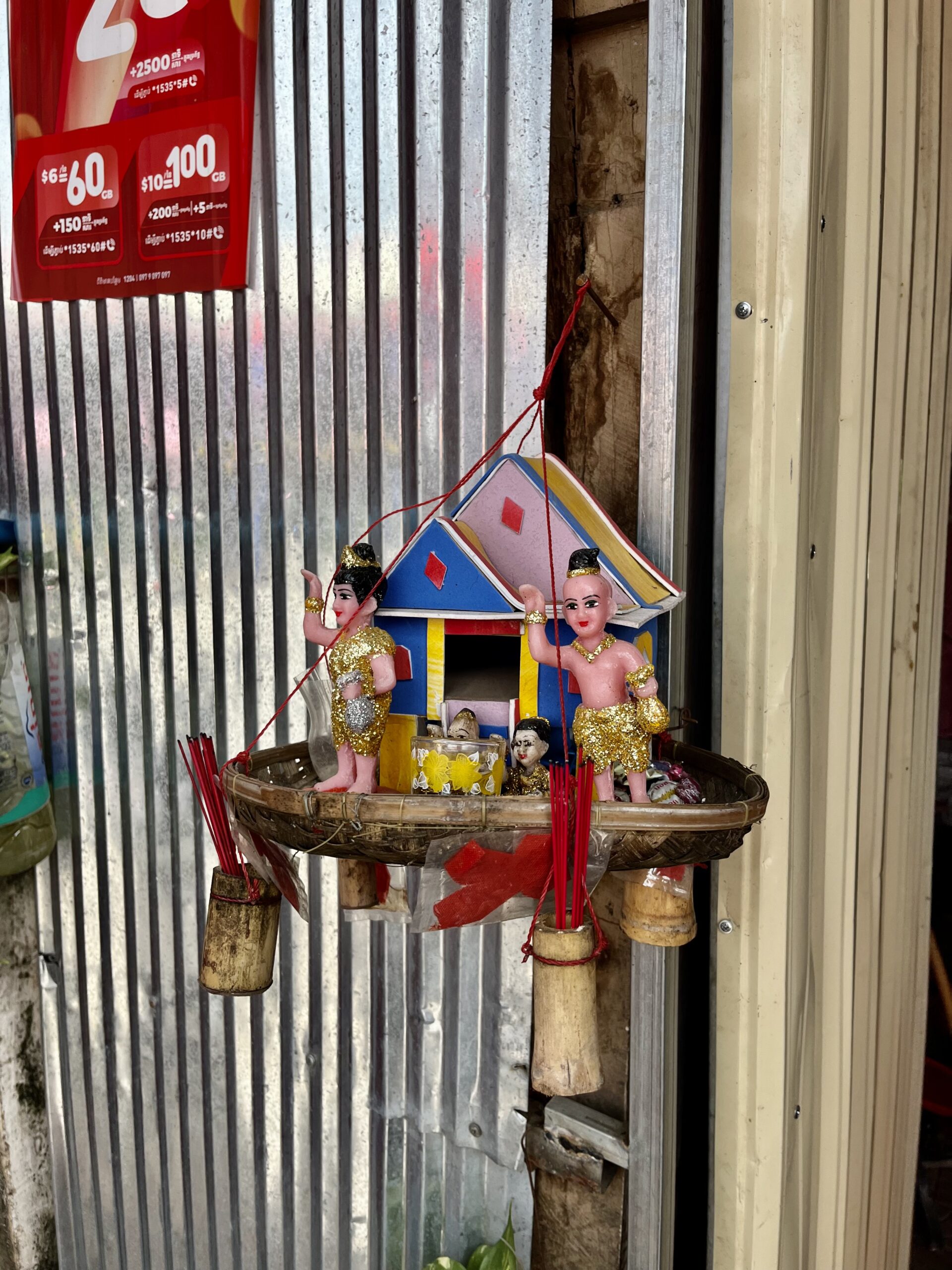
ម្រេញគង្វាល គឺជាភពអមនុស្ស ដែលជាកញ្ចក់ឆ្លុះបញ្ចាំងពីភពរបស់យើង ដែលភាគច្រើនយើងតែងតែហៅក្មេងឃ្វាលគោ ឃ្វាល ក្របី។ ដោយសាររឿងហ្នឹងវាទាក់ទងបាយសំណុំ ទឹកបំពង់ ដែ...
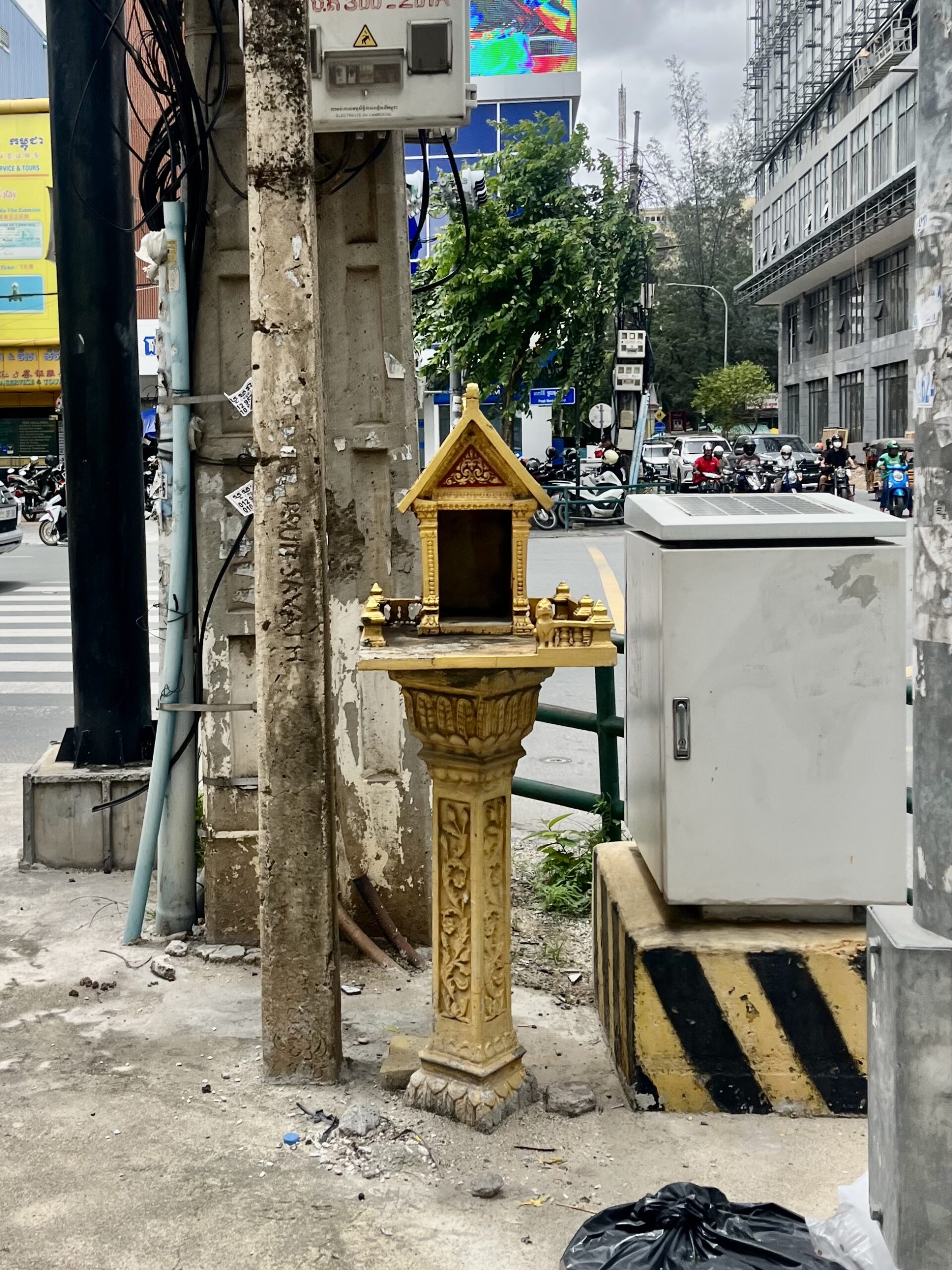
ព្រះភូមទេវតា ឬរានទេវតានេះ គេដាក់នឹង គឺភាគច្រើនគេដាក់សម្រាប់ឱ្យពពួកភូមទេវតារស់នៅ មានដូចជាអរុក្ខទេវតា ភូមិទេវតាដែលយើងហៅថាម្រេញគង្វាល ។ ហើយការដាក់ទាំងអស់...
អ្នកដែលមិនជឿលើព្រះបិតា លោកតាស្នាប់ បានជួបប្រទះអភ័យហេតុផ្សេងៗគ្នា៖ ម៉ូតូរបស់ពួកគេខូចនៅពេលបើកចូលព្រៃ ខណៈដែលមនុស្សខ្លះវិលត្រឡប់មកវិញបានដួលចេញពីម៉ូតូ បាក់...
วัฒนธรรม/Wattanatham (meaning ‘culture’) is one of over one thousand terms coined by Prince Wan Waithayakon. In a 1975 interview, Prince Wan, who atte...
ธรรมชาติ/Thammachat, meaning ‘nature’ in Thai, was a term coined as part of a larger language policy spanning the late-19th and 20th centuries, involv...
ปะกำ (ภะษากูย) หรือ ผีปะกำ (ภาษาไทย) เป็นวัฒนธรรมที่พบได้เฉพาะในกลุ่มกูยอาจีงหรือกูยเลี้ยงช้างเท่านั้น เป็นวิญญาณของบรรพบุรุษกูยเลี้ยงช้างที่เป็นหมอหร...
Traditional Manggarai weaving designs used natural dyes as the background, including indigo, known as 'tao' in the Manggarai language or 'nila', meani...
This website uses strictly necessary cookies to function. We would also like to use functional and analytical cookies to improve your experience. You can choose to accept or decline.