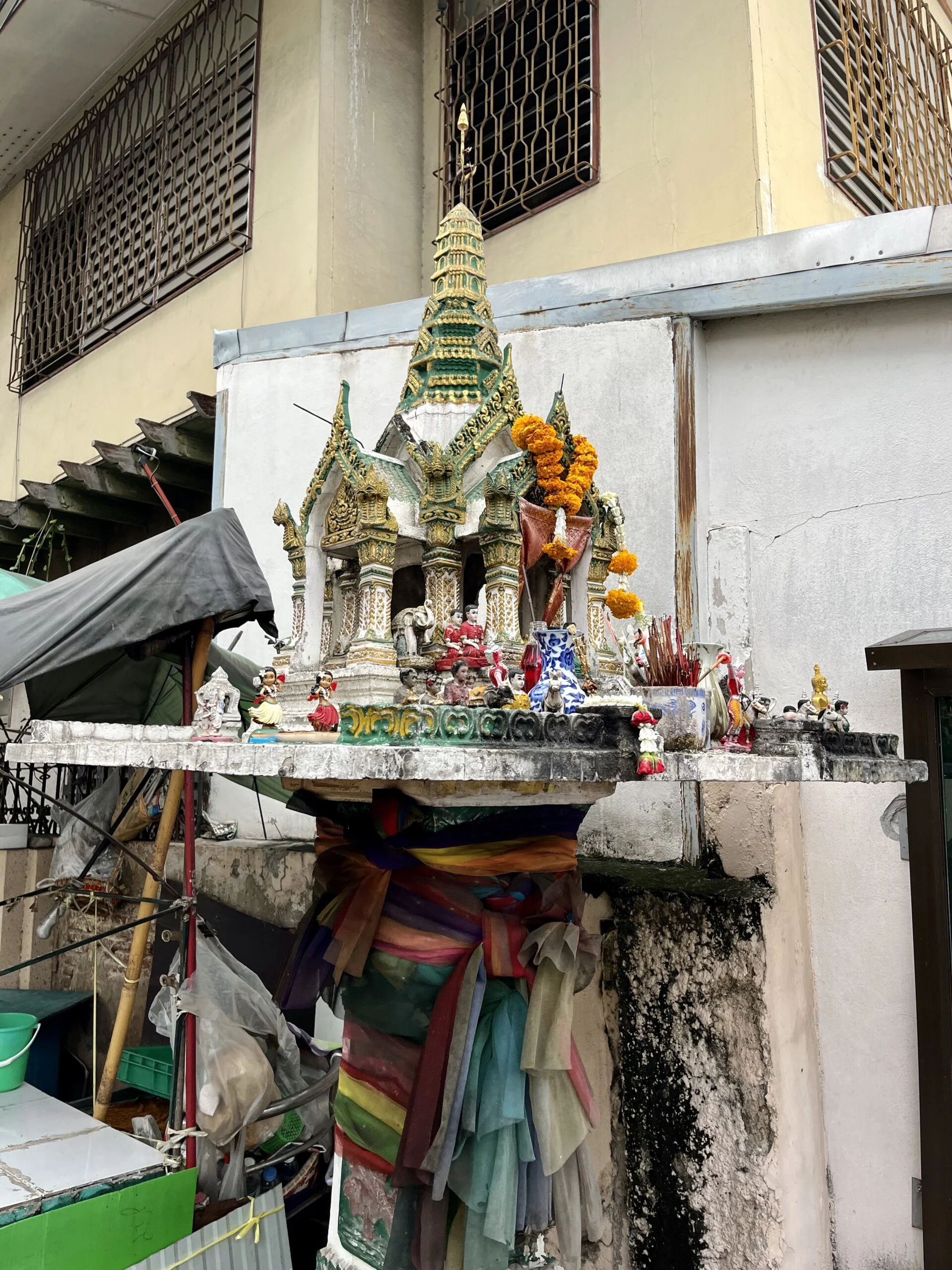
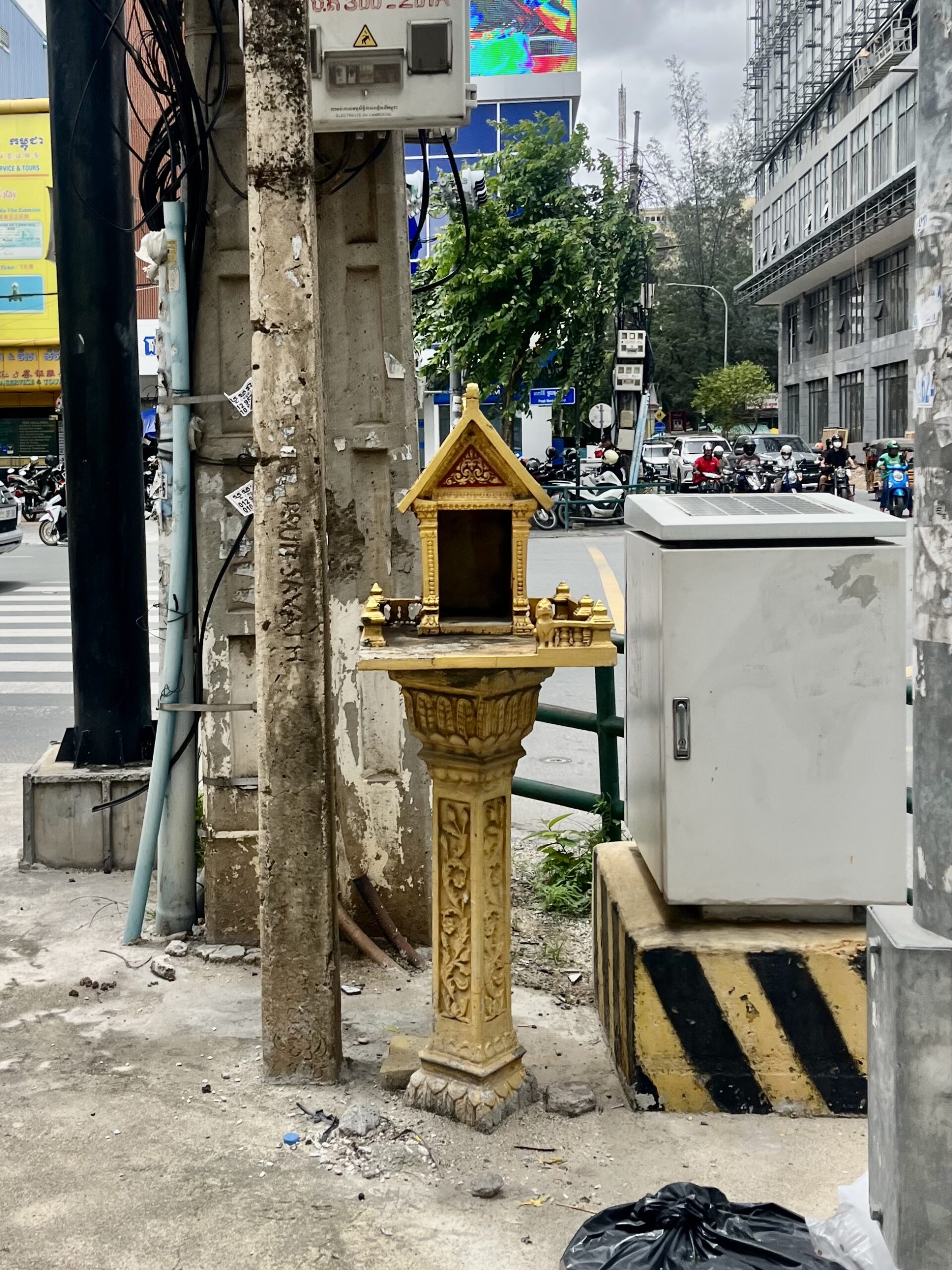
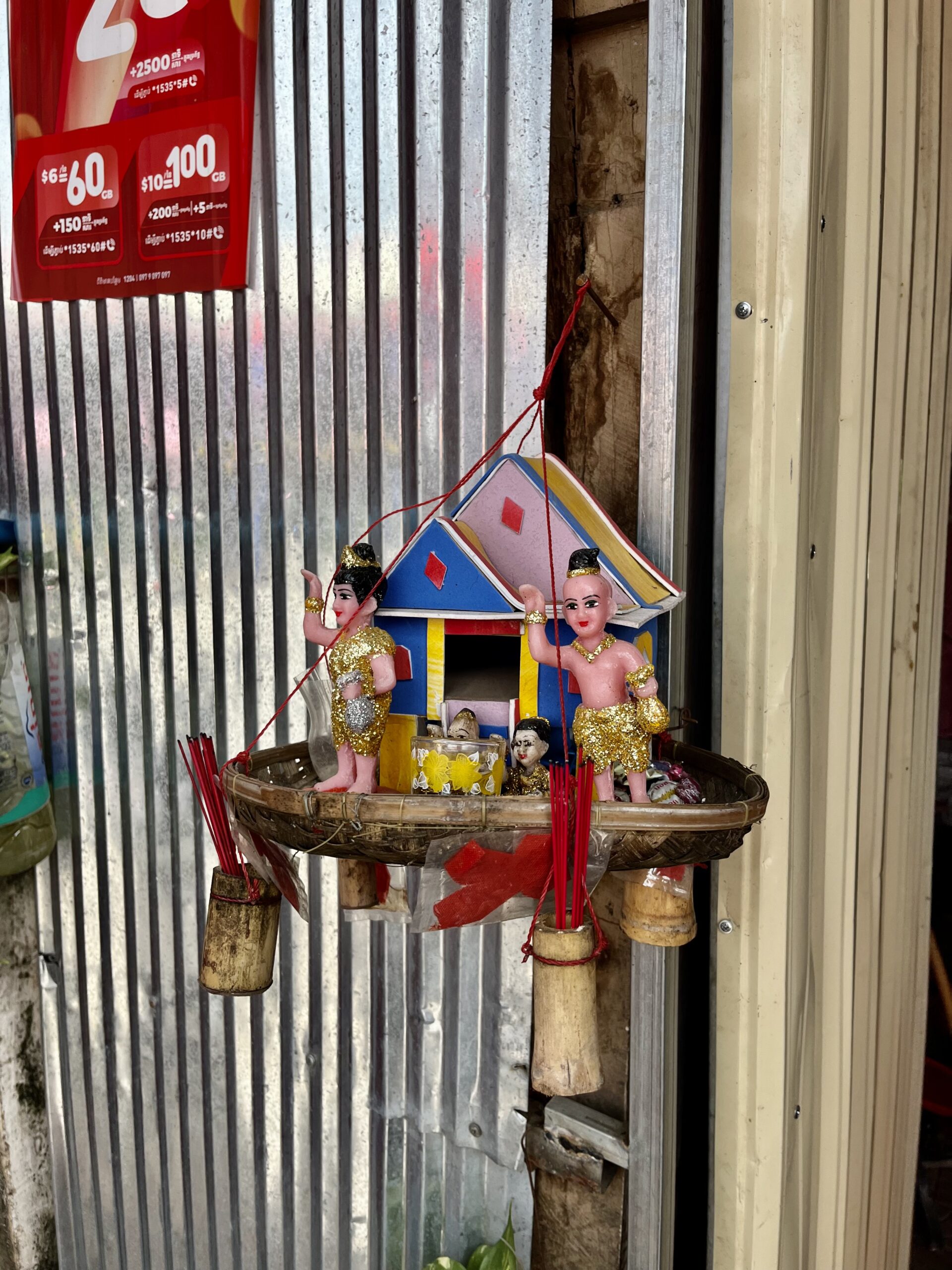
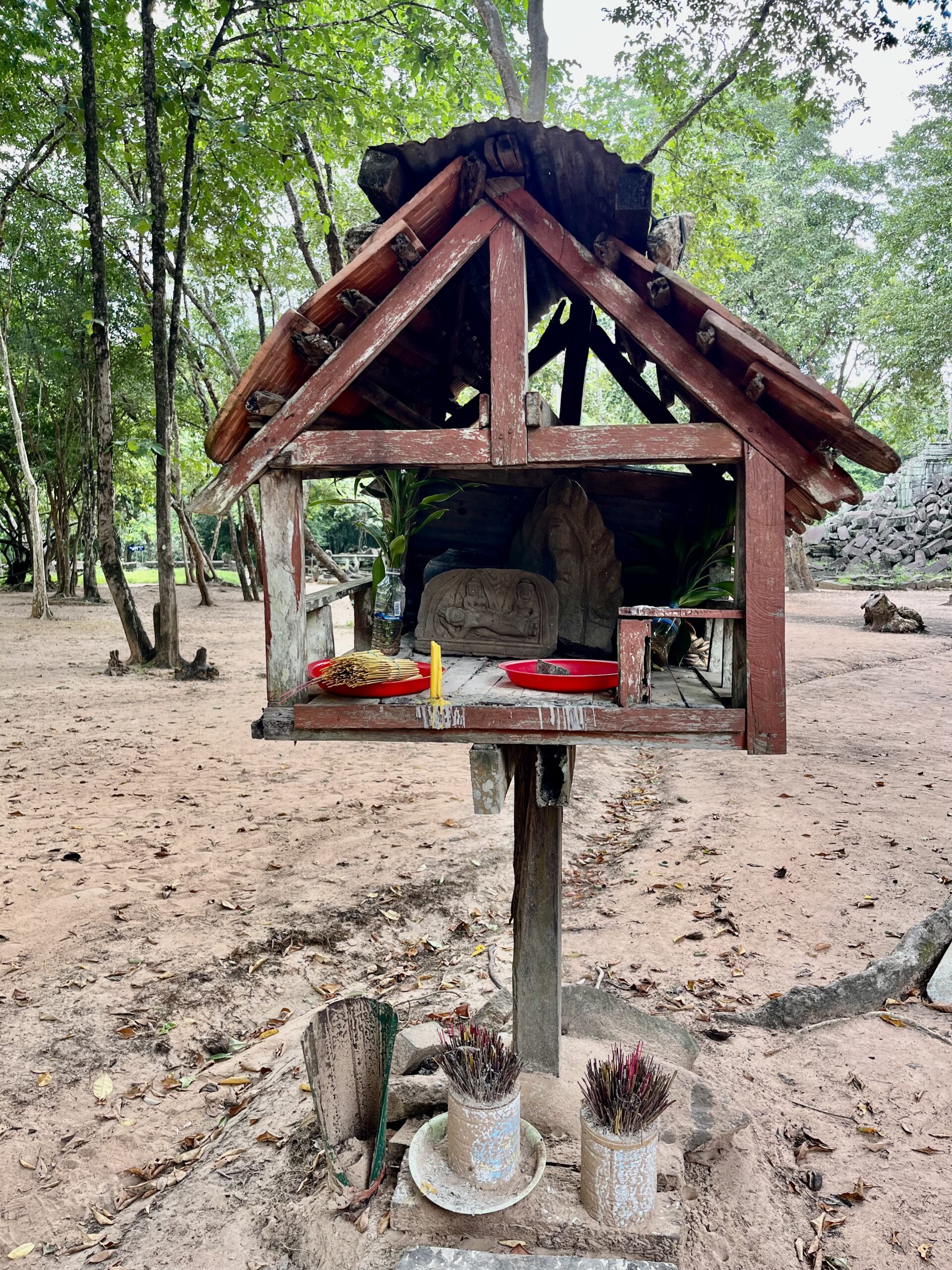
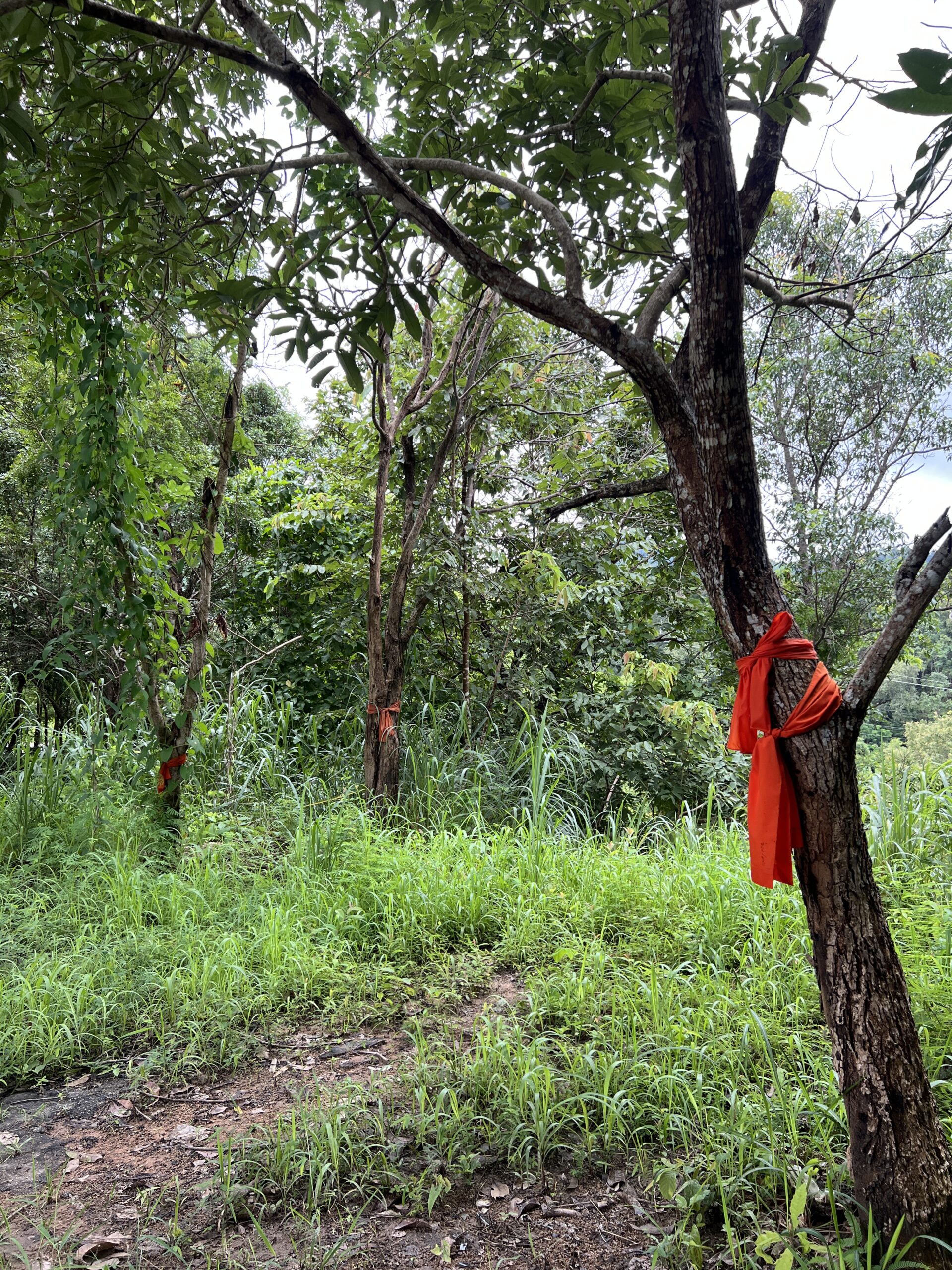
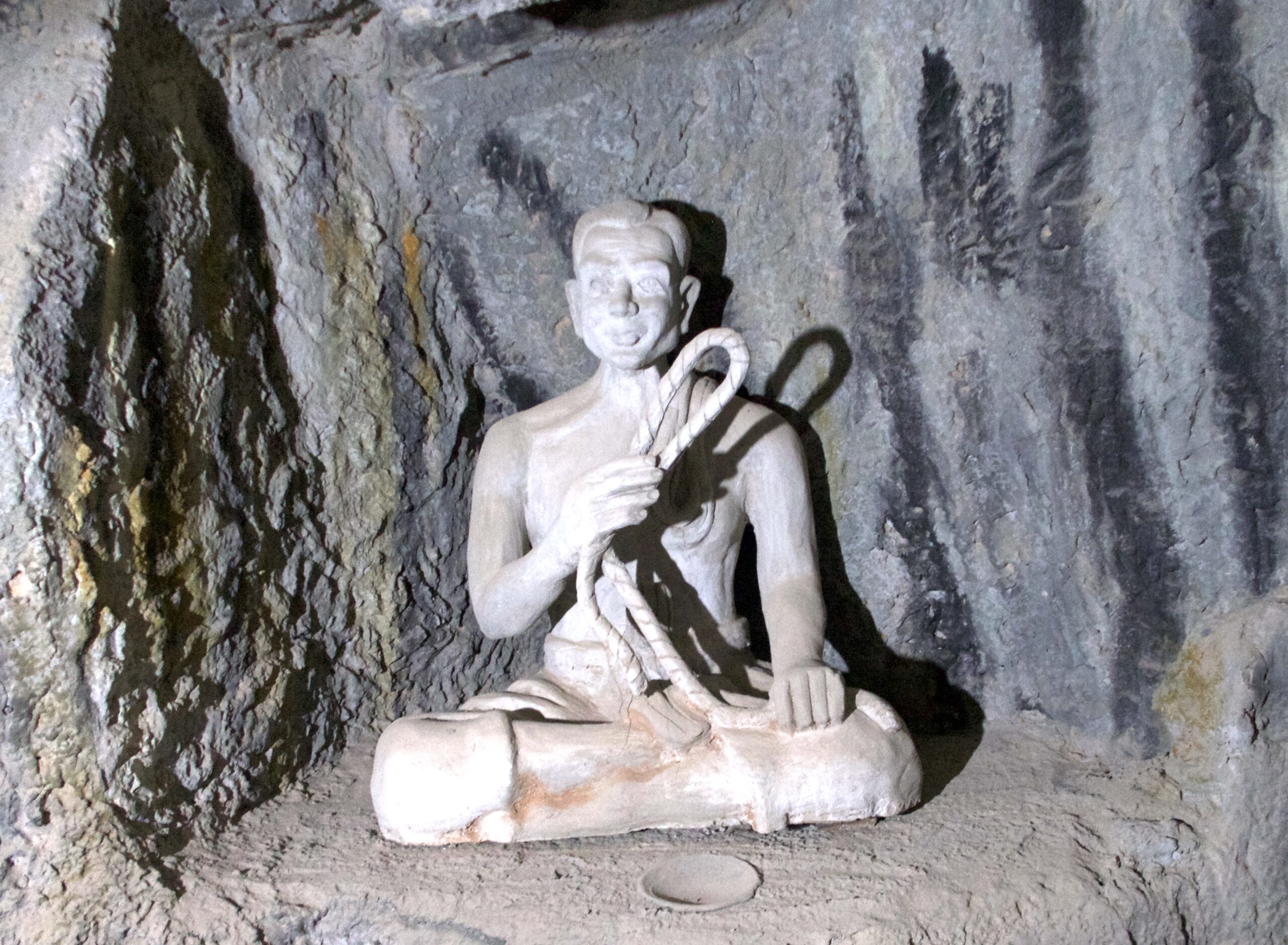
A saan phra phuum is a spirit house or spirit shrine. ‘Saan’ means ‘shrine’ or ‘court’, and ‘phra phuum’ means ‘guardian spirit’.
One suggestion for the origins of saan phra phuum (ศาลพระภูมิ) spirit shrines lies in the legend of King Thao Thotrat (ท้าวทศราช) and his wife Queen Sandharatthukdevi (พระนางสันทรทุกเทวี). Together they ruled a place called Pali, and had nine sons, each of whom had a different ability.
These nine sons were sent to protect different areas:
- Phra Chai Mongkhon (พระชัยมงคล) was sent to protect houses, shops, and trading halls.
- Phra Nakhon Ratcha (พระนครราช) was sent to protect the city gates, forts, and camps.
- Phra Thep Pen (พระเทเพล) was sent to protect elephant, horse, and cattle stables.
- Phra Chaisap (พระชัยศพณ์) was sent to protect the rice granaries and food stores.
- Phra Khanthap (พระคนธรรพ์) was sent to protect the bridal chamber.
- Phra Thammahora (พระธรรมโหรา) was sent to protect fields, rice paddies, forests, and mountains.
- Phra Thewathera (พระวัยทัต) was sent to protect monasteries, temples, shrines, and various religious sites.
- Phra Thammarat (พระธรรมมิคกะราช) was sent to protect parks and orchards.
- Phra Thatsathara (พระทาษธารา) was sent to protect streams, swamps, canals, ponds, and rivers.
However, the King became a tyrant, oppressing his people and demanding tribute from them. Eventually word of their struggles reached Lord Narayana (one of the forms of Lord Vishnu), who devised a plan to teach the King and his family a lesson. Lord Narayana disguised himself as a Brahmin and entered the city of Pali, where he met with the King and asked for a piece of land. When the King asked how much land he wanted, Narayana replied that he needed only three steps’ worth. After the king agreed, Lord Narayana transformed into his original form, which was taller than the palace itself. In three steps, he covered the entire territory of Pali. The King and his family were shocked and begged Lord Narayana for forgiveness. Lord Narayana told them to leave the city. Upon facing the hardship of life outside the city, they returned to beg Lord Narayana for forgiveness. He agreed to let them return to the city, but only as protectors, living in a pavillion with a single pillar planted on the ground and unable to leave.
The saan phra phuum today, therefore, typically resemble a temple/pavillion and stand on a single pillar, elevated to just above eye-level. Unlike the jao ti spirits who live on the ground and need stairs to access their shrines, saan phra phuum spirits can fly and, therefore, the shrines do not incorporate staircases or ladders into the design. The shrines for the jao ti spirits will also often sit on four legs, more closely ressembling a house. Saan phra phuum are for guardian spirits called ‘theparak’ เทพารักษ์ who protect the house and the area around it. They are built north or east facing, with the exact placement done in consultation with a ‘hmor saan’ or shrine doctor (หมอศาล). Hmor saan can be Brahmin priests, monks, feng shui masters, or fortune tellers. The hmor saan will dictate the appropriate time, date and direction for the shrine to be erected and will then perform a ceremony to invite the appropriate spirits inside and ask for good fortune.