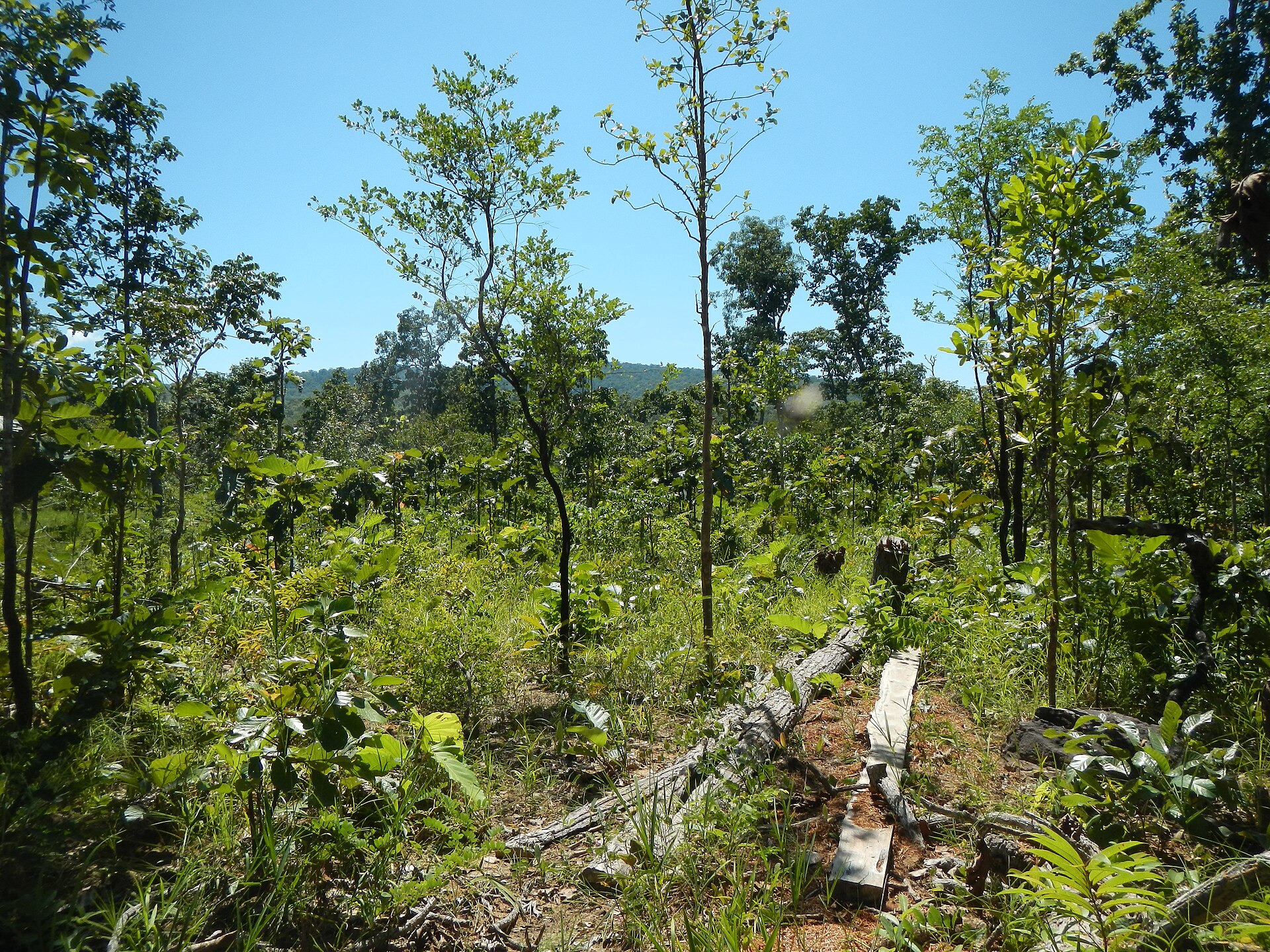
Our land has seven forest layers, like the seven tiers of a waterfall.
- Settlement.
- Farmland.
- Orchards with fruit trees–not for full-scale economy, but subsistence.
- Rotational farming land. Outsiders may see it as destructive, but every act involves ritual and permission.
- Forest for use (e.g., for building houses). Each layer has its boundaries.
- Conservation forest, preserved for caretaking.
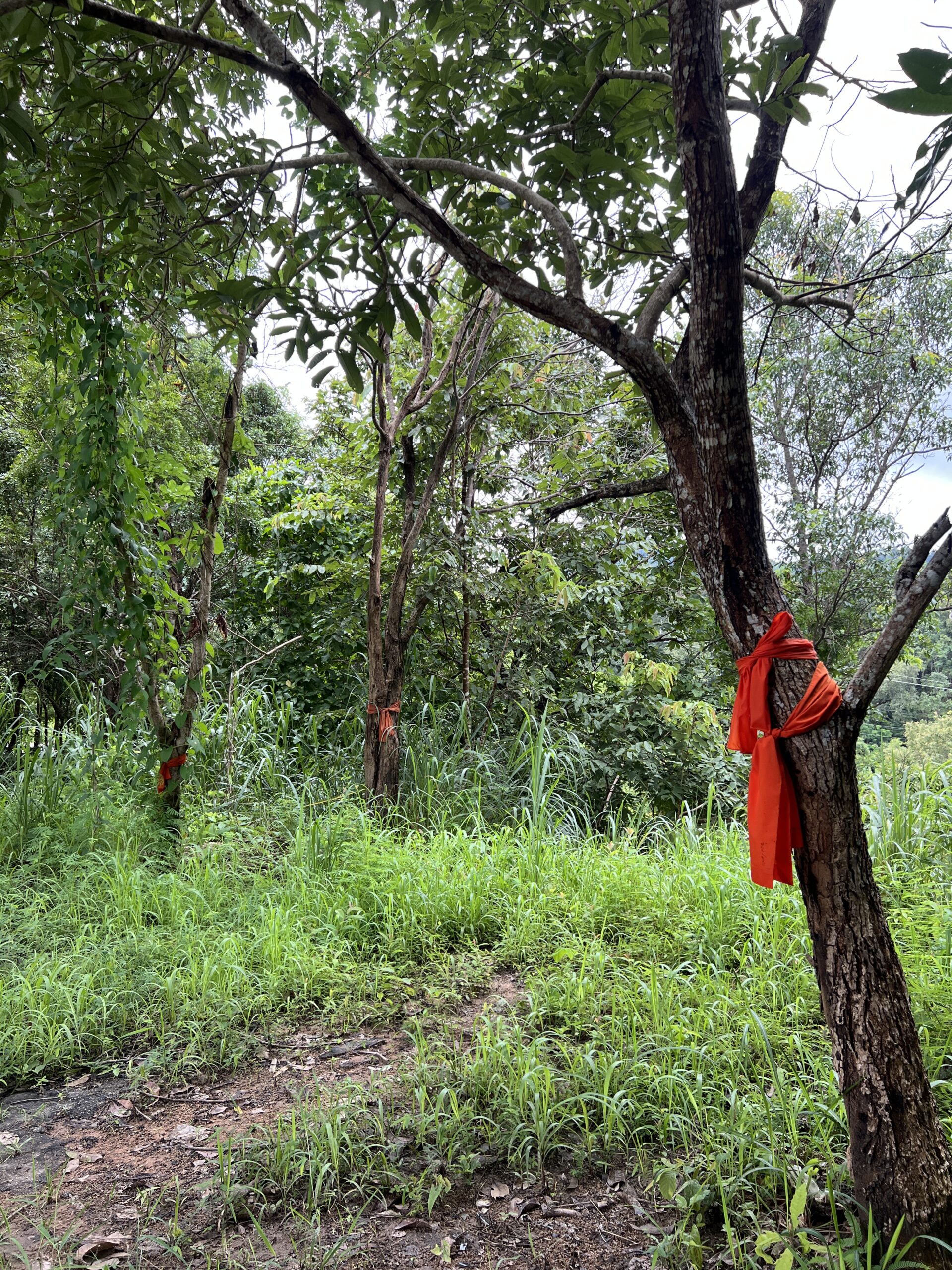
- Sacred forest, linked to De Paw Thoo (umbilical cord forest). And in Huai E Khang village we also have the women’s forest (Ke Ne Mue).
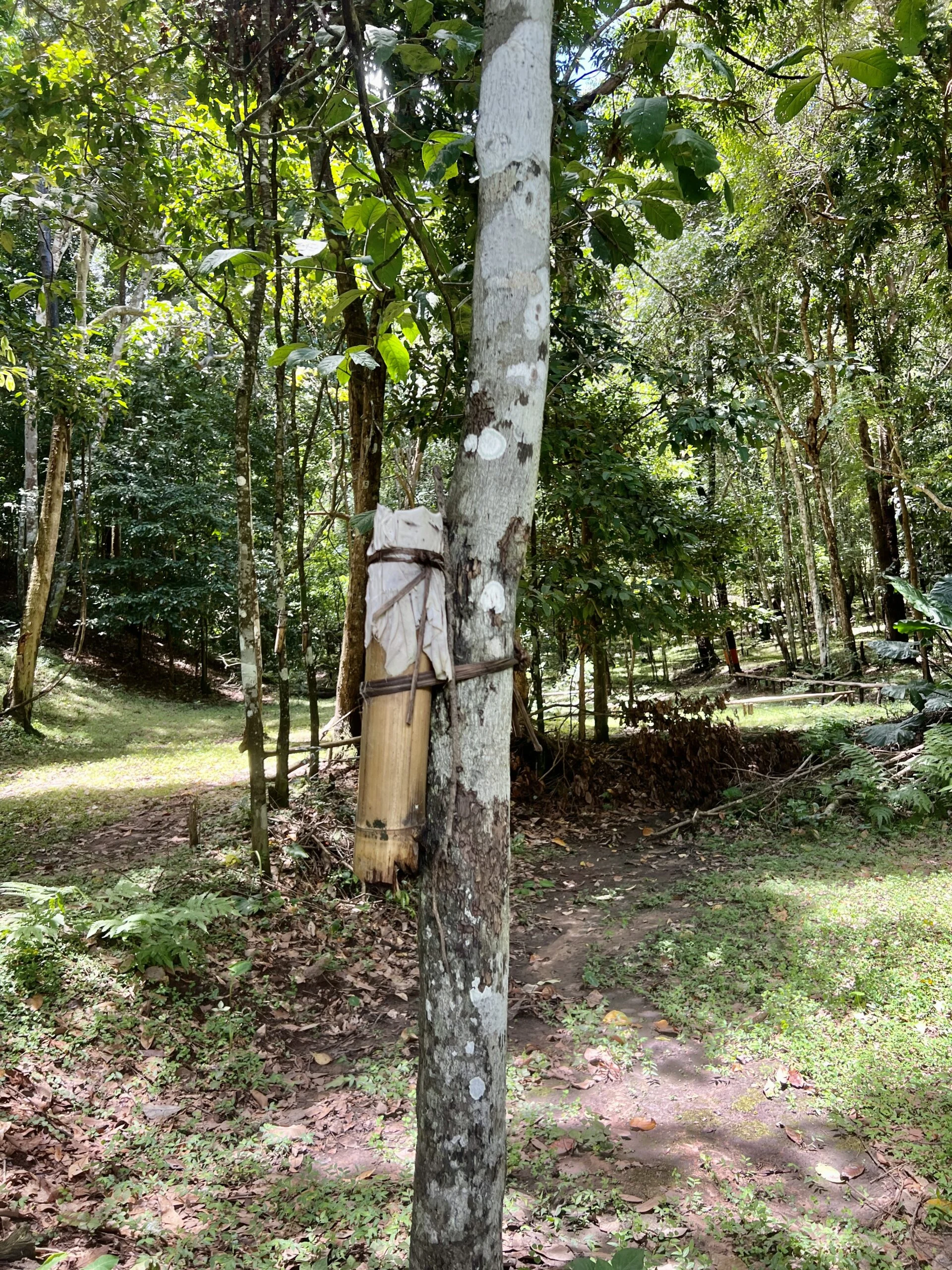
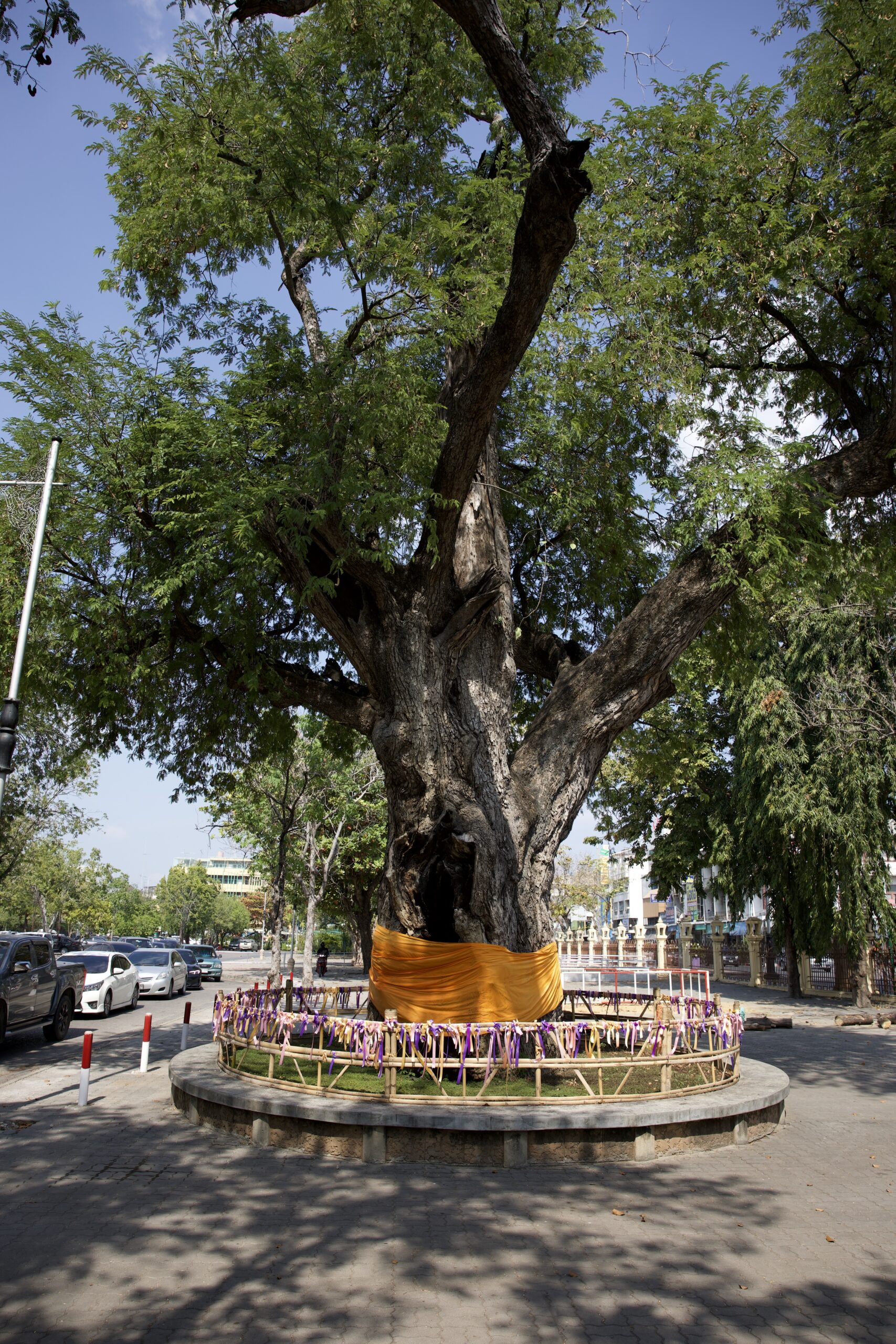
In the past, it wasn’t like nowadays. In the old days, here there were many De Paw Thoo, because the Pga K’Nyaw people didn’t have hospitals. When a child was born, the umbilical cord would be placed in a bamboo container and tied to a tree. That tree—the De Paw tree—could not be cut down, because it was connected to that person. The Pga K’Nyaw believe that when a person dies, their spirit must return to their De Paw tree. We have to respect that person and also the tree that holds their spirit.
Later, as development came—hospitals, schools, and so on—children born in the community could no longer always be registered as citizens if they were born at home. The laws became stricter, so most people had to give birth in hospitals. But when births moved to hospitals, the traditional ritual—the tying of the umbilical cord to the tree, which is both belief and sacred practice—was lost.
So we thought: what can we do to bring back to the children this body of knowledge passed down through belief and culture? That’s why we joined together to form the Karen Network for Culture and Environment. We asked: what can we do?
We sent letters to the hospitals, explaining that we have this tradition, that there is a ritual requiring the De Paw (umbilical cord) to be tied to a tree. We requested that if a Pga K’Nyaw family gives birth in a hospital, they should be allowed to take the baby’s umbilical cord home to perform the ritual. At first, outsiders didn’t understand. They thought we wanted to eat it or do something strange with the umbilical cords. But now the hospitals understand. When a birth happens, they ask whether the family will need the De Paw for the ritual. If so, the hospital staff will wrap it carefully so that it can be brought home and used in the ceremony.
This has been happening since about 2002 (B.E. 2545), so for more than twenty years now. And now, De Paw forests are coming back again. There is even a large area—about 100 rai (roughly 40 acres) dedicated to the De Paw forest in Huai E Khang village. When you walk into such a forest, near the community, it feels very good. In the past, these places were centers of life, places of spiritual connection. Entering them brings happiness.