Yehkuja, also known as the ‘Swing Festival’ is an Akha ceremony that happens every year in August. In the past, the timing followed the zodiac—linked to buffalo and cattle—but now it has been adjusted to fall on weekends, so that children can take part in games and festivities.
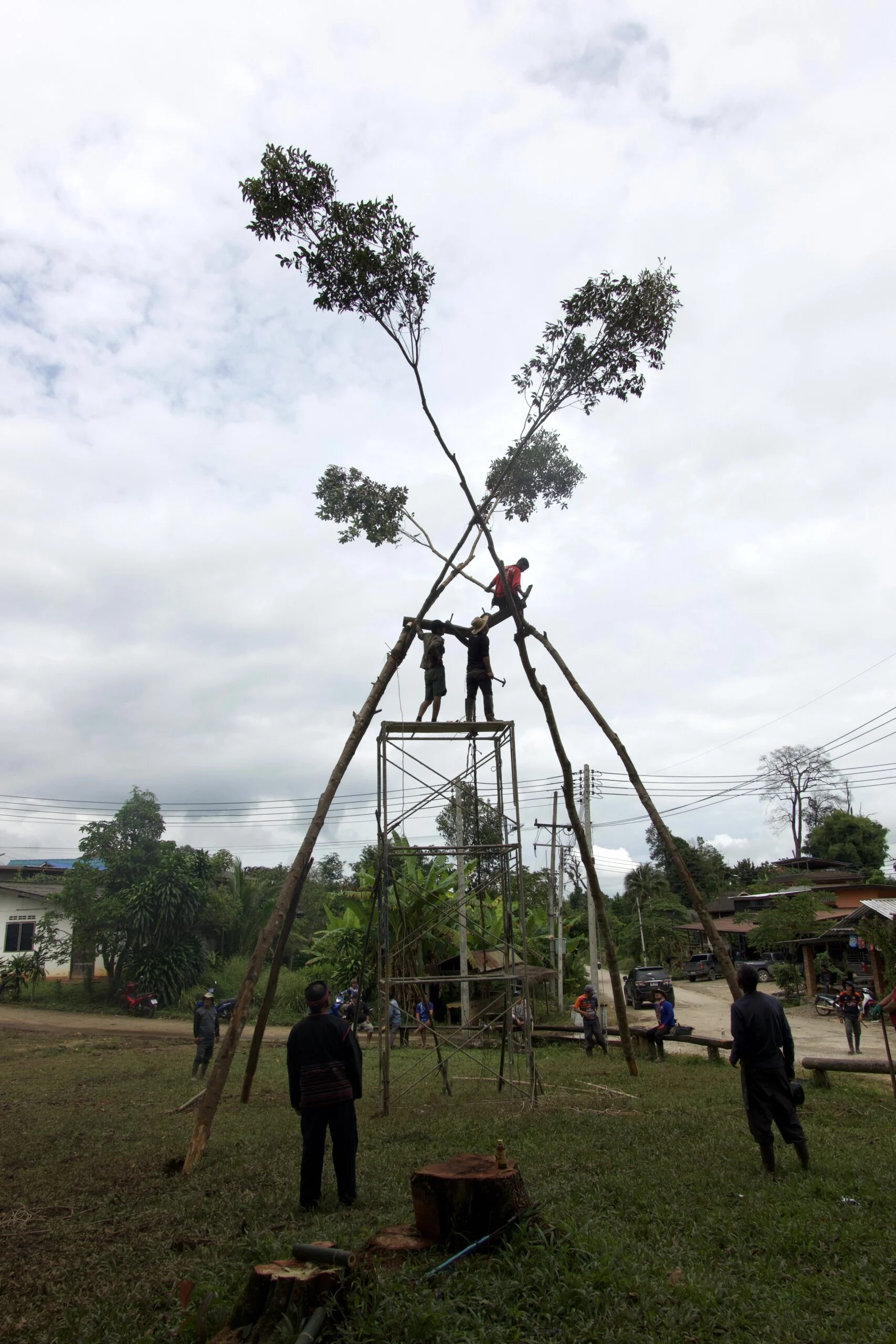
The building of the swing (or ‘lavqceq’ in Akha) uses four posts. These four posts can be made from wood taken from anywhere, but what is important is that when they are put together, they are joined as one. This represents unity—though the community is made up of many families and many lineages, everyone is of one heart.
This tradition especially concerns women. It comes from ancient times and is connected to women’s livelihoods. Whether planting rice, growing corn, or working in the fields, this festival offers women a chance to relax and enjoy themselves. It is an opportunity for women to celebrate, to express themselves by wearing traditional costumes, and to sing and make music.
When the swing is ready, only the village leader has the authority to give the order to swing first. This is done to bring good fortune to the village. Teachers, officials, and elders may be present, but the ritual must start with the spiritual leader. A rope is hung down from the wooden frame, and when the leader swings, it symbolizes unity—if the village has a thousand people, then all thousand share one heart together.
After the leader swings, objects are dropped down: some stones, grass, and thorns. Each of these has meaning. The stones represent respect for the heavens. The grass represents offerings to the earth. The thorns represent protection, like barbed wire in modern science, which blocks harmful things from entering the community.
The swing festival, then, is not only a ritual for the spirits but also a way of bringing people together—especially women. It gives women joy, strength, and wellbeing, ensuring prosperity for their lives and for the community.