ลงรักปิดทอง/Long Rak Pit Thong

Language: Thai
Also known as: lacquering and gilding

Description

ลงรักปิดทอง/Long Rak Pit Thong, or ‘lacquering and gilding’, is both a Thai conservation technique and an act of worship and a way of making merit within the Buddhist belief (Khumsaeng and Rinsri 2024). There is evidence of lacquering and gilding Buddha images and temple decoration dating back to the Ayutthaya period (1351–1767) (Thanakrit 2024).

Lacquering and gilding in Thai history served three main purposes: firstly, it was used in Buddhist art to decorate images of Buddha as well as other sacred objects. Lacquer and gilding were also applied to cover up visible joints/seams in the casting process of Buddha statues, where various pieces had to be joined together (Siam Renaissance, n.d.). Secondly, it was used to add a layer of protection to materials like wood. The sap used to make the lacquer comes from the Rak Luang tree (Latin name: Gluta usitata). The sap helps preserve the wood while also acting as a primer for the gold application (Sompong 2002). And finally, it served a ritual purpose as a way of making merit and marking something as sacred and worthy of veneration (ขุนปลัดเสฏฐวุฒิ พระแท้ เพื่อแผ่นดิน 2025).

Different things that can be gilded include: 

Buddha images, pagodas, spires, chedis/stupas, and decorative elements on columns, paintings or wooden carvings. 

There are four main styles of lacquering and gilding in Thailand (Petachburi Dee Jung 2020): 

  1. Solid gold-leafing work (งานลงรักปิดทองทึบ/ngan long rak pit thong thueb): Gold leaf is applied to objects made from fired clay, plaster, wood or metal to create a completely smooth and gilded surface, as can be seen with principal Buddha images in temples. 
  2. Vermilion-groove gold-leafing work (งานลงรักปิดทองล่องชาด/ngan long rak pit thong long chad): Gold leaf is applied to form decorative elements on furnishings or architectural elements, typically made of wood. In this technique, a groove is cut to outline the gilded pattern, with a vermilion pigment applied to it. 
  3. Mirror-inlay groove gold-leafing work (งานลงรักปิดทองร่องกระจก/long rak pit thong rong krachok): As with the solid gold-leaf work, lacquer and gold are applied to cover the surface; however, thin sheets of coloured glass are cut into small squares and placed in between the patterns. 
  4. Stencil-pattern gold-leafing work (งานลงรักปิดทองลายฉลุ/long rak pit thong lai chalu): Lacquer and gold leaf are applied to form different patterns with the aid of a stencil. This is often seen in decorative architectural elements, for example, on rafters or the walls of ordination halls.

When gilding for conservation—to repair previously gilded surfaces—the technique involves a traditional method of applying dry gold leaf, using real gold. The surface is cleaned, and any cracks are repaired before the gold is applied, with a thin layer of sealant added on top afterwards to prevent further peeling (The Rich Construction, n.d.).

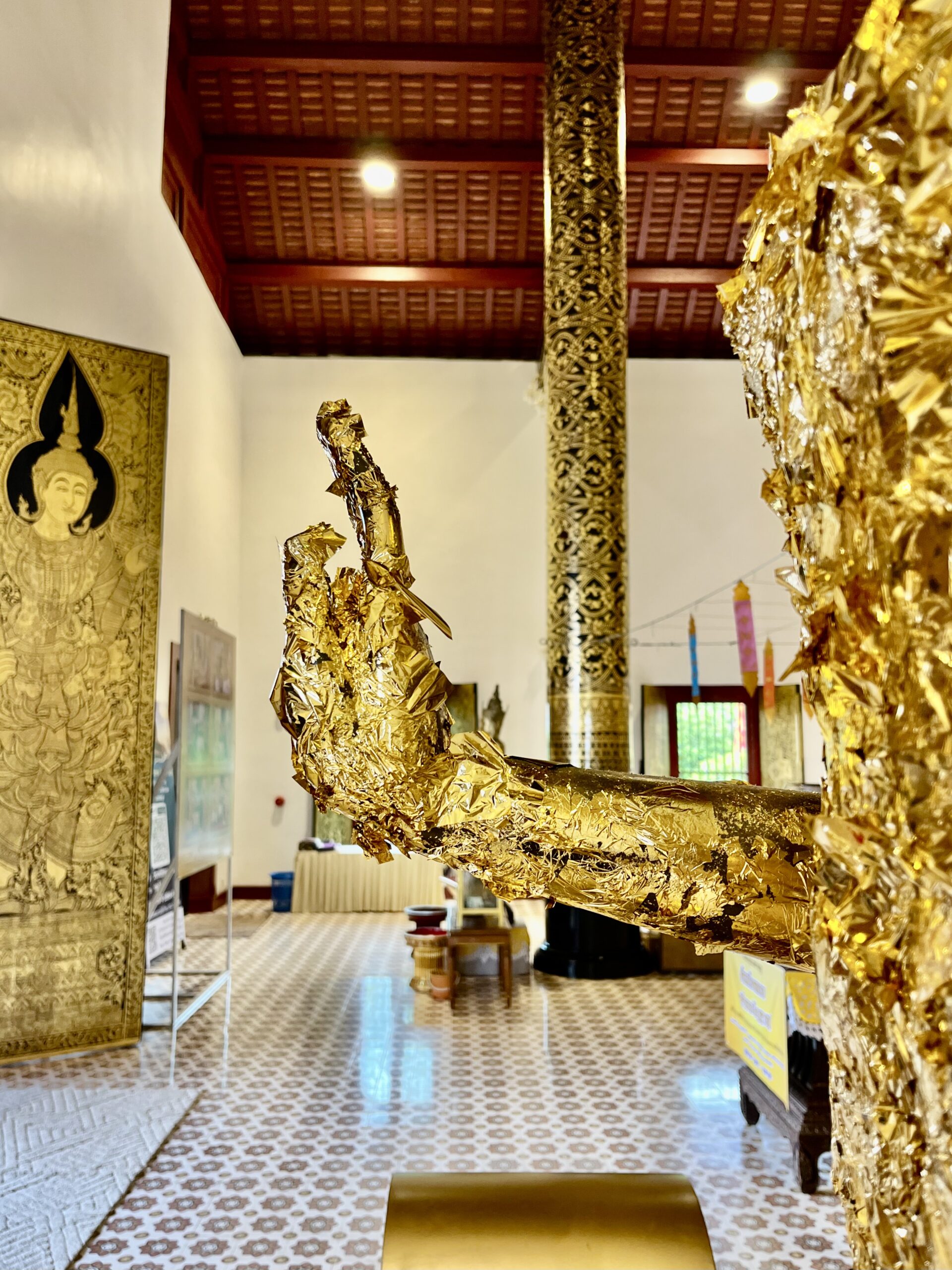
Many temples also offer patrons an opportunity to gild statues as a way of merit-making. In these instances, lacquer is usually not applied beforehand. People believe that applying gold leaf to different parts of the Buddha statue will lead to different fortunes. For example, applying it to the abdomen will bring wealth and prosperity (Kapook, n.d.).

Read more

 Khumsaeng W., & Rinsri K. (2024). The use of lacquer in the conservation of Lanna art. Journal of Humanities and Social Sciences, Chiang Mai Rajabhat University , 6 (2), 63–86. Retrieved from https://so01.tci-thaijo.org/index.php/husocjr/article/view/272453.

Thanakrit Kongweha (ธนกฤต ก้องเวหา). 2024. “ลงรักปิดทอง” สุดยอดศิลปกรรมอันวิจิตรของไทย ทำอย่างไร? Silpa Magazine.
https://www.silpa-mag.com/culture/article_103662.

Siam Renaissance. n.d. https://siam-renaissance.com/contents/civic/ayudhyaapictorialodyssey1/.

Somphong Saengramroungroj. 2002. Lai Rod Nam: Thai gold-leaf lacquerware technique. In Lacquerware in Asia, today and yesterday, p. 143-148. https://unesdoc.unesco.org/ark:/48223/pf0000125954.

ขุนปลัดเสฏฐวุฒิ พระแท้ เพื่อแผ่นดิน. 2025. Facebook post.

Petchaburi Dee Jung. 2020. https://phetchaburideejung.com/%E0%B8%A5%E0%B8%87%E0%B8%A3%E0%B8%B1%E0%B8%81%E0%B8%9B%E0%B8%B4%E0%B8%94%E0%B8%97%E0%B8%AD%E0%B8%87/.

Kapook. n.d. วิธีปิดทองพระ ให้ติดแน่นไม่หลุดล่อน เสริมอานิสงส์มงคล. https://home.kapook.com/view279666.html.
Date of entry: August 14, 2026
The gilded hand of a Buddha for merit making at a temple in Chiang Mai, Thailand. Photograph by Alisa Santikarn.
The name you would like to be credited with for your contribution.
The word you wish to contribute
Your email for contact and updates regarding your submission.
The language you are contributing the word in
Maximum file size: 3 MB
Maximum file size: 5 MB
By proceeding, I acknowledge and agree to GloCo's Legal notice and Terms of use
and the Guidelines for Contributors *

Related Words

ម្ចាស់ទឹកម្ចាស់ដី / Mchas Teuk, Mchas Dei
Khmer
mcheasatukamcheasadei

គេ​តែងតែ​គោរព​ពពួក​អស់​នឹង ព្រោះ​ពពួក​អស់​នឹង​គេ​តាម​បីបាច់​ថែរក្សា​យើង ហើយ​ខ្លះ​ទៀត ពេល​ណា​ដែល​ម្ចាស់ផ្ទះ​មាន​គ្រោះ មាន​ភ័យ មាន​អន្តរាយ​អ្វីមួយ​កើត​ម...

Shrine PP
ព្រះភូម / Preah Phum
Khmer

អ​ញ្ចឹ​ង​ពពួក​ភូមិ​ទេវតា តាម​ការពារ និង​ថែរក្សា​ម្ចាស់ផ្ទះ​នឹង ទាល់តែ​ម្ចាស់ផ្ទះ​នឹង​ជា​អ្នកមាន​ទាន មាន​សីល មាន​សេចក្តី​ល្អ ប្រព្រឹត្ត​សេចក្តី​ល្អ​ដែរ...

Spirit House
ម្រេញគង្វាល / Mrenh Kongveal
Khmer
m'renh kung'viel

ម្រេញគង្វាល គឺជាភពអមនុស្ស ដែលជាកញ្ចក់ឆ្លុះបញ្ចាំងពីភពរបស់យើង ដែលភាគច្រើនយើងតែងតែហៅក្មេងឃ្វាលគោ ឃ្វាល ក្របី។ ដោយសាររឿងហ្នឹងវាទាក់ទងបាយសំណុំ ទឹកបំពង់ ដែ...

Shrine
រានទេវតា / Rean Devata
Khmer
rien tevada

ព្រះភូមទេវតា ឬរានទេវតានេះ គេដាក់នឹង គឺភាគច្រើនគេដាក់សម្រាប់ឱ្យពពួកភូមទេវតារស់នៅ មានដូចជាអរុក្ខទេវតា ភូមិទេវតាដែលយើងហៅថាម្រេញគង្វាល ។ ហើយការដាក់ទាំងអស់...

Cambodia_2014_-_panoramio_(12)
លោកតាស្នាប់ / Lok Ta Snap
Khmer

អ្នកដែលមិនជឿលើព្រះបិតា លោកតាស្នាប់ បានជួបប្រទះអភ័យហេតុផ្សេងៗគ្នា៖ ម៉ូតូរបស់ពួកគេខូចនៅពេលបើកចូលព្រៃ ខណៈដែលមនុស្សខ្លះវិលត្រឡប់មកវិញបានដួលចេញពីម៉ូតូ បាក់...

A large tree with green leaves and thick strip of orange cloth wrapped around its base. The tree is enclosed with a round metal fence. Outside of the fence is pavement, with a row of parked cars down the left side.
บวชต้นไม้/buat tonmai
Thai
Bwch t̂nmị̂

บวชต้นไม้/buat ton mai, also known as 'tree ordination', is a method of conserving trees in Thailand rooted in Buddhism. The practice emerged as a res...

A building with large windows and a triangular roof. The sign reads: Ministry of Culture. There is a Thai flag with red, white, blue, white and red horizontal stripes on a flag pole in front of the building.
วัฒนธรรม/Wattanatham
Thai
Wạtʹhnṭhrrm

วัฒนธรรม/Wattanatham (meaning ‘culture’) is one of over one thousand terms coined by Prince Wan Waithayakon. In a 1975 interview, Prince Wan, who atte...

A sparse forest with thin trees. The trees are each wrapped in a strip of bright red/orange cloth.
ธรรมชาติ/thammachat
Thai
Ṭhrrmchāt

ธรรมชาติ/Thammachat, meaning ‘nature’ in Thai, was a term coined as part of a larger language policy spanning the late-19th and 20th centuries, involv...

Statue of a man sitting cross-legged, carved in white, holding up a lasso in his right hand.
ปะกำ/Pakam
Kui (Thailand)
pĕē pakam

ปะกำ (ภะษากูย) หรือ ผีปะกำ (ภาษาไทย) เป็นวัฒนธรรมที่พบได้เฉพาะในกลุ่มกูยอาจีงหรือกูยเลี้ยงช้างเท่านั้น เป็นวิญญาณของบรรพบุรุษกูยเลี้ยงช้างที่เป็นหมอหร...

There is a plant in the centre with thin branches with small, oval, green leaves. In the background is a lush green field and a blue sky with white clouds.
Ta'o
Manggarai (Indonesia)

Traditional Manggarai weaving designs used natural dyes as the background, including indigo, known as 'tao' in the Manggarai language or 'nila', meani...

error: