Di’bö

Pronunciation: [diʔˈbø]
Language: Bribri/Chibchan family
Contributors: Sabino Díaz, Anastasia Segura adultos mayores de la comunidad y Alí García Segura.
Also known as: Mollera, fontanella

Description

Di’bö, e’ dör se’ kṹne ẽ̀rpa e’ wö́kila shõ̀õ tóttòla.

Read more

Español: Mollera
English: Fontanelle

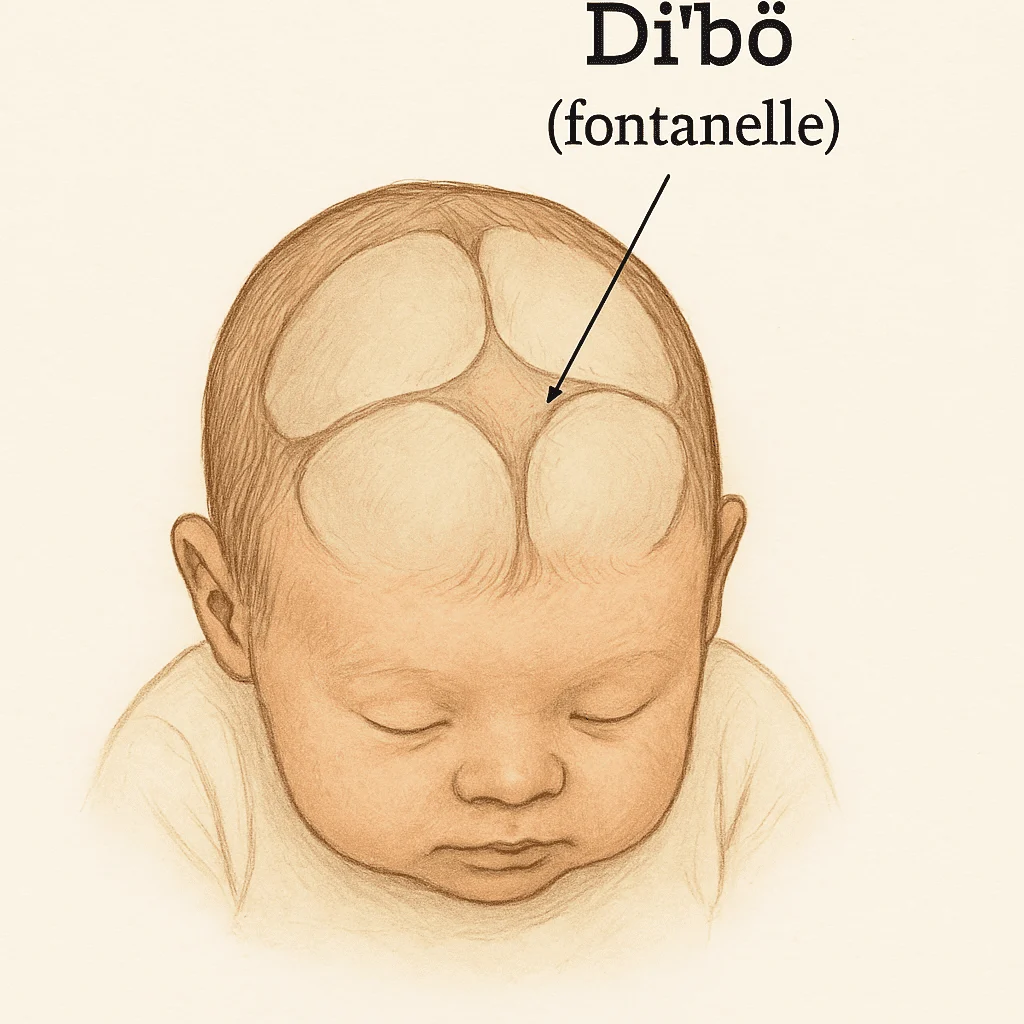
The soft spot on a newborn’s head.

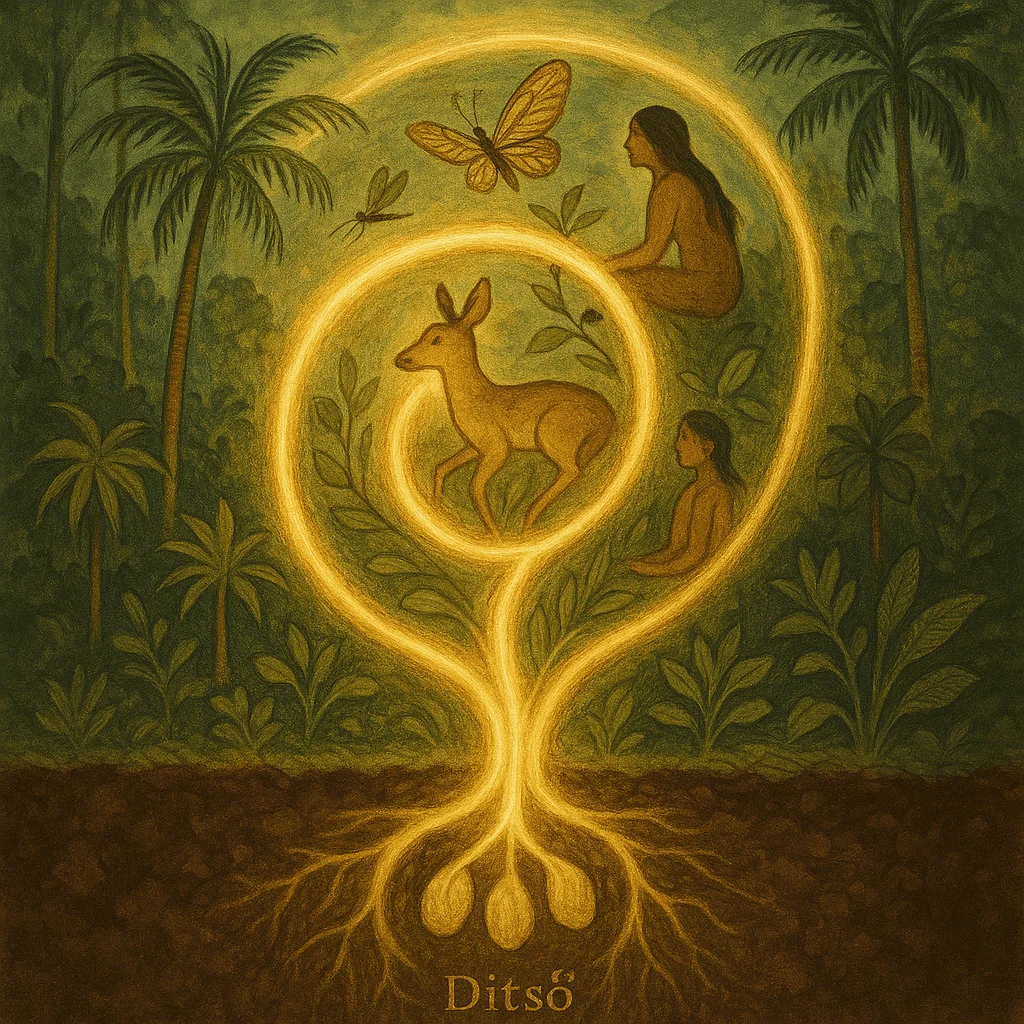
In Bribri culture, the concept of Di’bö (fontanelle) not only refers to the soft part of a newborn’s head, where the rhythm of their breathing can be felt, but also holds deep spiritual significance.
It symbolizes the closing of one era and the beginning of another, and is considered a channel through which ancestral knowledge is transmitted.
This area of the body is linked to wisdom and the connection with the spiritual world for sharing knowledge.

 

MedlinePlus. (n.d.). Fontanelas hundidas. MedlinePlus Enciclopedia Médica. U.S. National Library of Medicine. Retrieved July 25, 2025, from https://medlineplus.gov/spanish/ency/article/003309.htm (Accessed July 25, 2025)

The information in this entry was provided through direct consultation with a Bribri speaker. No recordings were made; the content was documented through notes taken during the conversation (Sabino Díaz, Anastasia Segura adultos mayores de la comunidad y Alí García Segura).

Date of entry: July 28, 2025
Illustration of the fontanelle (Di’bö) on a newborn’s head, highlighting the soft area before the skull bones fuse. Image by Alí García Segura.
The name you would like to be credited with for your contribution.
The word you wish to contribute
Your email for contact and updates regarding your submission.
The language you are contributing the word in
Maximum file size: 3 MB
Maximum file size: 5 MB
By proceeding, I acknowledge and agree to GloCo's Legal notice and Terms of use
and the Guidelines for Contributors *

Related Words

Tsuru
Tsuru’
Bribri/Chibchan family (Costa Rica)
[tsuˈɾu˥ʔ]

Sa’ bribripa ikuá tchéke, iwö̀ wa kanèwẽ se’ kuóie, ena alàkölpa tsṍwã. Ie’ bitsétã.  

Planta de manú
Tsulë’
Bribri/Chibchan family (Costa Rica)
[tsuˈlɘʔ]

Tsulë’, ie’ dilitã, e’kũẽ́k se’ wã itso’ ù tsiní yuwók ena pö́ ie.

Ste
Stë̀
Bribri/Chibchan family
[stɛ̀]

Stë̀, E’ tso’ Awápa wã se’ tö́tchò

tsirik
Tsirík
Bribri/Chibchan family
[tsiˈɾík]

Tsirík, E’ tso’ Awápa wã se’ wö́ikòk

Sio
Sĩã’/ Sĩõ’
Bribri/Chibchan family
[sĩãʔ] / [sĩõʔ]

E’ dör Awá yàblo se’ kanèwṍk.

Siakol
Siáköl
Bribri/Chibchan family
[siá.kœl]

E’ tso’ bribripa wã se’ nú blàwṍk.

Iro
Irö̀
Bribri/Chibchan family
[iɾɔ̀]

Bribripa ã ie’ suwẽ́ tã́ĩë  

Er
ẽ́r
Bribri/Chibchan family
[ẽ́ r]

E’wa se’ kṍ bikéitse ena se’ añi dlë̀r.

Ditso
Ditsö̀
Bribri/Chibchan family
[diˈtsɔ̀]

E’ bléke se’dör wa kua’tché ena itsíkène bulé böiki tã.

error: