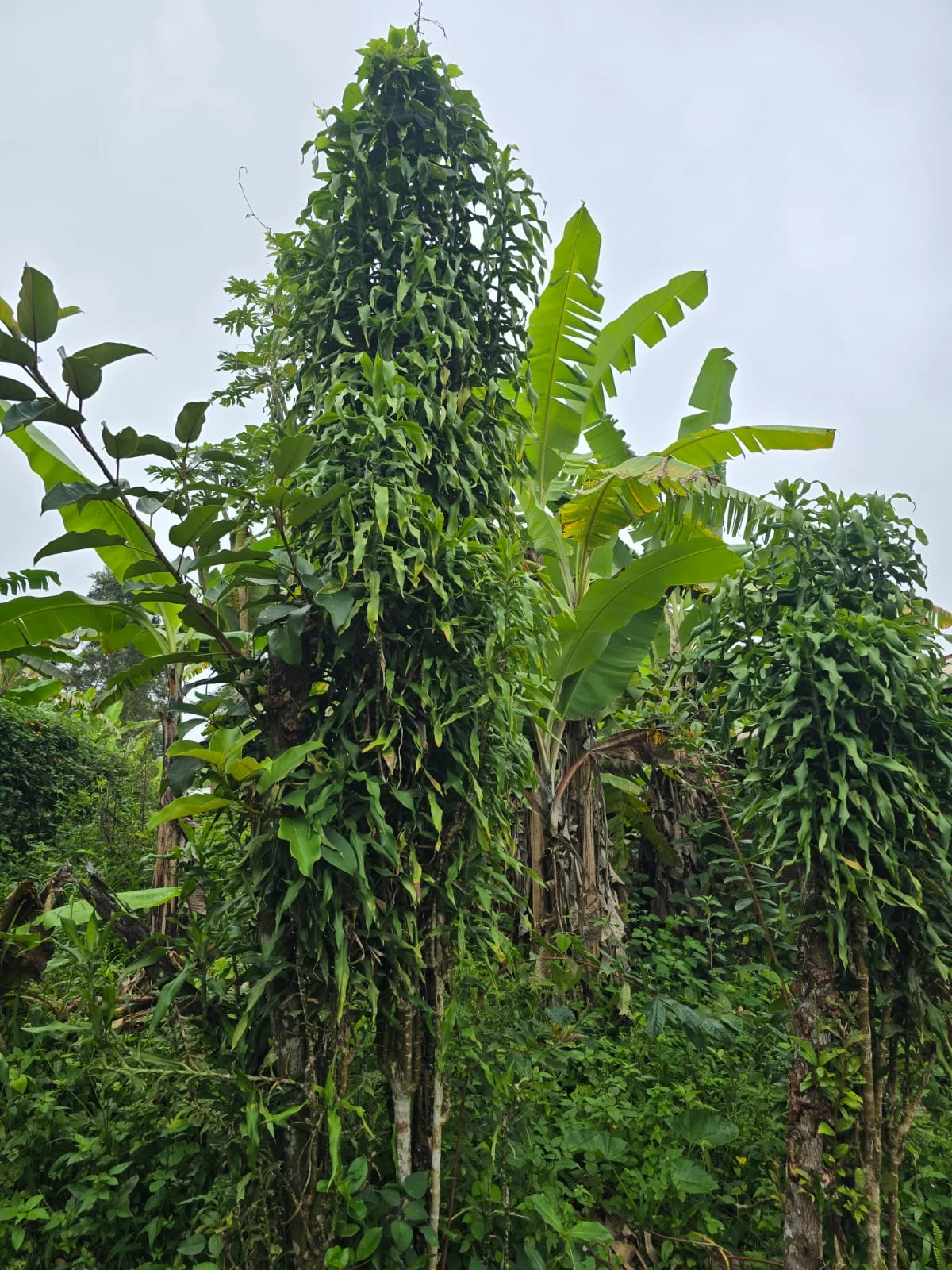
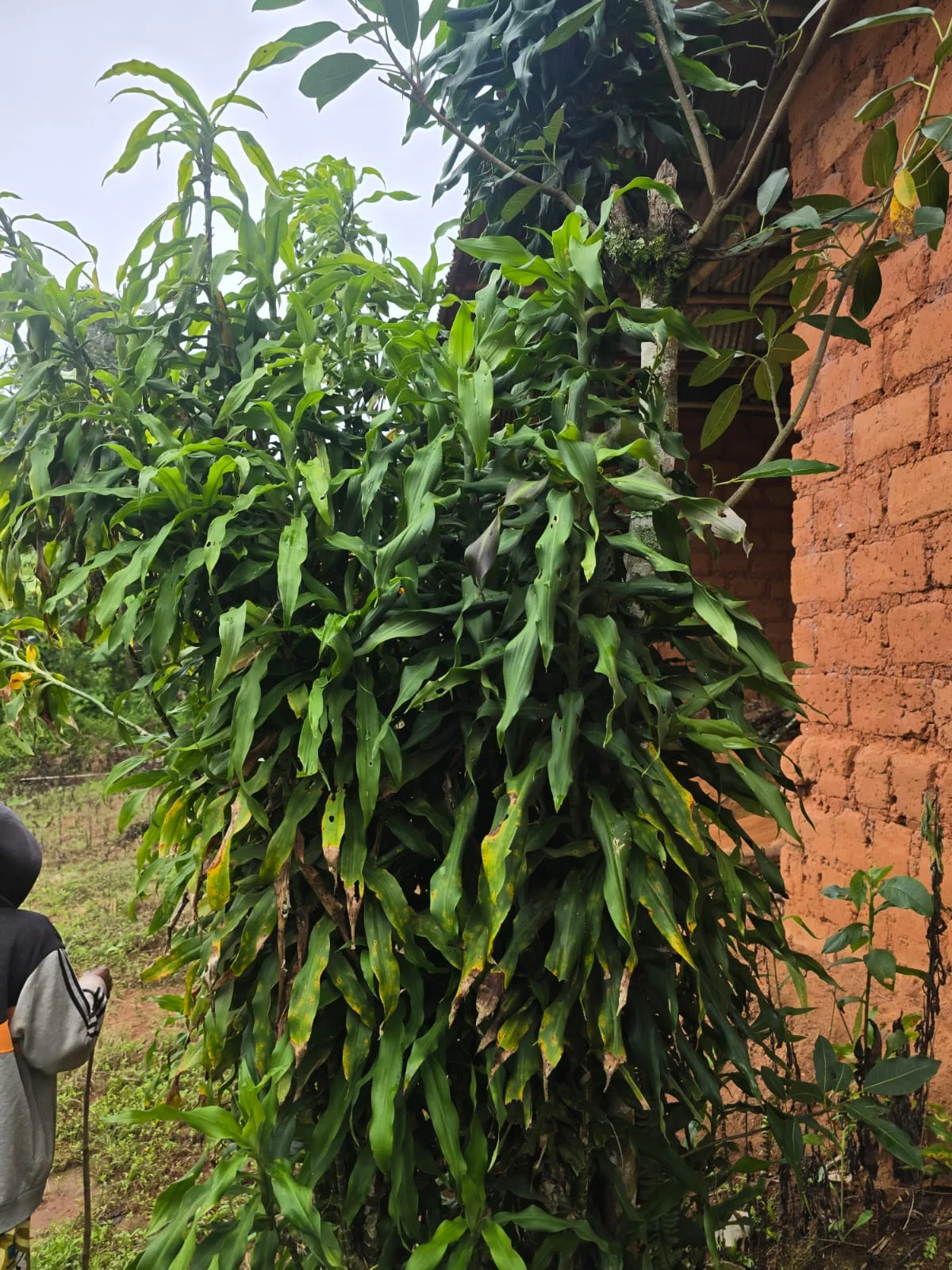
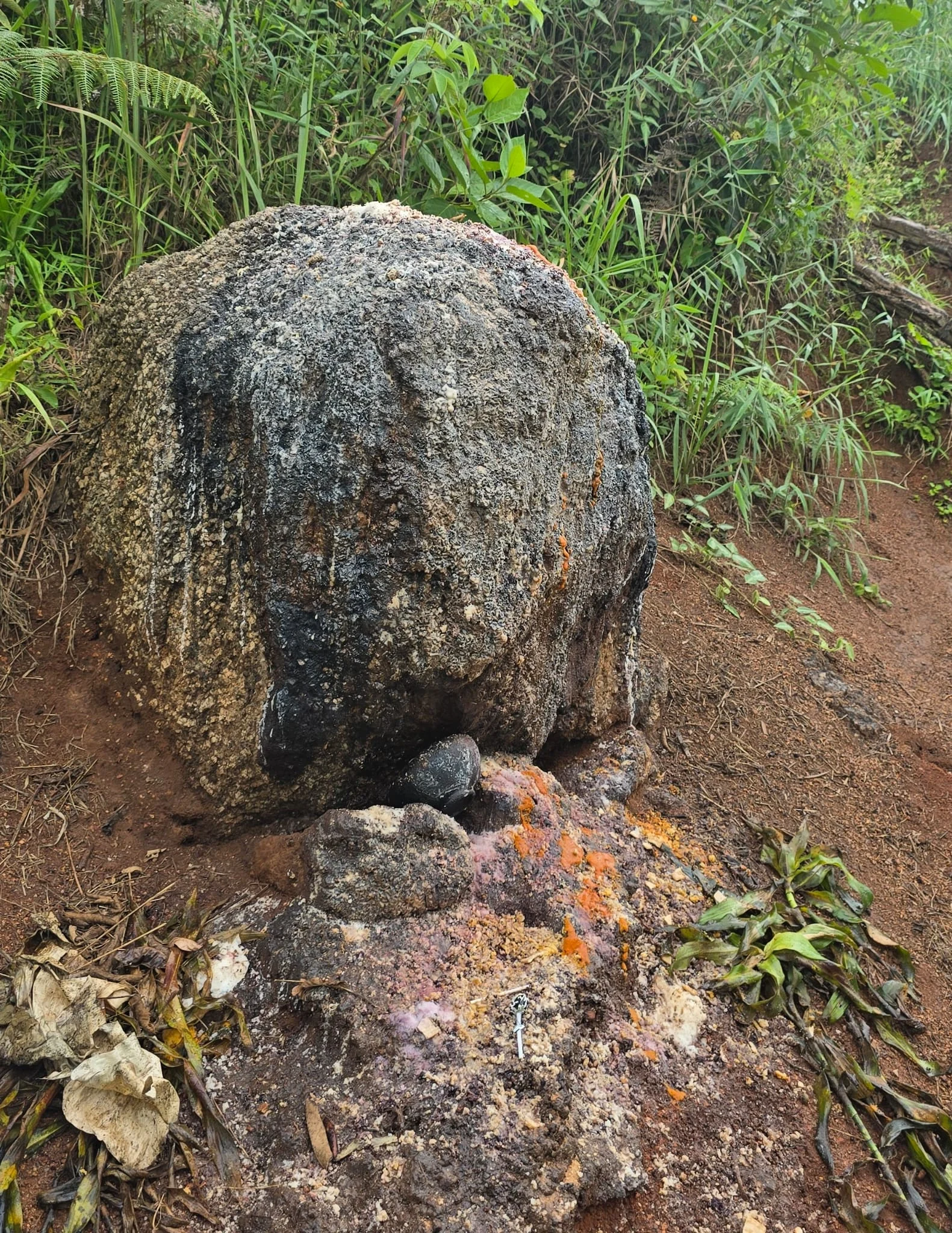
The peace tree is a shrub that can grow up to five meters high. In Bamiléké chiefdoms, it is one of the constituent plants of the bocage*, specific to the organisation of agrarian space. It is used to demarcate borders and land boundaries. This function gives it the name “peace tree”. Its use in bocage* and boundary marking is also justified by its insect-repellent properties. It keeps away and repels pests. (Tsobou et al. 2015, 35) The use of nkeŋ in religious and ritual practices as a symbol of peace derives from its ability to protect fields from gastropods and insects takes precedence and has led to its religious and political symbolization as a protector of land, borders and people against evil spirits. This sacred plant is used in all religious and ritual services. Its stems are hung on door lintels or brandished during rituals as a symbol of peace and proof of the presence of beneficent, protective spirits.
L’arbre de paix est un arbuste qui peut atteindre cinq mètres de hauteur. Dans les chefferies Bamiléké, il fait partie des plantes constitutives du bocage*, spécifiques à la gestion de l’espace agraire. Il sert à la démarcation des frontières et des limites des terres. Cette fonction lui donne son nom d’arbre de paix. Son usage dans le bocage* et le bornage est aussi justifié par ses propriétés répulsives contre les insectes. Il éloigne les mollusques et repousse les nuisibles (Tsobou et al. 2015, p. 35). L’usage du nkeŋ dans les pratiques religieuses et rituelles comme symbole de paix dérive de ses vertus. Son aptitude à protéger les champs des gastéropodes et des insectes prime et a conduit à sa symbolisation religieuse et politique comme protecteur des terres, des frontières et des hommes contre les esprits maléfiques. Cette plante sacrée intervient dans tous les services religieux et rituels. Ses tiges sont accrochées aux linteaux des portes ou brandies pendant les rituels comme symbole de paix et comme preuve de la présence d’esprits bienfaisants et protecteurs.

The word means hat. There are many different types, from royal headdresses to simple hats, Nkam (ŋkǎm)' hats and headdresses worn by the members of t...
It refers to the offering made to deities during Bamiléké religious ceremonies. The act of making an offering is called ŋgwā' pↄↄ' (throwing the mushr...
Une poutre en bois sur laquelle sont gravées des informations, lesquelles renseignent généralement sur l’importance du lieu, les valeurs ainsi que la ...
It refers to the chiefdom, which is the most important place in the village. The chiefdom has a dual definition. Firstly, it refers to the territorial...
A notable is a person occupying a high rank in a chiefdom (See No’h (nɔ̀’)). A notable acquires his title and rank either by succession or by recognit...
The grouping of people of a certain age category. The gaps between two age groups vary from chiefdom to chiefdom. The gap considered for a generation ...
Literally the man of the tarantula, he is a doctor and a diviner. He uses tarantulas or cowrie shells for divination. He also uses plants and sacred w...
The man of leaves or medicine is the community's chief doctor. He has a thorough knowledge of medicinal plants, but also of anatomy (Notue/Perrois 198...
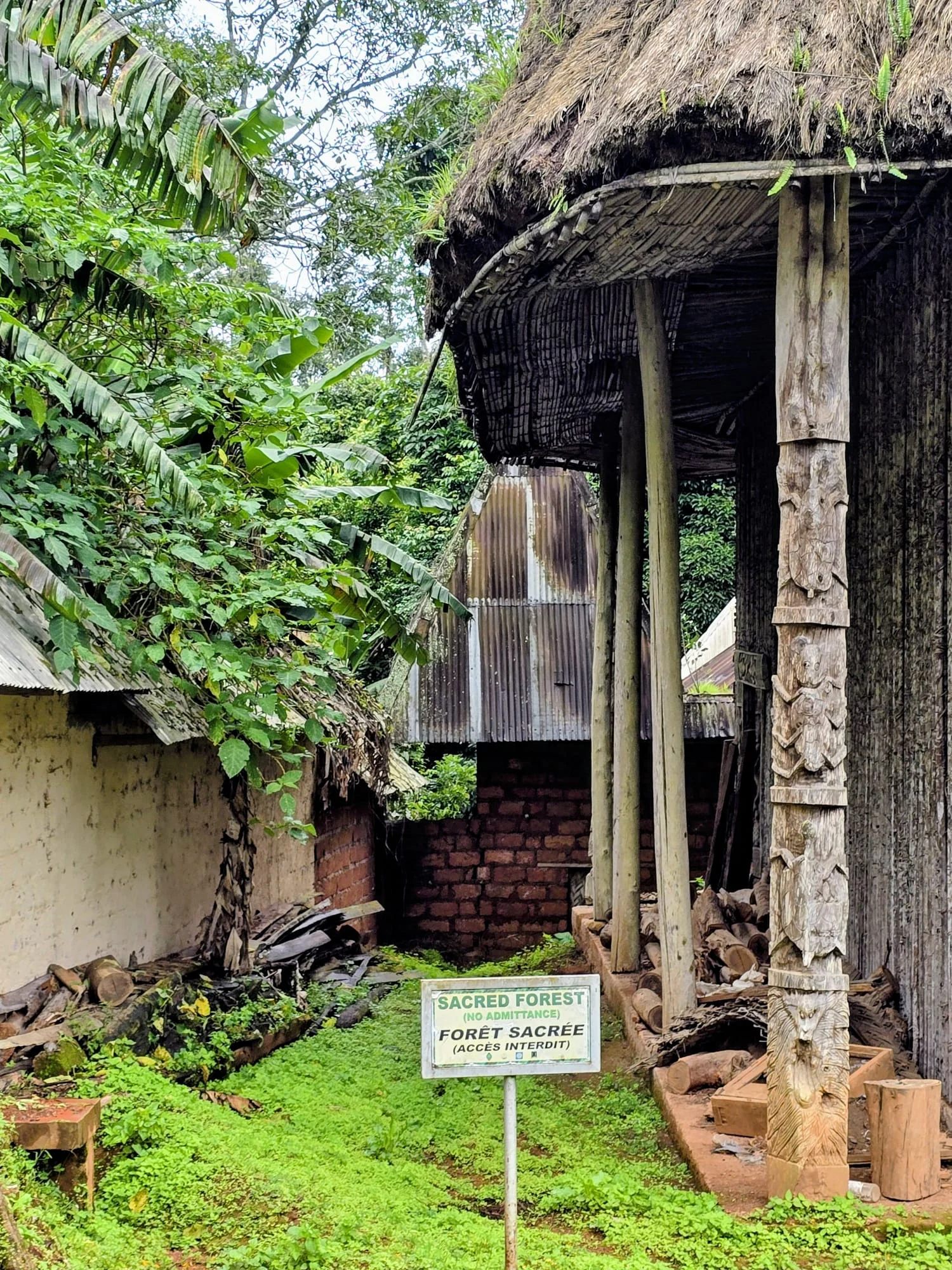
This sacred forest is located at the entrance or rear of the chiefdoms (see No’h (nɔ̀’)). It is a realm that represents the Grassfields in their origi...
This website uses strictly necessary cookies to function. We would also like to use functional and analytical cookies to improve your experience. You can choose to accept or decline.