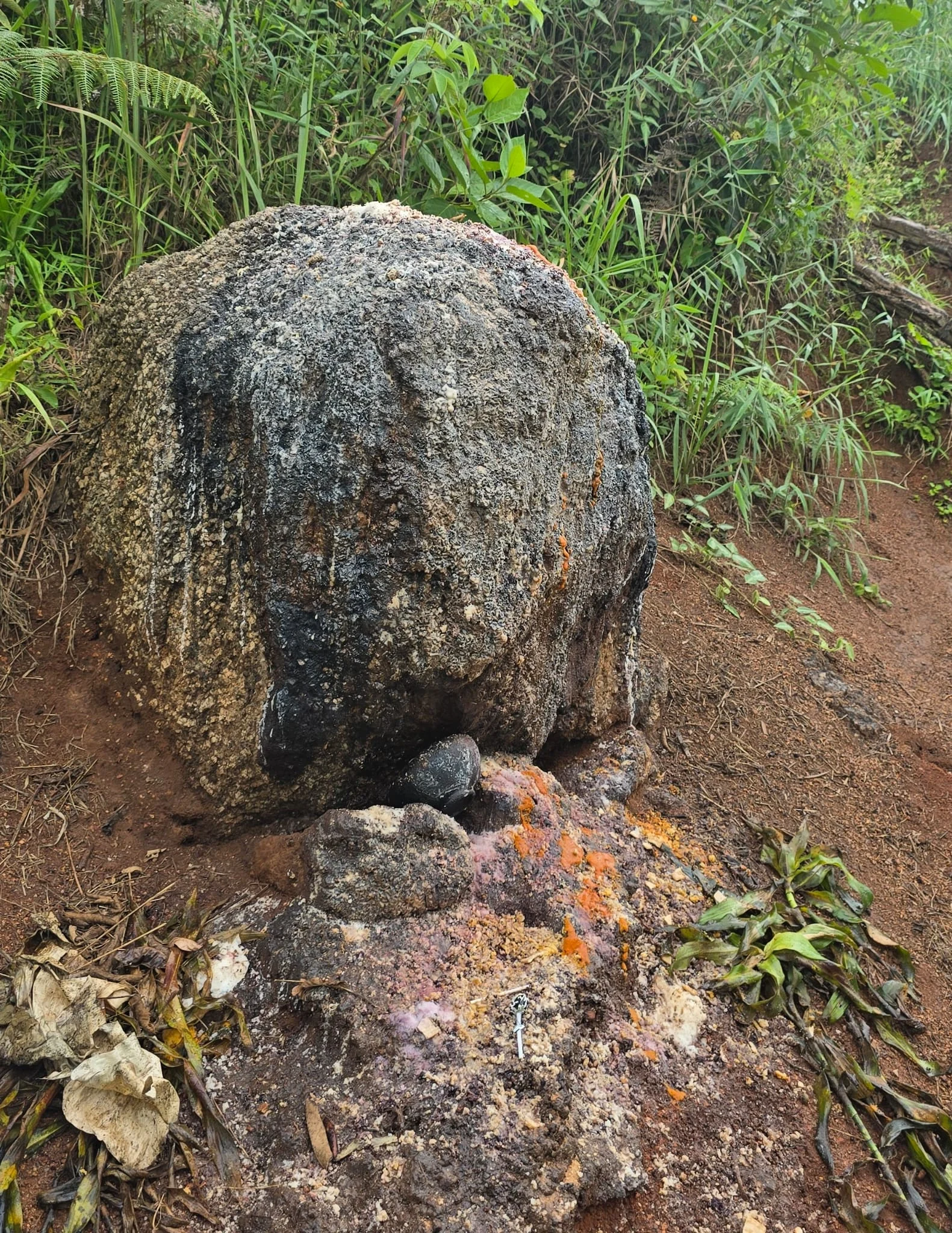
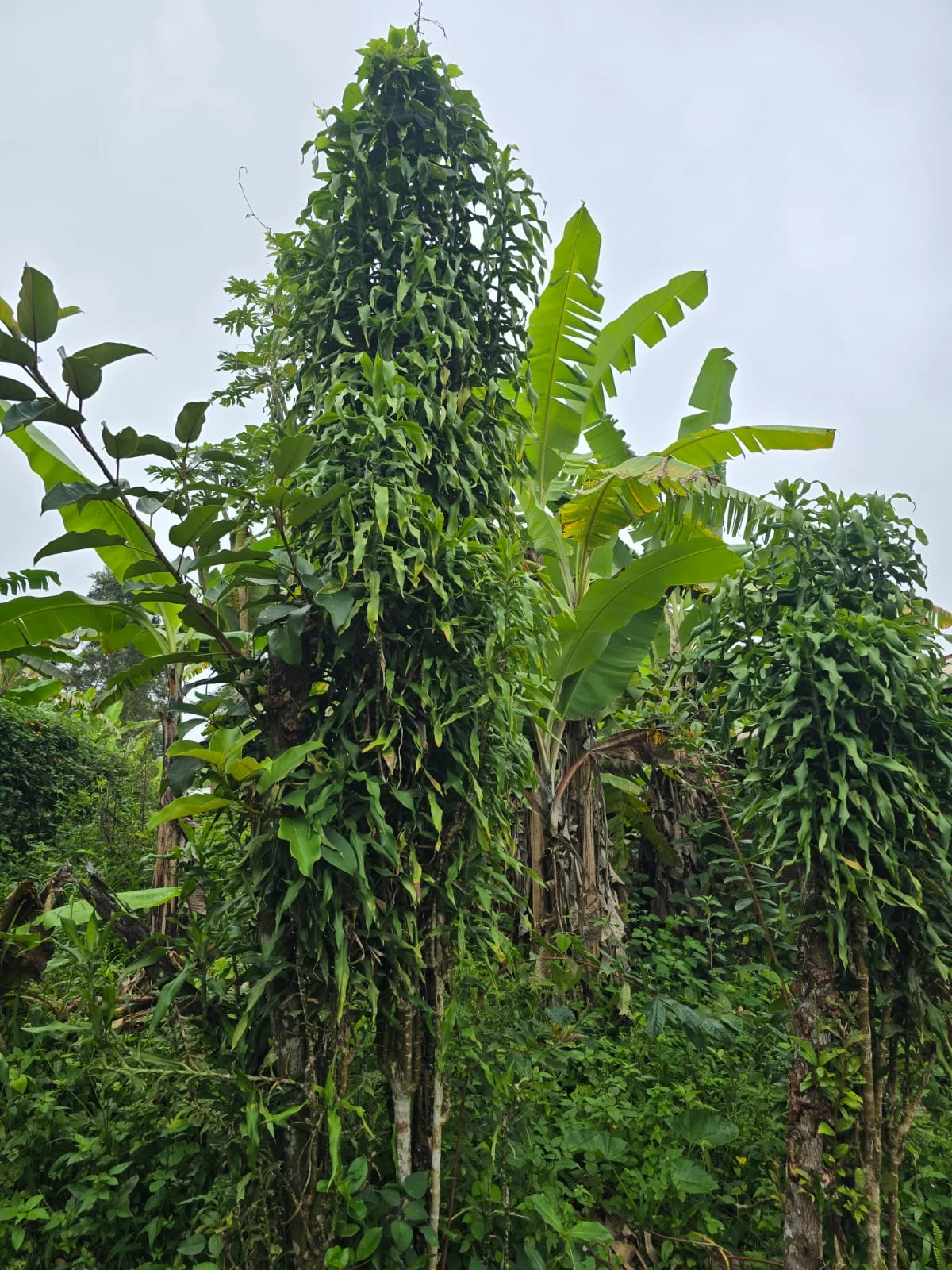
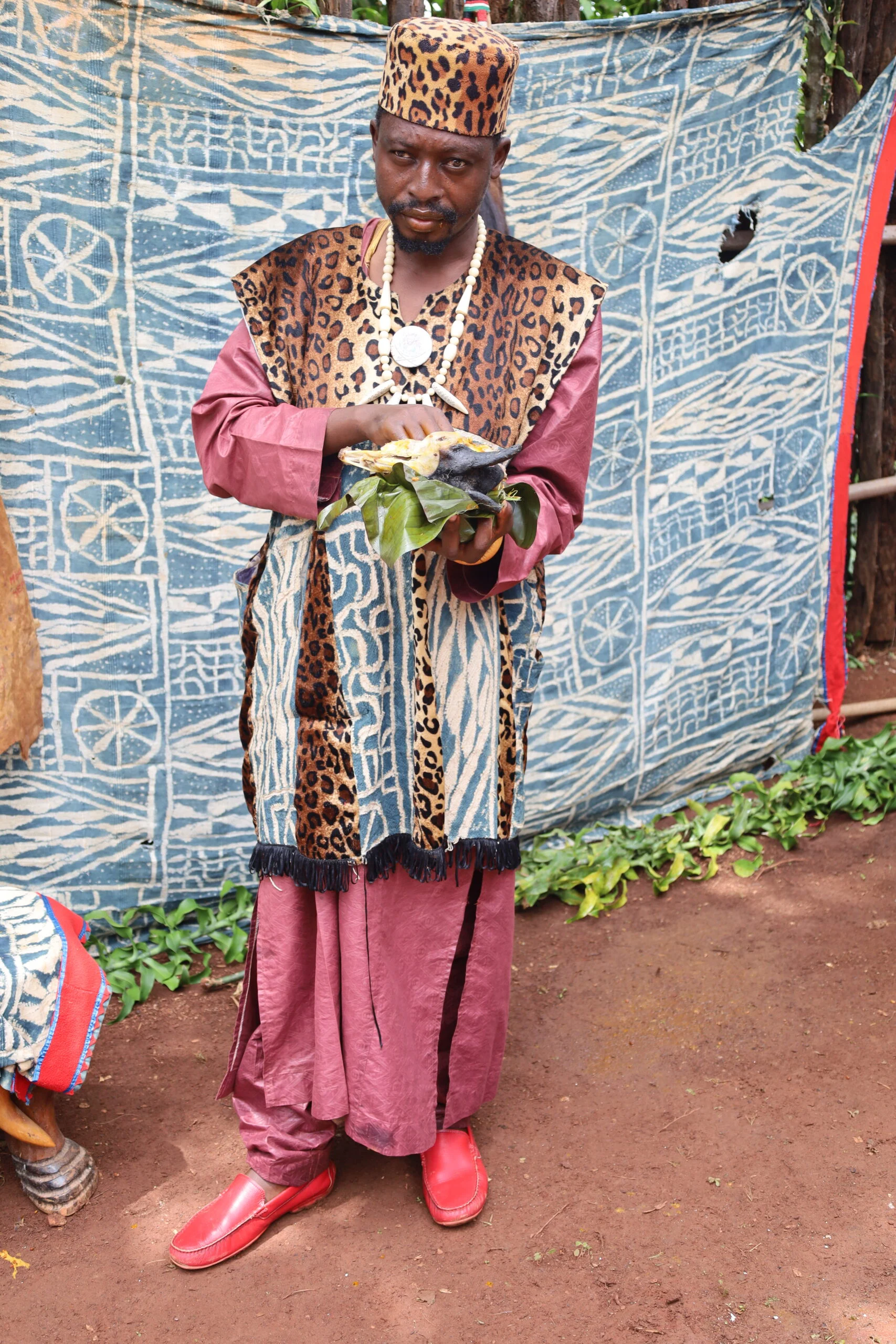
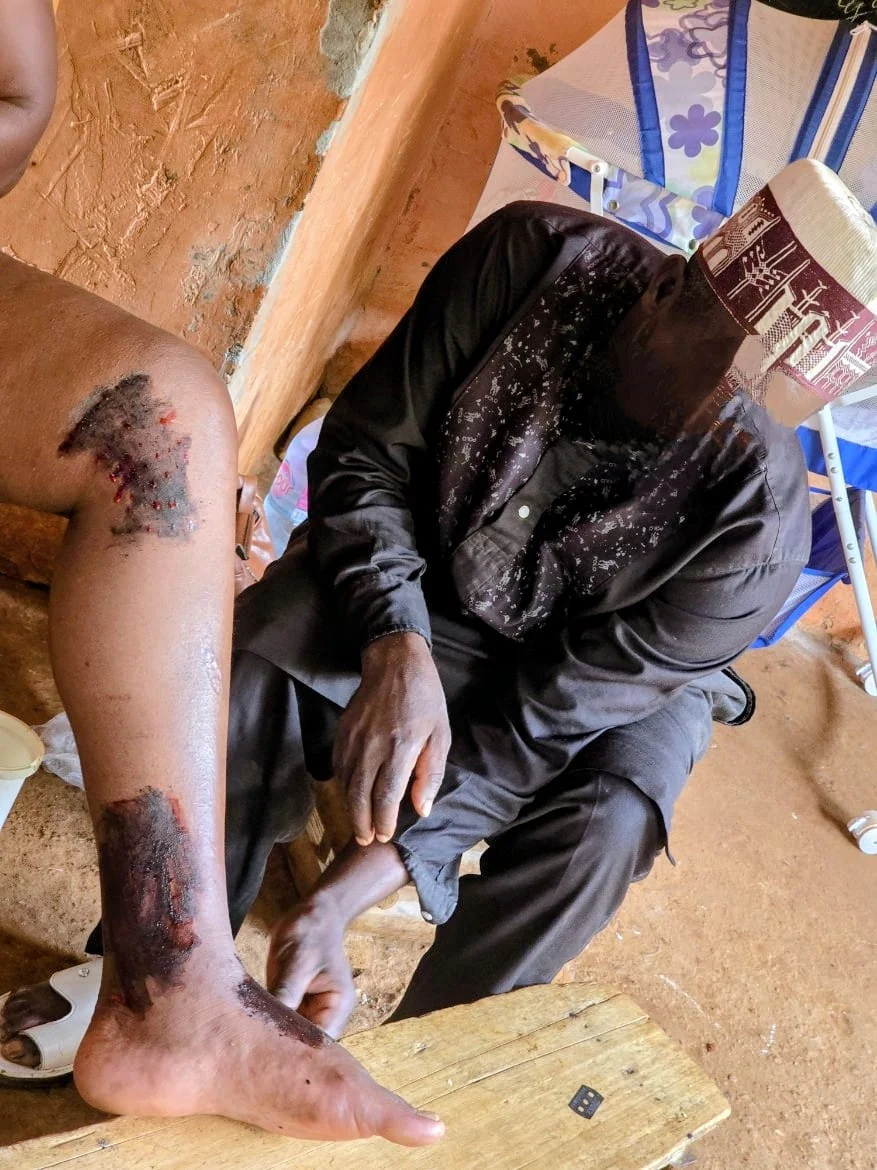
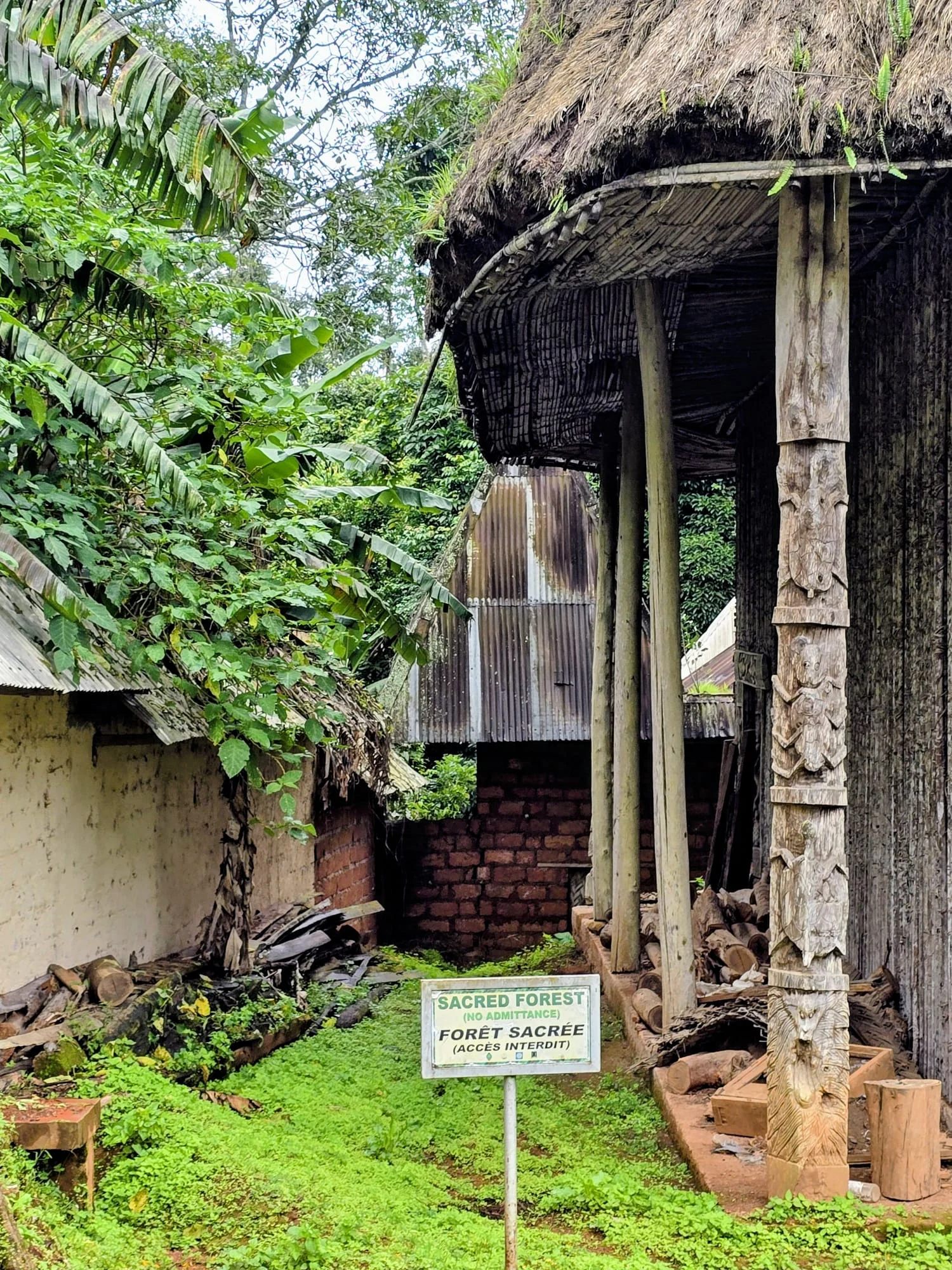
Literally the man of the tarantula, he is a doctor and a diviner. He uses tarantulas or cowrie shells for divination. He also uses plants and sacred words for healing. Since the emergence of the Gwísī and Nkémsī diviners, this diviner has lost his notoriety and vigour. (Kouemo 2018) However, in the Bamiléké chiefdoms, he enjoyed the role of chief oracle. He is called upon to divine the causes of death, failure, or illness, or to predict and analyse future events. In his compound, he keeps a cavity containing a tarantula that he cares for. During each consultation, he breaks sticks and throws them into the opening of the hole. When the tarantula comes out, it knocks them over. The Ngaŋnga then analyses their arrangement, each of which corresponds to an astrological sign that allows him to divine the course of the patient’s life (Notue/Perrois 1984, 69). The Ngaŋnga derives his knowledge from a higher power or from the legacy of a master.
Littéralement l’homme de la Mygale, il est un médecin et un devin. Il se sert de la mygale ou des cauris pour faire de la divination. Il utilise également des plantes et des paroles sacrées pour soigner. Ce corps de devin a perdu, depuis l’apparition de celui des Gwísī et des Nkémsī, de sa notoriété et de sa vigueur. (Kouemo 2018) Pourtant, il jouissait, dans les chefferies Bamiléké, du rôle d’oracle principal. On fait appel à lui pour deviner les causes d’une mort, d’un échec, d’une maladie ou pour prédire et analyser des évènements à venir. Il conserve, dans sa concession, une cavité contenant une mygale qu’il entretient. Lors de chaque consultation, il brise des baguettes qu’il lance sur l’ouverture du trou. Lorsque la mygale sort, elle les bouscule. Le Ngaŋnga analyse alors leur disposition qui renvoie, chacune singulièrement, à un signe astrologique permettant de deviner le déroulement de la vie des patient-e-s (Notue/Perrois 1984, 69). Le Ngaŋnga détient son savoir grâce à une force supérieure, ou encore grâce à l’héritage d’un maître.

The word means hat. There are many different types, from royal headdresses to simple hats, Nkam (ŋkǎm)' hats and headdresses worn by the members of t...
It refers to the offering made to deities during Bamiléké religious ceremonies. The act of making an offering is called ŋgwā' pↄↄ' (throwing the mushr...
Une poutre en bois sur laquelle sont gravées des informations, lesquelles renseignent généralement sur l’importance du lieu, les valeurs ainsi que la ...
It refers to the chiefdom, which is the most important place in the village. The chiefdom has a dual definition. Firstly, it refers to the territorial...
The peace tree is a shrub that can grow up to five meters high. In Bamiléké chiefdoms, it is one of the constituent plants of the bocage*, specific to...
A notable is a person occupying a high rank in a chiefdom (See No’h (nɔ̀’)). A notable acquires his title and rank either by succession or by recognit...
The grouping of people of a certain age category. The gaps between two age groups vary from chiefdom to chiefdom. The gap considered for a generation ...
The man of leaves or medicine is the community's chief doctor. He has a thorough knowledge of medicinal plants, but also of anatomy (Notue/Perrois 198...
This sacred forest is located at the entrance or rear of the chiefdoms (see No’h (nɔ̀’)). It is a realm that represents the Grassfields in their origi...
This website uses strictly necessary cookies to function. We would also like to use functional and analytical cookies to improve your experience. You can choose to accept or decline.