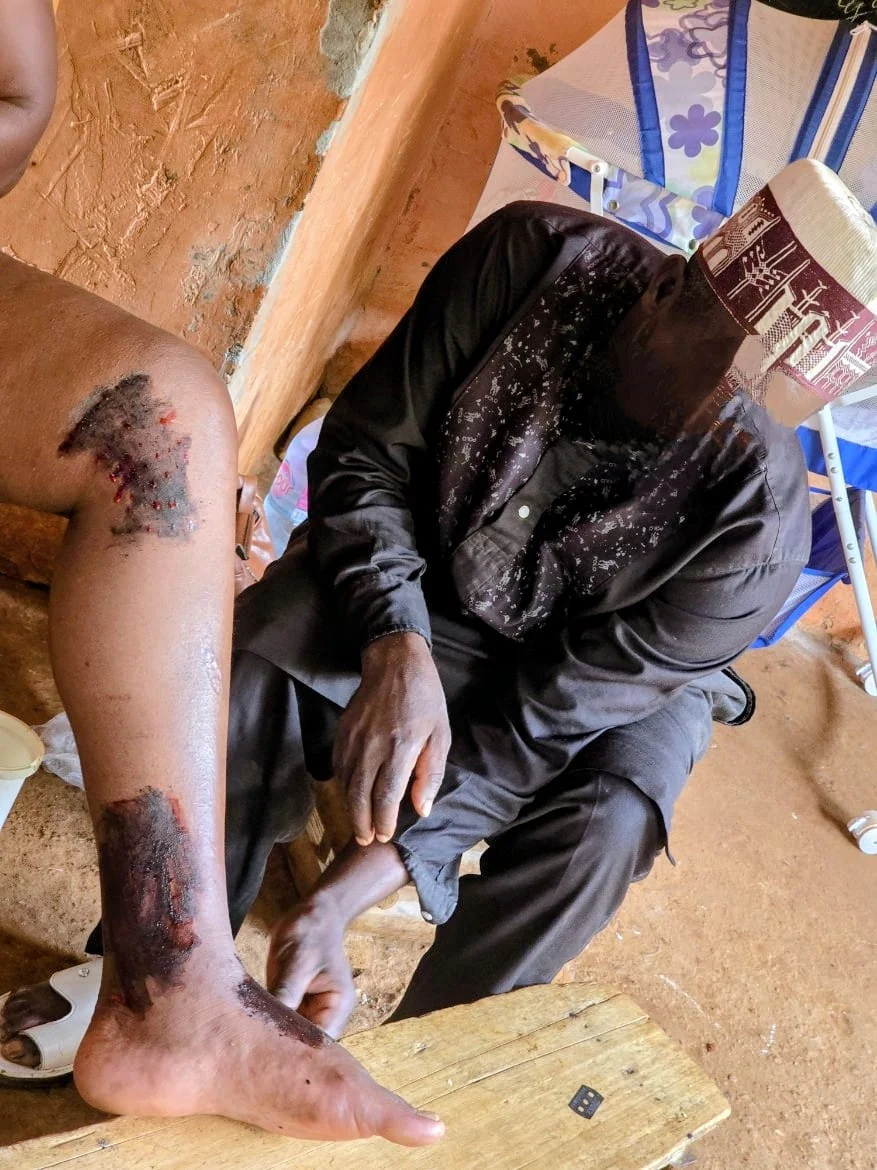
A curse is a punishment inflicted by the ancestors to penalize various breaches of traditional rules and customs. There are two types of curses. The most recurrent is that which is transmitted by umbilical ties, i.e. by matrilineal filiation. (Pradelles De Latour, 1974, 138) A parent commits a fault and his or her descendants pay the price. The second is the community curse: it stems from the mistakes of the founders and afflicts anyone belonging to that community. Ndↄ is hereditary and can be transmitted from generation to generation, as long as it is not atoned for. It is atoned for through various rituals called Mvhérè (which reads “to dilute”), the structure of which depends on the typology of the offence committed. This offence may be disobedience, deceit, murder, swindling, theft, forgetfulness of memory, failure in ritual practice, blasphemy or the desecration of a sacred object or place (Tagnang 1st, 2022). Ndↄ afflictions include illness, accidents, failure, and death.
Read more
Alternative Description
La malédiction est une punition infligée par les ancêtres pour sanctionner divers manquements aux règles de la tradition, aux us et coutumes. On peut distinguer deux types de malédiction : la plus récurrente est celle qui se transmet par les liens ombilicaux, c’est-à-dire par filiation matrilinéaire. (Pradelles De Latour, 1974, 138) Un parent commet une faute et sa descendance en paie le prix. La seconde est la malédiction communautaire : elle provient des erreurs des fondateur-rice-s et afflige toute personne appartenant à cette communauté. Le Ndↄ est héréditaire et peut se transmettre de génération en génération, aussi longtemps qu’il n’est pas expié. Son expiation se fait à travers divers rituels appelés Mvhérè (qui signifie « diluer »), dont la structure dépend de la typologie de la faute commise. Cette faute peut être une désobéissance, une fourberie, un meurtre, une escroquerie, un vol, un oubli mémoriel, un manquement dans la pratique rituelle, un blasphème ou encore la profanation d’un objet ou d’un lieu sacré (Tagnang 1er, 2022). Les afflictions du Ndↄ sont, entre autres, la maladie, les accidents, les échecs, et la mort.
Oral Story
Date of entry: August 18, 2025
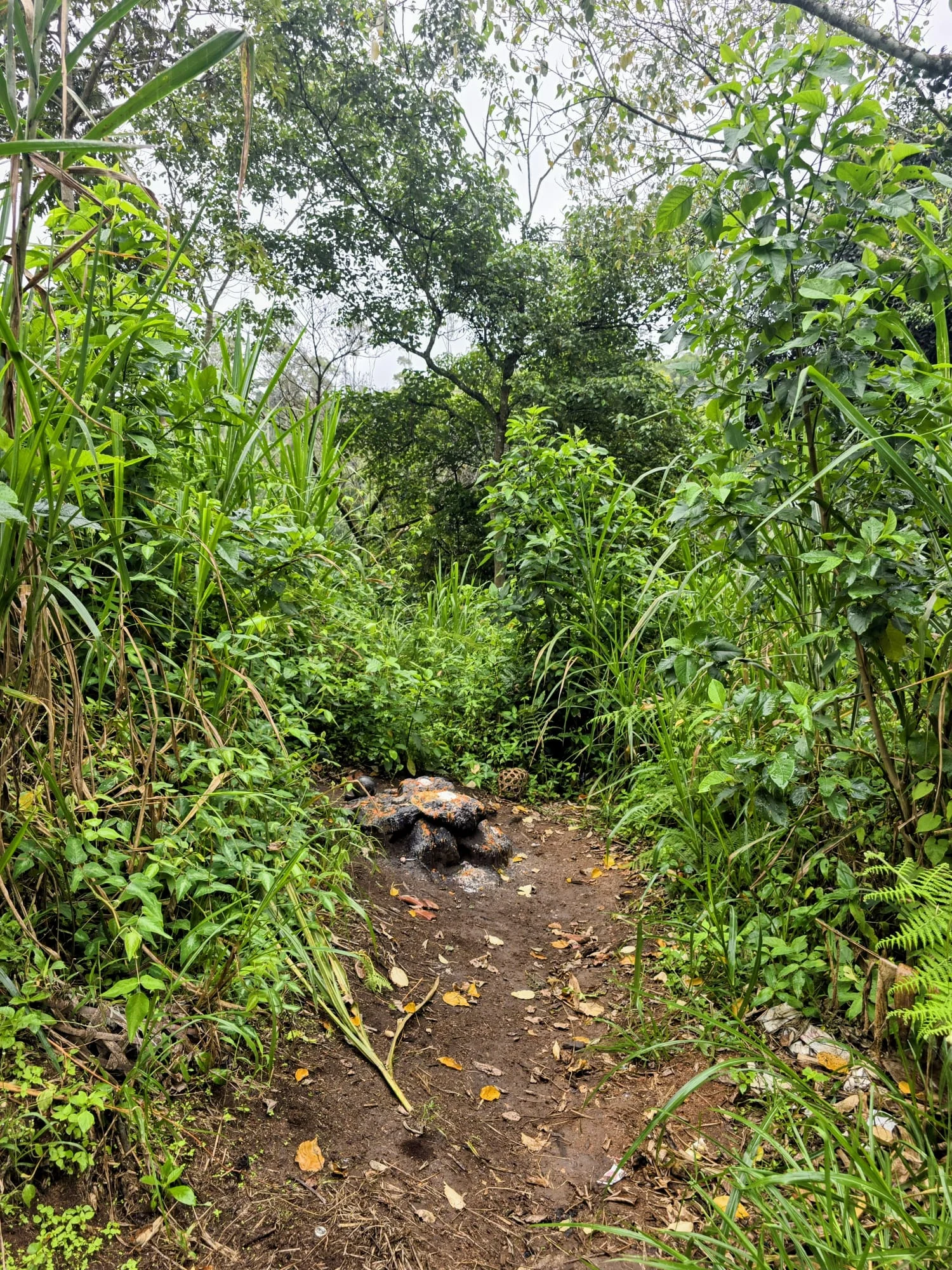
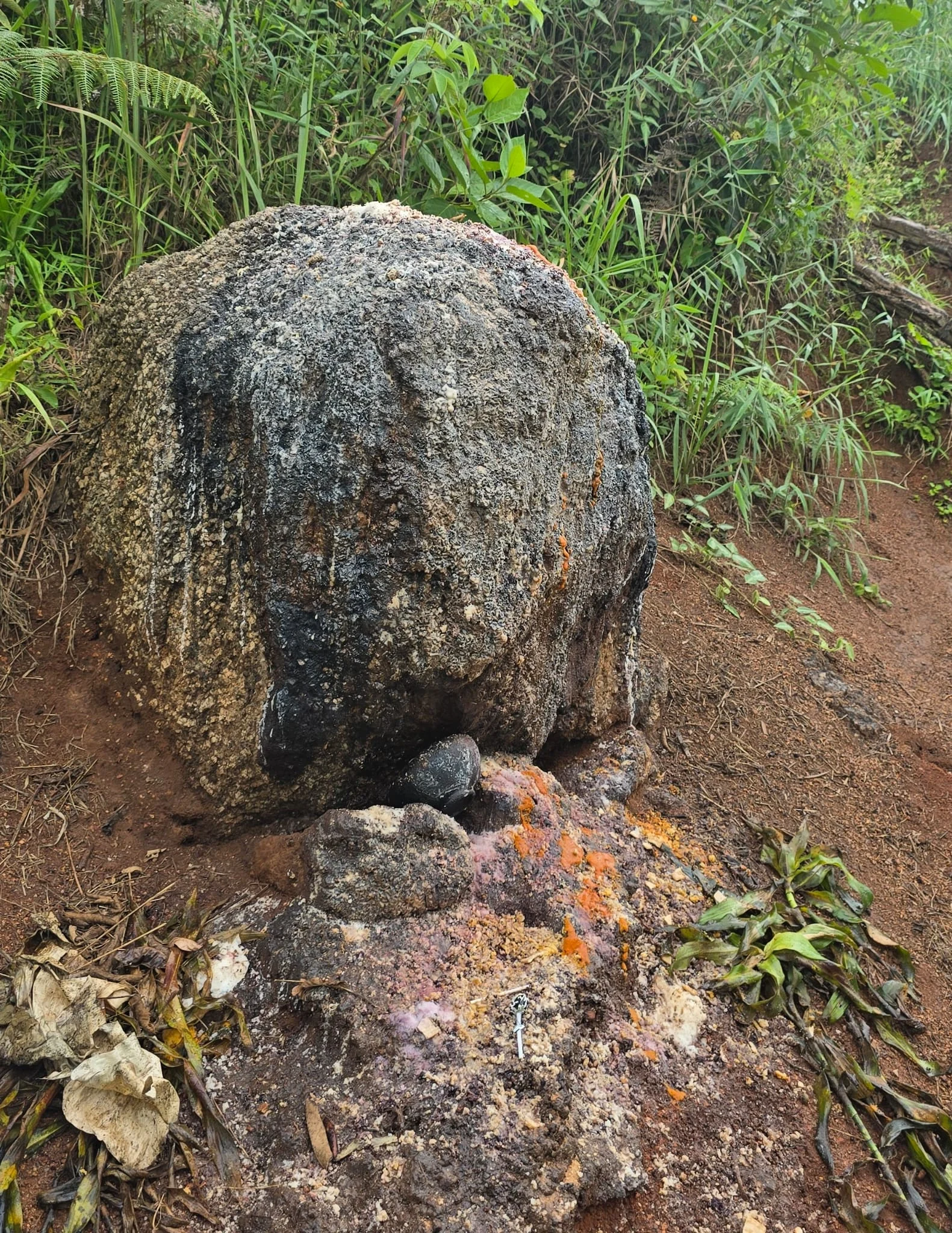
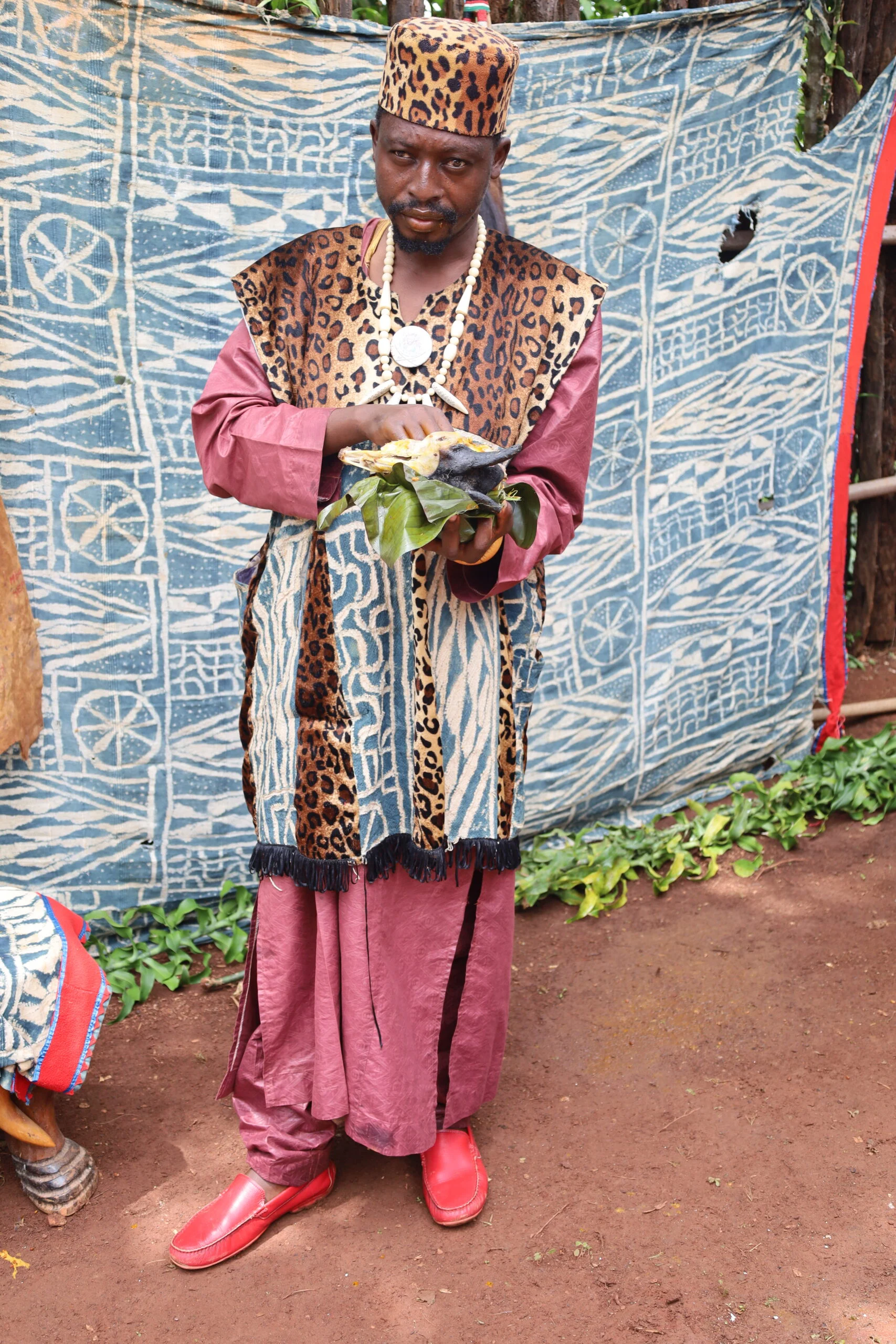
Ndo sacrifice, Tui rainfall at Bapa chiefdom (Cameroon), 07/2025, by Maeva PIMO
Add to this entry
Related Words
Tcheu’ (cœ̀')
Nguemba
The word means hat. There are many different types, from royal headdresses to simple hats, Nkam (ŋkǎm)' hats and headdresses worn by the members of t...
It refers to the offering made to deities during Bamiléké religious ceremonies. The act of making an offering is called ŋgwā' pↄↄ' (throwing the mushr...
Une poutre en bois sur laquelle sont gravées des informations, lesquelles renseignent généralement sur l’importance du lieu, les valeurs ainsi que la ...
It refers to the chiefdom, which is the most important place in the village. The chiefdom has a dual definition. Firstly, it refers to the territorial...
The peace tree is a shrub that can grow up to five meters high. In Bamiléké chiefdoms, it is one of the constituent plants of the bocage*, specific to...
A notable is a person occupying a high rank in a chiefdom (See No’h (nɔ̀’)). A notable acquires his title and rank either by succession or by recognit...
The grouping of people of a certain age category. The gaps between two age groups vary from chiefdom to chiefdom. The gap considered for a generation ...
Literally the man of the tarantula, he is a doctor and a diviner. He uses tarantulas or cowrie shells for divination. He also uses plants and sacred w...
The man of leaves or medicine is the community's chief doctor. He has a thorough knowledge of medicinal plants, but also of anatomy (Notue/Perrois 198...
This website uses strictly necessary cookies to function. We would also like to use functional and analytical cookies to improve your experience. You can choose to accept or decline.