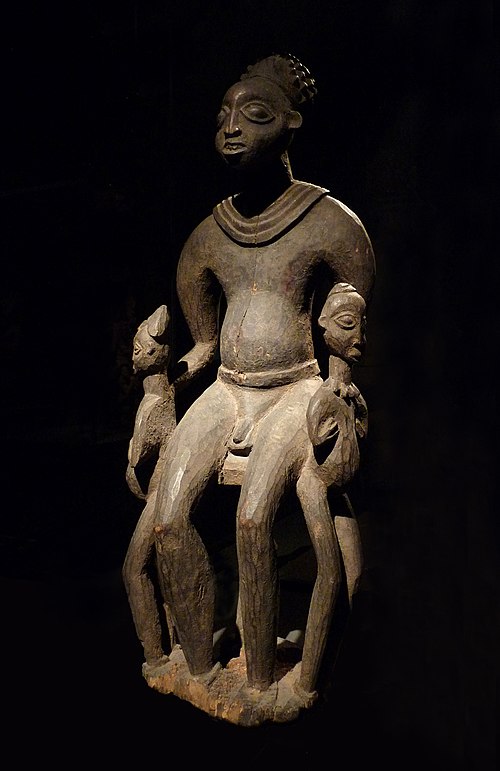
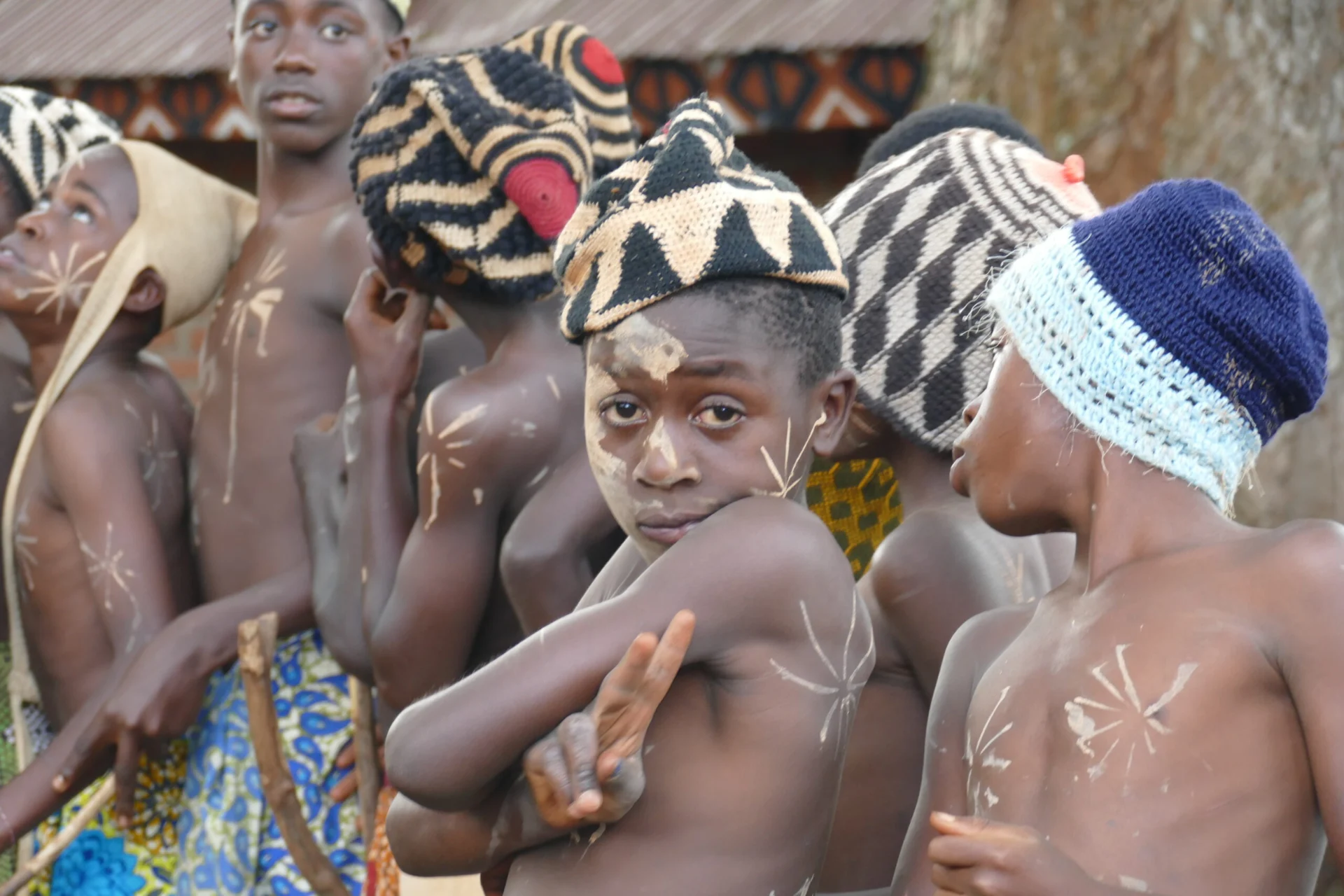
Also known as Mú Nyĕ (double child) or Pō Sī (children of the earth or of God), Méŋ Lefāk (double child) refers to twins among the Bamiléké people. They are considered divine beings because of their duality. As such, they are believed to have supernatural powers (Temkeng 2003, p.13). The Nkāŋ/sī ritual dedicated to them helps to regulate this power, making it beneficial to the community. The duality of twins is highly celebrated as a symbol of procreation, wealth and prosperity. In Bamileke cosmogony, there are two types of twins: twins of conception and twins of belief. The former are children born in pairs or more, while the latter are children born alone, but with the peculiarity of having come out of their mother’s womb feet first, with the umbilical cord wrapped around their neck, the placenta on their head, or who are simply the direct younger siblings of conception twins. According to established beliefs, the latter ate their brother or sister in their mother’s womb, as they were capable of mutating like snakes. This connection to snakes also gives them the power of reincarnation (Notue/Perrois 1984, 98). This set of beliefs surrounding the world of twins explains their strong symbolism in the religious sphere. When they reach adulthood, twins are predisposed to religious and spiritual roles such as priests, sacrificers, doctors or diviners. They are very often depicted in art as symbols of fertility and prosperity.
Encore appelés Mú Nyĕ (enfant double) ou Pō Sī (enfants de la terre ou de Dieu), Méŋ Lefāk (enfant double) désigne les jumeaux/ jumelles chez les Bamiléké. Ils/ elles sont considéré(e) s ici comme des êtres divins du fait de leur dualité. Ainsi, on leur reconnaît des pouvoirs surnaturels (Temkeng 2003, p.13). Le rite Nkāŋ/sī qui leur est dédié participe à la régulation de ce pouvoir, le rendant ainsi bénéfique pour la communauté. La dualité des jumeaux/ jumelles est hautement célébrée comme symbole de procréation, de richesse et de prospérité. Dans la cosmogonie bamiléké, l’on distingue deux types de jumeaux/ jumelles: les jumeaux/ jumelles de conception et les jumeaux/ jumelles de croyance. Les premiers sont des enfants venus au monde par deux ou plus, tandis que les seconds sont des enfants venus au monde seuls, mais ayant la particularité d’être sortis du ventre de leur mère par les pieds, avec le cordon ombilical enroulé autour du cou, le placenta sur la tête ou sont, tout simplement, des cadets directs des jumeaux de conception. D’après les croyances établies, ces derniers auraient mangé leur frère ou sœur dans le vendre de leur mère, ceux-ci étant capables, tels des serpents, de muter. Ce rapport au serpent leur vaut également un pouvoir de réincarnation (Notue/Perrois 1984, 98). Cet ensemble de croyances qui entoure l’univers des jumeaux/ jumelles, explique leur symbolique forte dans l’espace religieux. Lorsqu’ils atteignent l’âge adulte, les jumeaux/jumelles, sont prédisposé-e-s à des fonctions religieuses et spirituelles comme celles de prêtres, de sacrificateurs, de médecins ou de devins. Ils/elles sont très souvent reproduits dans le domaine artistique en tant que symbole de fécondité et de prospérité.

The word means hat. There are many different types, from royal headdresses to simple hats, Nkam (ŋkǎm)' hats and headdresses worn by the members of t...
It refers to the offering made to deities during Bamiléké religious ceremonies. The act of making an offering is called ŋgwā' pↄↄ' (throwing the mushr...
Une poutre en bois sur laquelle sont gravées des informations, lesquelles renseignent généralement sur l’importance du lieu, les valeurs ainsi que la ...
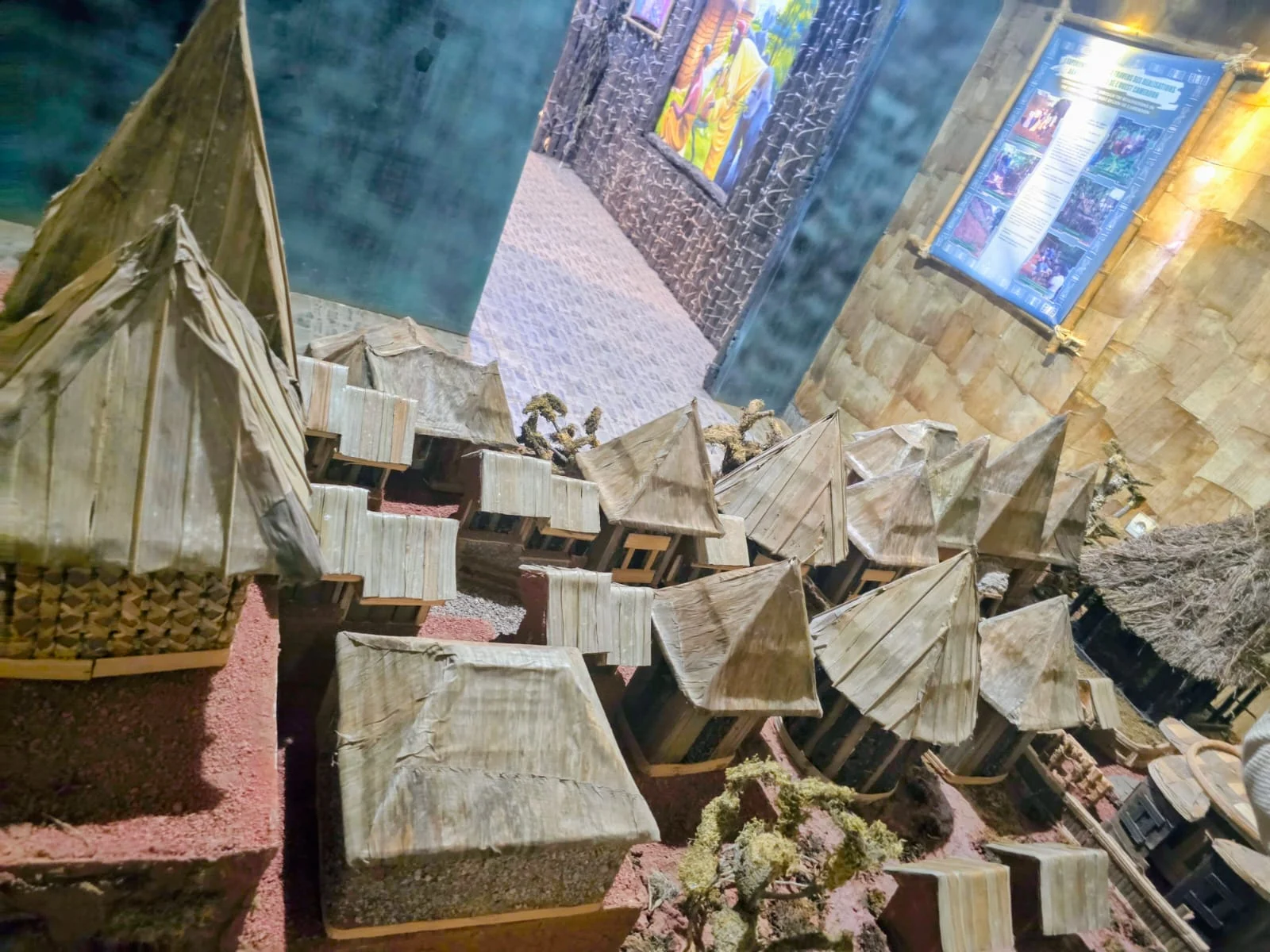
It refers to the chiefdom, which is the most important place in the village. The chiefdom has a dual definition. Firstly, it refers to the territorial...
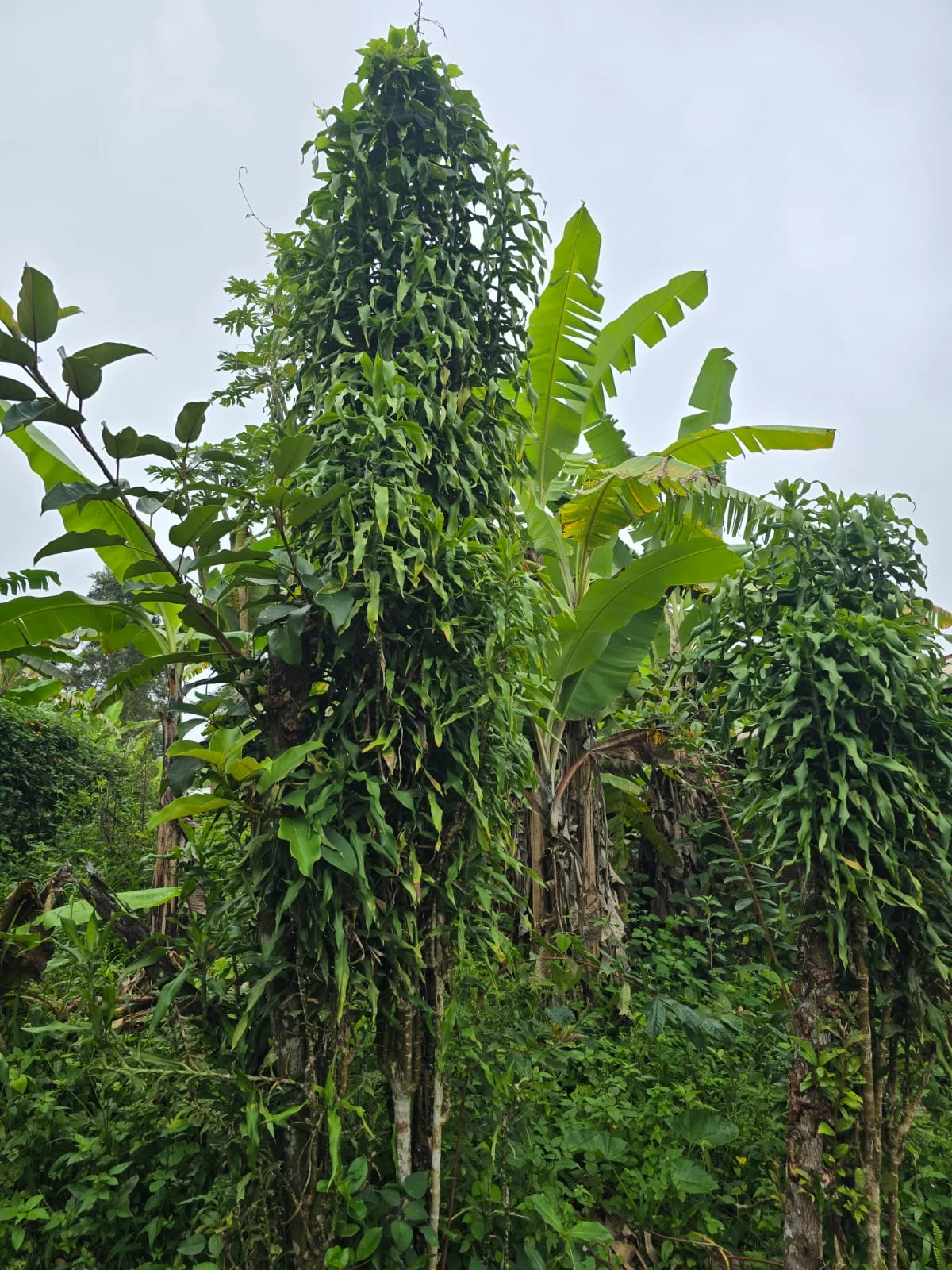
The peace tree is a shrub that can grow up to five meters high. In Bamiléké chiefdoms, it is one of the constituent plants of the bocage*, specific to...
A notable is a person occupying a high rank in a chiefdom (See No’h (nɔ̀’)). A notable acquires his title and rank either by succession or by recognit...
The grouping of people of a certain age category. The gaps between two age groups vary from chiefdom to chiefdom. The gap considered for a generation ...
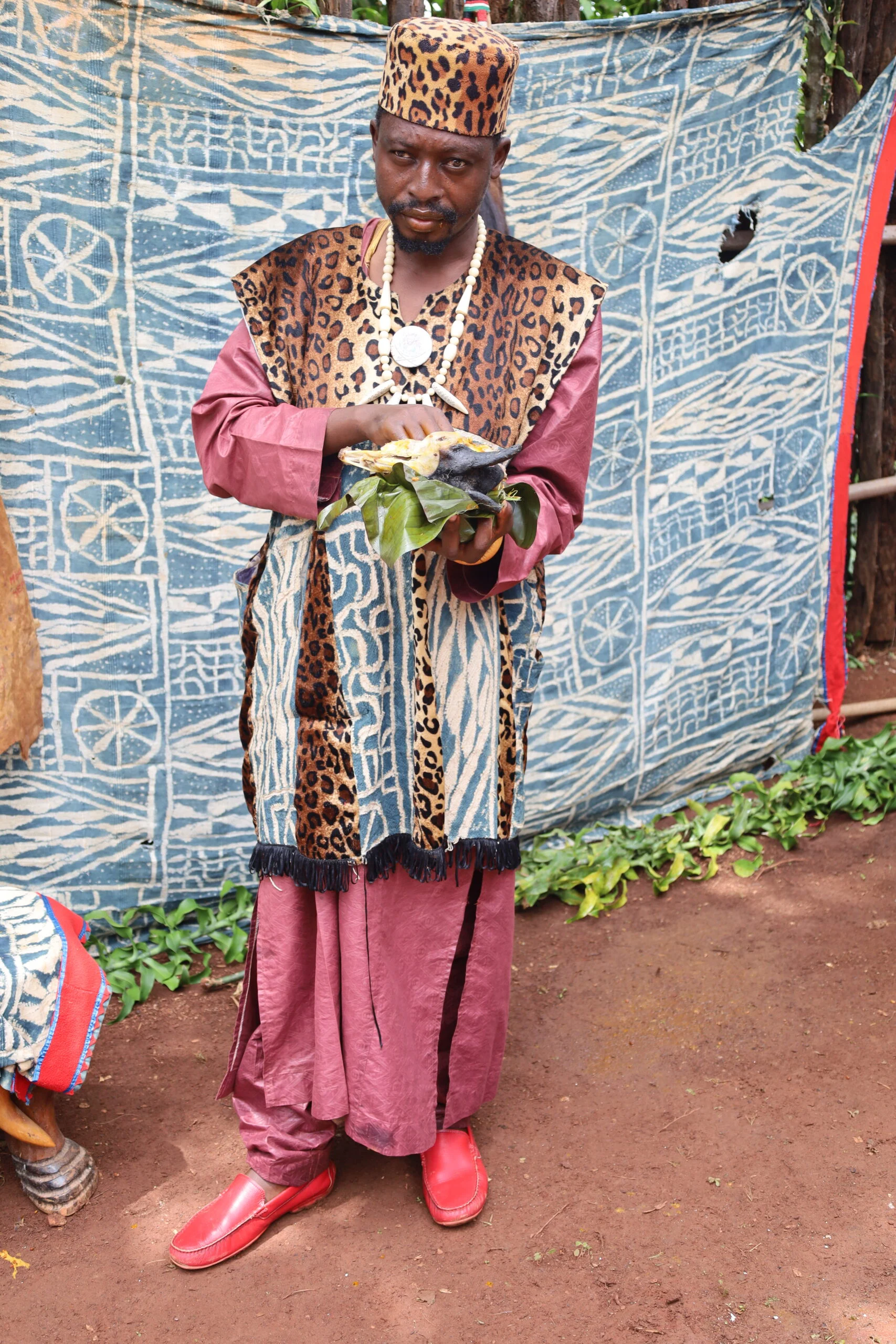
Literally the man of the tarantula, he is a doctor and a diviner. He uses tarantulas or cowrie shells for divination. He also uses plants and sacred w...
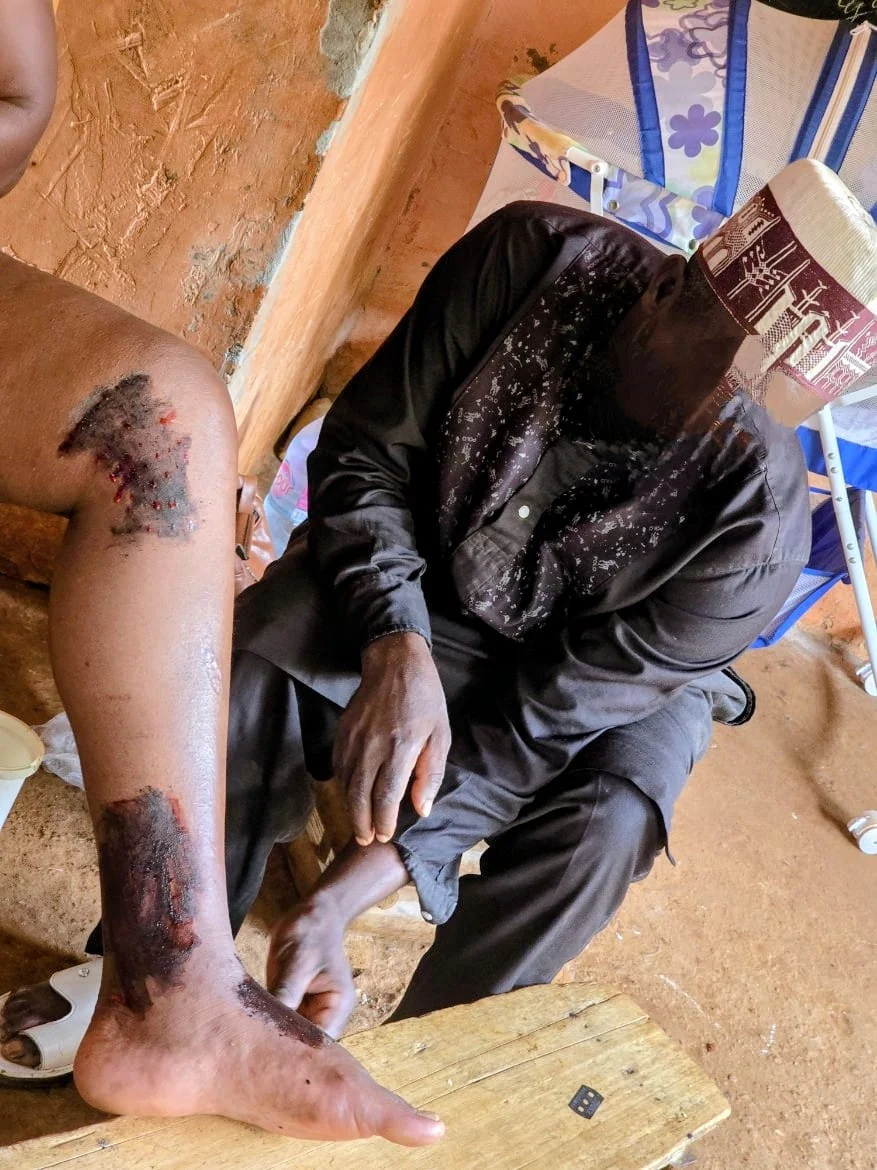
The man of leaves or medicine is the community's chief doctor. He has a thorough knowledge of medicinal plants, but also of anatomy (Notue/Perrois 198...
This website uses strictly necessary cookies to function. We would also like to use functional and analytical cookies to improve your experience. You can choose to accept or decline.