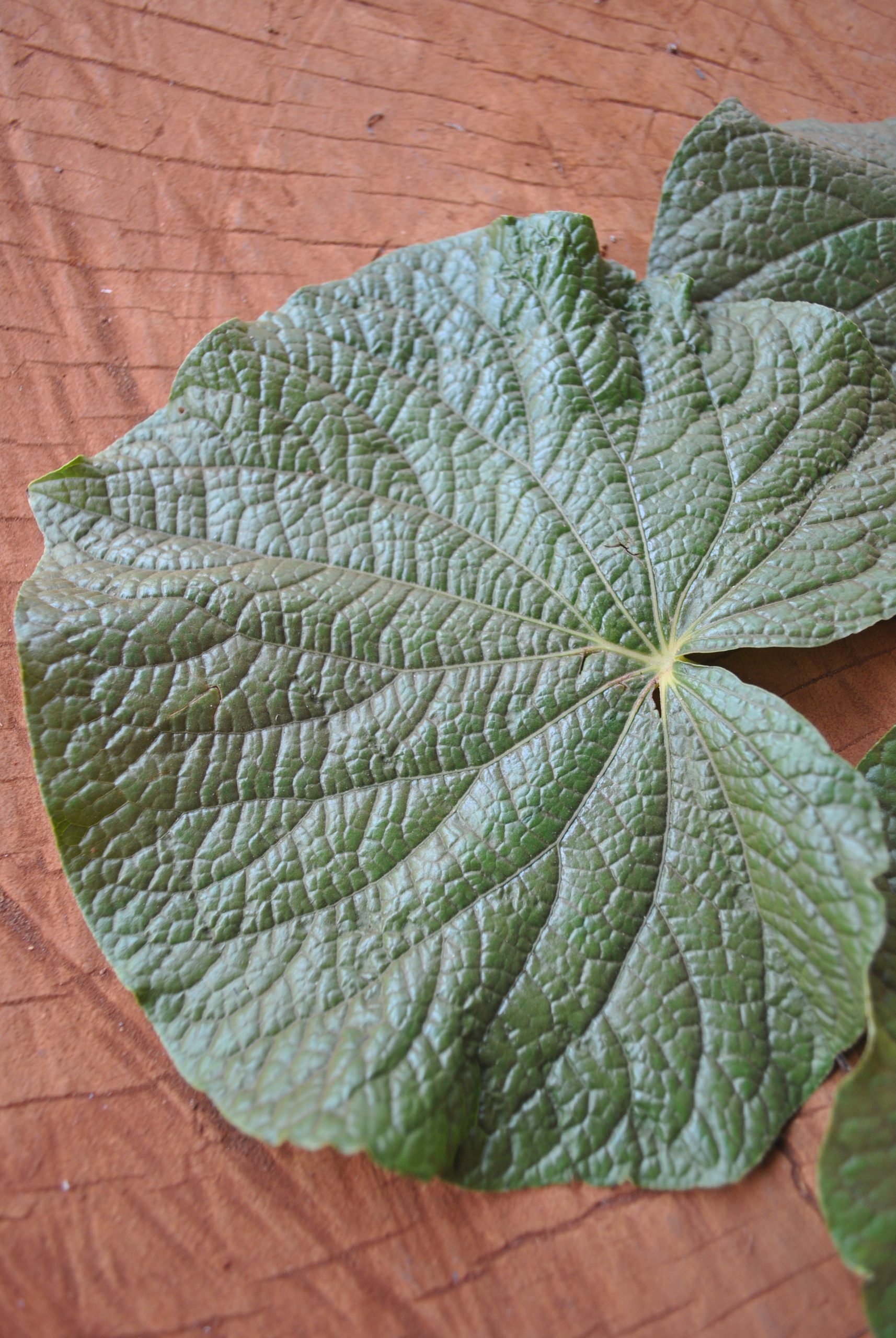
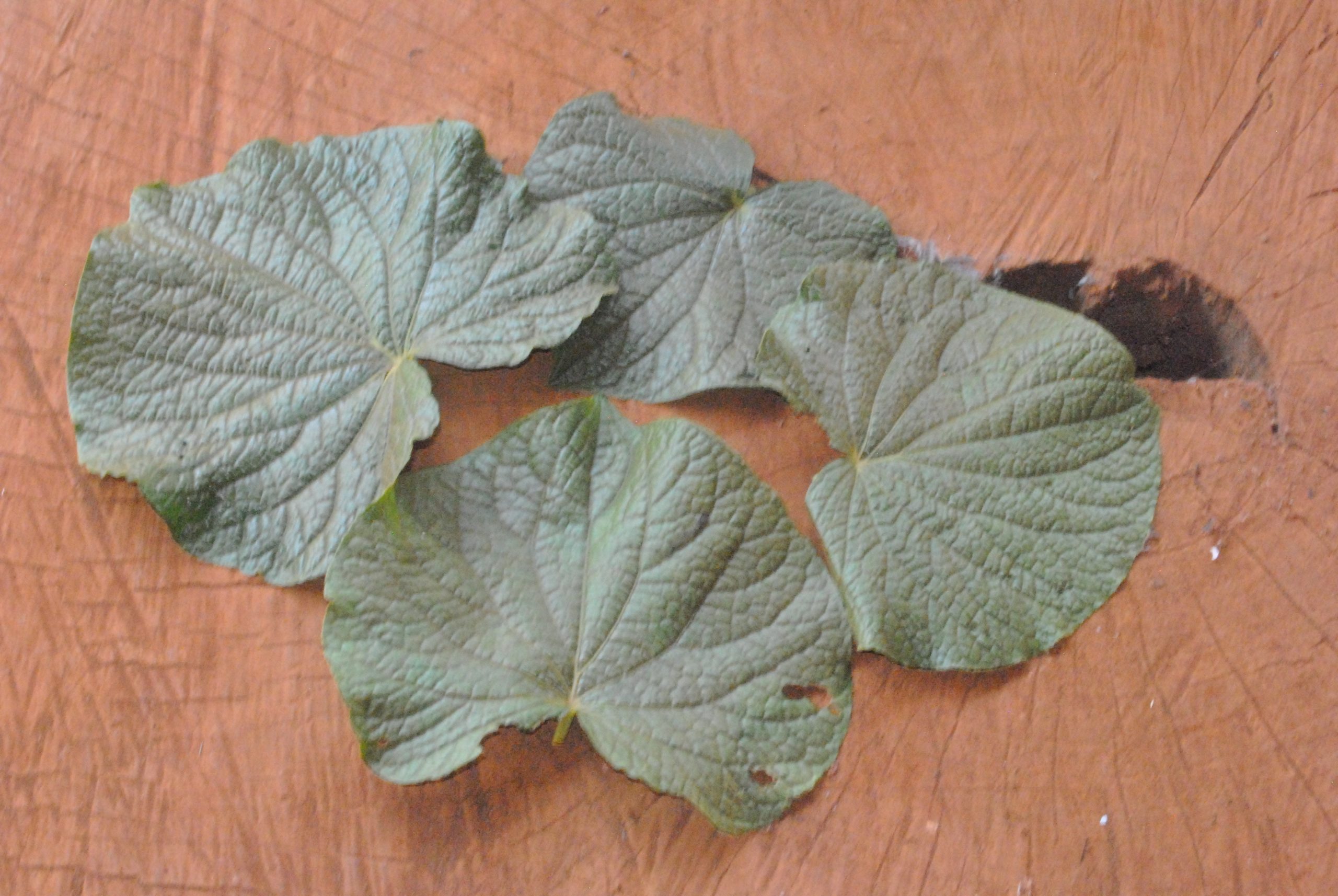
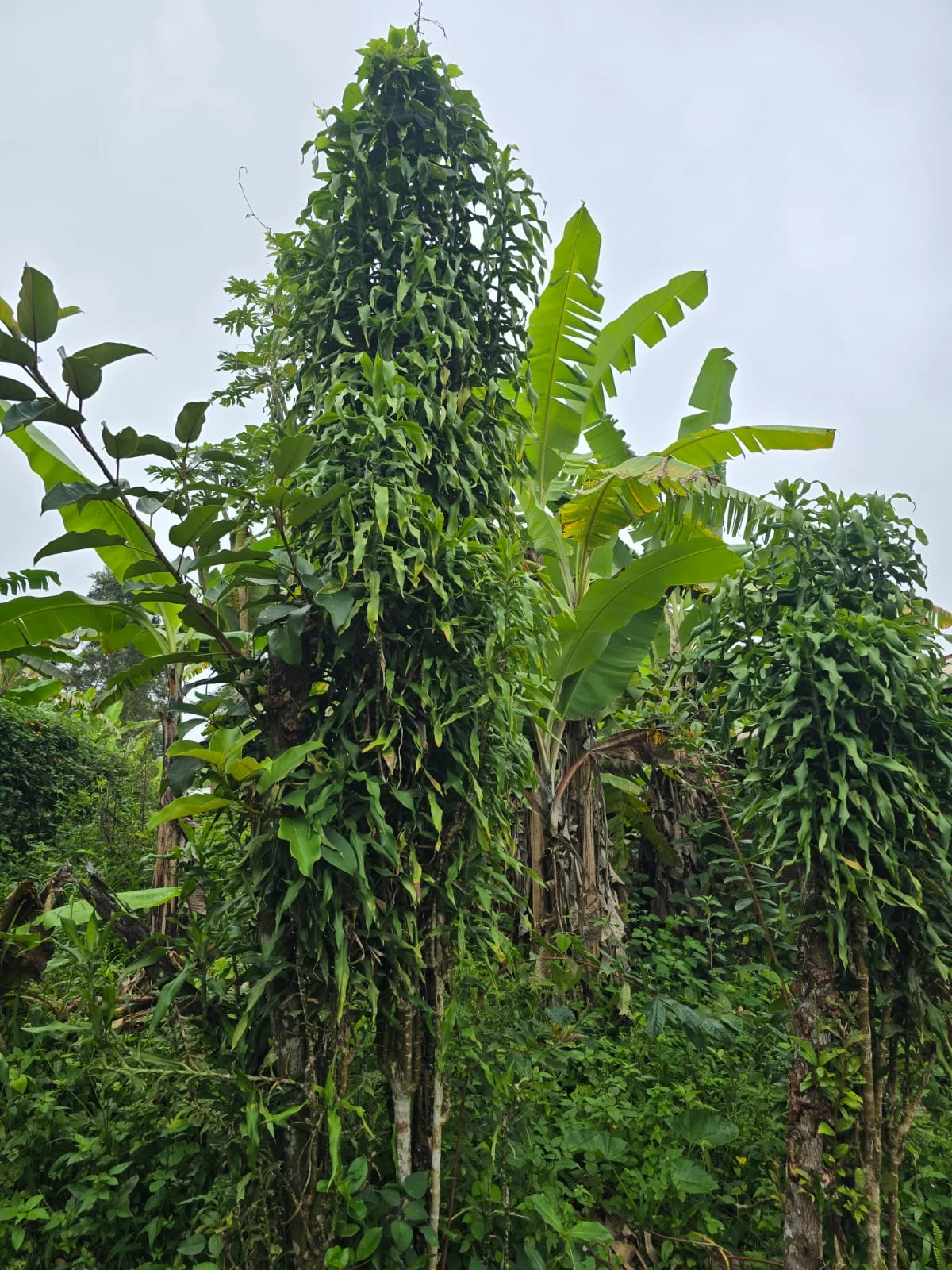
L’une des nombreuses plantes de la pharmacologie traditionnelle, reconnue pour ses propriétés antalgiques, émollientes, et antiseptiques. Son usage est également courant dans les pratiques rituelles et religieuses.
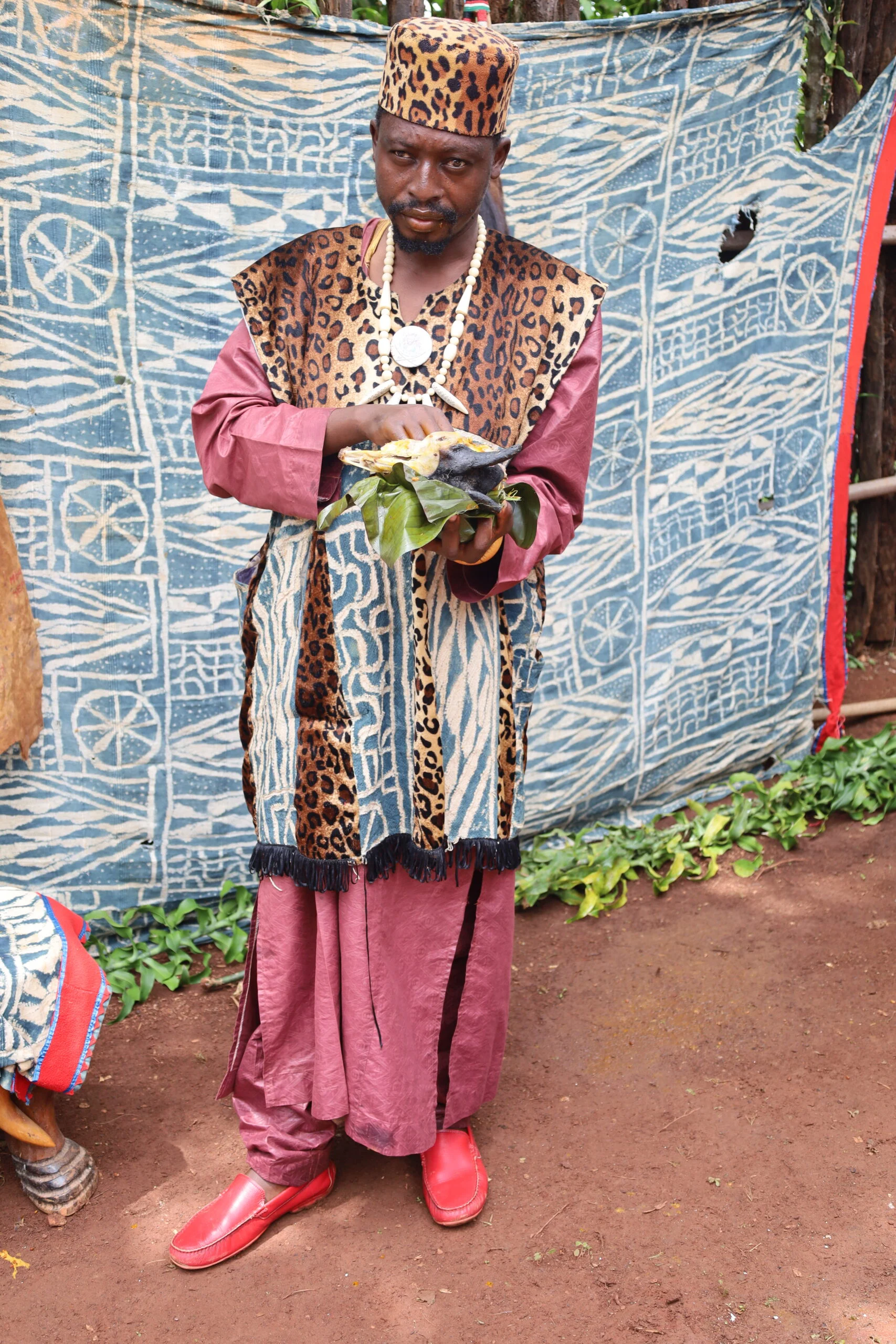
Sur le plan médicinal, ses feuilles sont généralement utilisées pour des massages crâniens dans le but de calmer les migraines et les maux de tête. Dans le contexte religieux, on l’utilise pour le culte des ancêtres. Sur ses feuilles sont servis les aliments offerts, en guise d’offrandes, aux ancêtres. Ces feuilles servent également au transport et à la conservation des crânes d’ancêtres dans le sanctuaire familial. Dans le cadre de certains rites, elles sont attachées au front du candidat comme symbole d’apaisement. Cet apaisement, selon les dires, viendrait du parfum de ses feuilles dont l’effet est émollient (Fojionang 2019).
One of the many plants used in traditional pharmacology, the cow-foot leaf is recognized for its analgesic, emollient, and antiseptic properties. It is also widely used in ritual and religious practices. Medicinally, its leaves are generally used for head massages to soothe migraines and headaches. In religious contexts, it plays a role in ancestor worship, with food served on its leaves as offerings to the ancestors. The leaves are also used to transport and preserve ancestral skulls in the family shrine. As part of certain rites, they are attached to the candidate’s forehead as a symbol of appeasement, said to come from the fragrance of the leaves, which has a soothing effect (Fojionang 2019).

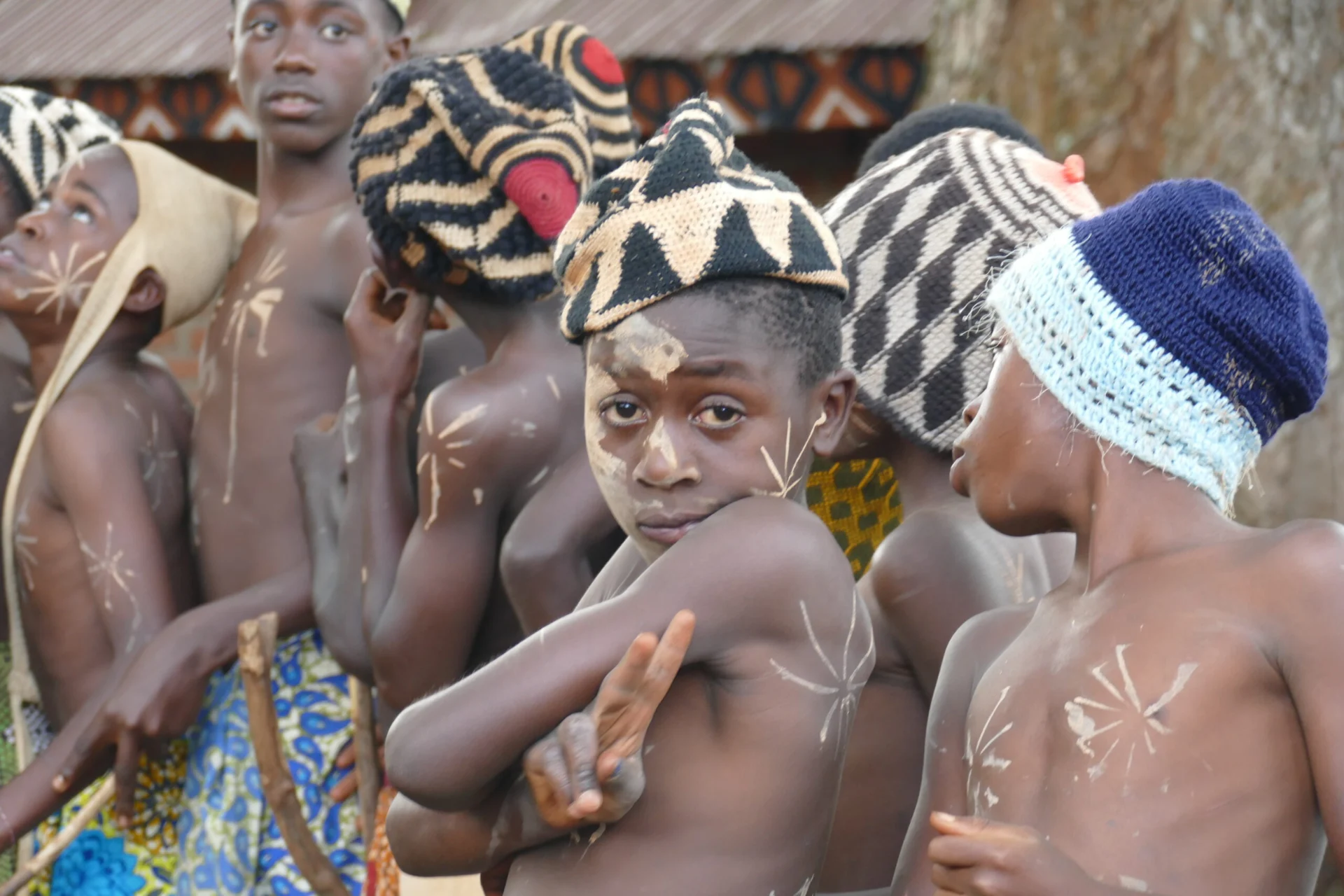
The word means hat. There are many different types, from royal headdresses to simple hats, Nkam (ŋkǎm)' hats and headdresses worn by the members of t...
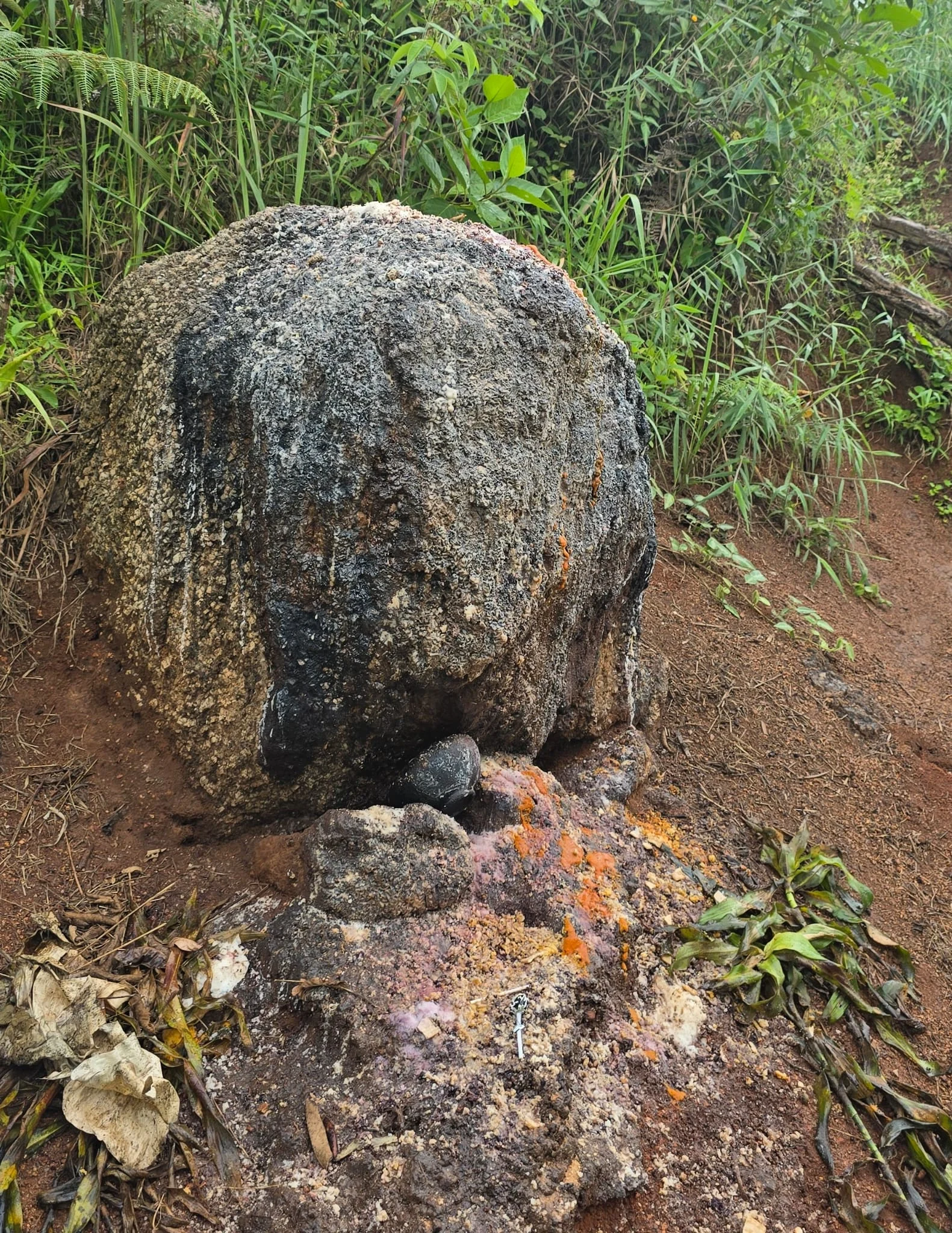
It refers to the offering made to deities during Bamiléké religious ceremonies. The act of making an offering is called ŋgwā' pↄↄ' (throwing the mushr...
Une poutre en bois sur laquelle sont gravées des informations, lesquelles renseignent généralement sur l’importance du lieu, les valeurs ainsi que la ...
It refers to the chiefdom, which is the most important place in the village. The chiefdom has a dual definition. Firstly, it refers to the territorial...
The peace tree is a shrub that can grow up to five meters high. In Bamiléké chiefdoms, it is one of the constituent plants of the bocage*, specific to...
A notable is a person occupying a high rank in a chiefdom (See No’h (nɔ̀’)). A notable acquires his title and rank either by succession or by recognit...
The grouping of people of a certain age category. The gaps between two age groups vary from chiefdom to chiefdom. The gap considered for a generation ...
Literally the man of the tarantula, he is a doctor and a diviner. He uses tarantulas or cowrie shells for divination. He also uses plants and sacred w...
The man of leaves or medicine is the community's chief doctor. He has a thorough knowledge of medicinal plants, but also of anatomy (Notue/Perrois 198...
This website uses strictly necessary cookies to function. We would also like to use functional and analytical cookies to improve your experience. You can choose to accept or decline.