Culte des crânes/Culte des ancêtres

Language: French
Also known as: skull worship/ancestor worship

Description

Deux expressions désignant le culte qui, chez les Bamilékés, sert à rendre hommage aux ancêtres à travers un ensemble de rituels qui forme ce qu’on appelle les funérailles. On peut questionner leur symbolisme: à qui rend-on hommage à travers le rite ? Au crâne qui n’est rien d’autre qu’un support du culte? Ou alors à l’ancêtre à qui s’adressent l’officiant et les membres de la famille pendant toute la durée du rite? L’observation des divers rituels qui entourent ce culte dévoile que le discours tenu pendant les cérémonies est adressé aux ancêtres et non aux crânes. Le but est de célébrer leur mémoire et de la conserver pour transmettre la généalogie et l’histoire de la famille. Pendant la mise en scène rituelle, l’officiant est en constante communication avec l’esprit de l’ancêtre à qui il s’adresse, allant même jusqu’à le nommer par son nom propre ou encore rappelant des pans d’évènements de sa vie (Fouellefak Kana and Malabon, 2024, 4–5). Comme tout objet de culte symbolique, le crâne n’est qu’un support visuel qui aide le croyant à fixer une pensée portée vers l’ancêtre (Madiya Faïk-Nzudji, 2000, 12–14). De ce fait, l’usage de l’expression culte du crâne semble inapproprié tandis que celui de culte des ancêtres exprime réellement le but du rite qui est celui de rendre hommage aux ancêtres.

Read more

Two expressions used to describe the main cult characteristic of Bamiléké spirituality, and sometimes employed as synonyms of ancestor worship, though this seems to lead to confusion. These expressions refer to the custom through which, among the Bamiléké, homage is paid to ancestors via a set of rituals that constitute what is known as a funeral*. The associated symbolism is, however, open to debate: to whom does this rite pay homage? To the skull, which is no more than a medium for the ritual? Or to the ancestor, whom the officiant and family members address throughout the rite? A closer look at the various rituals surrounding this cult reveals that the words used during the ceremonies are spoken to the ancestors, and not the skulls. The aim is to celebrate and preserve their memory in order to pass on the genealogy and history of the family involved. During the ritual staging, the officiant is in constant communication with the spirit of the ancestor being addressed, even going so far as to call them by their proper name, or recalling certain events in their life (Fouellefak Kana and Malabon, 2024, 4–5). Like all symbolic cult objects, the skull is merely a visual prop that helps the worshipper to focus their thoughts on the ancestor (Madiya Faïk-Nzudji, 2000, 12–14). As a result, the term skull worship seems inappropriate, whereas ancestor worship more fully captures the purpose of the ritual.

Date of entry: January 20, 2025
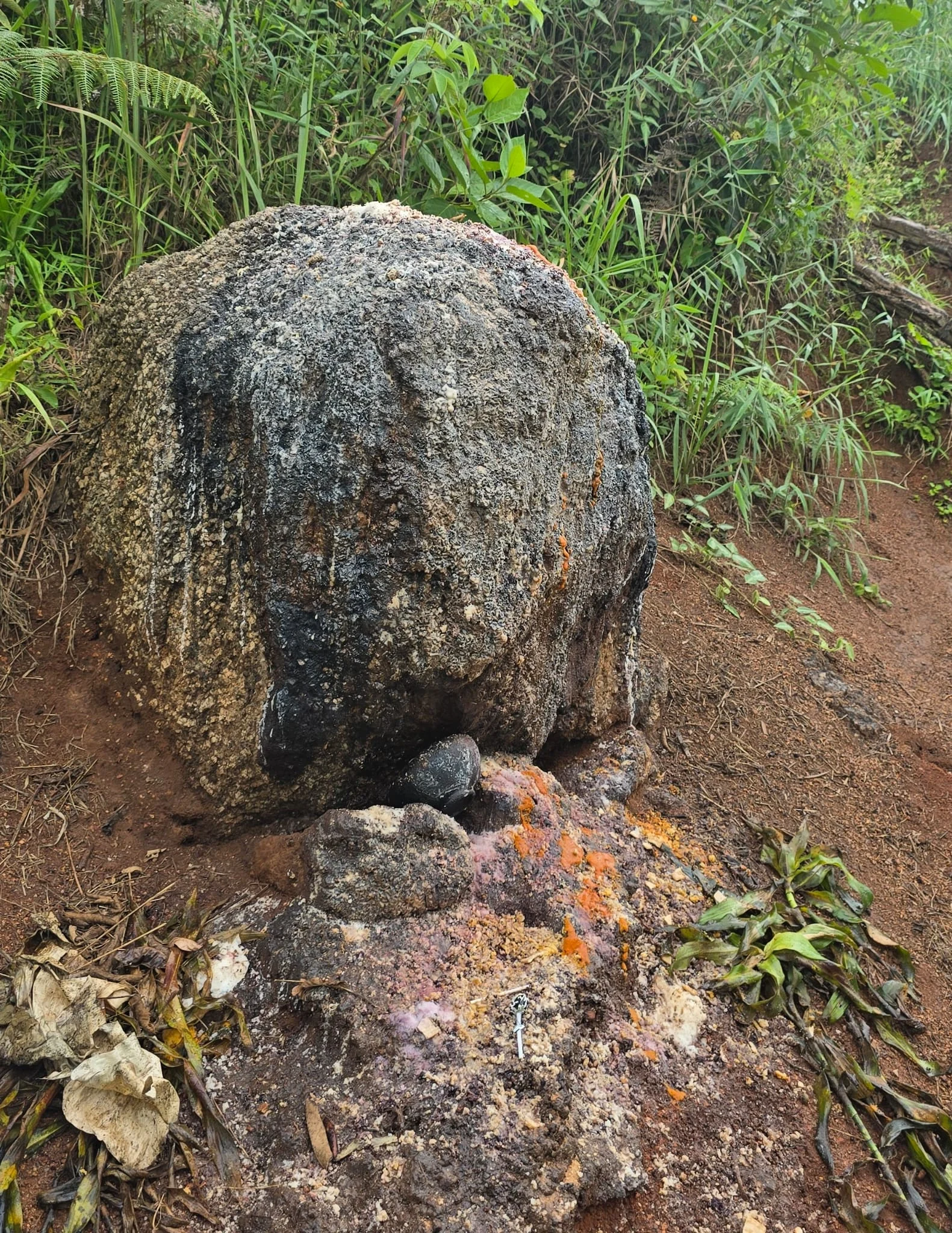
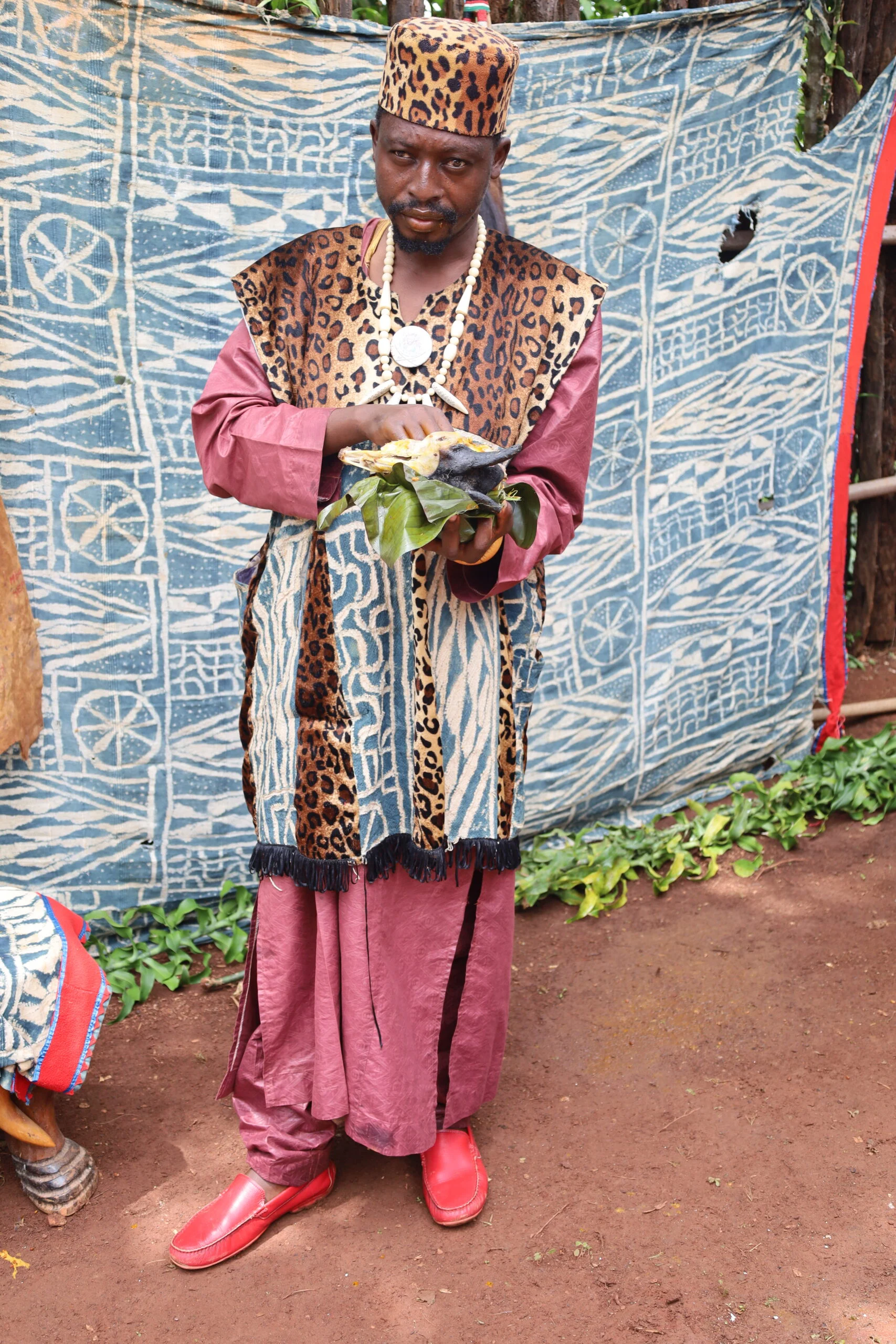
Ancestor worship. Bansoa (Cameroon), 28.12.2012, by Moifo.
The name you would like to be credited with for your contribution.
The word you wish to contribute
Your email for contact and updates regarding your submission.
The language you are contributing the word in
Maximum file size: 3 MB
Maximum file size: 5 MB
By proceeding, I acknowledge and agree to GloCo's Legal notice and Terms of use
and the Guidelines for Contributors *

Related Words

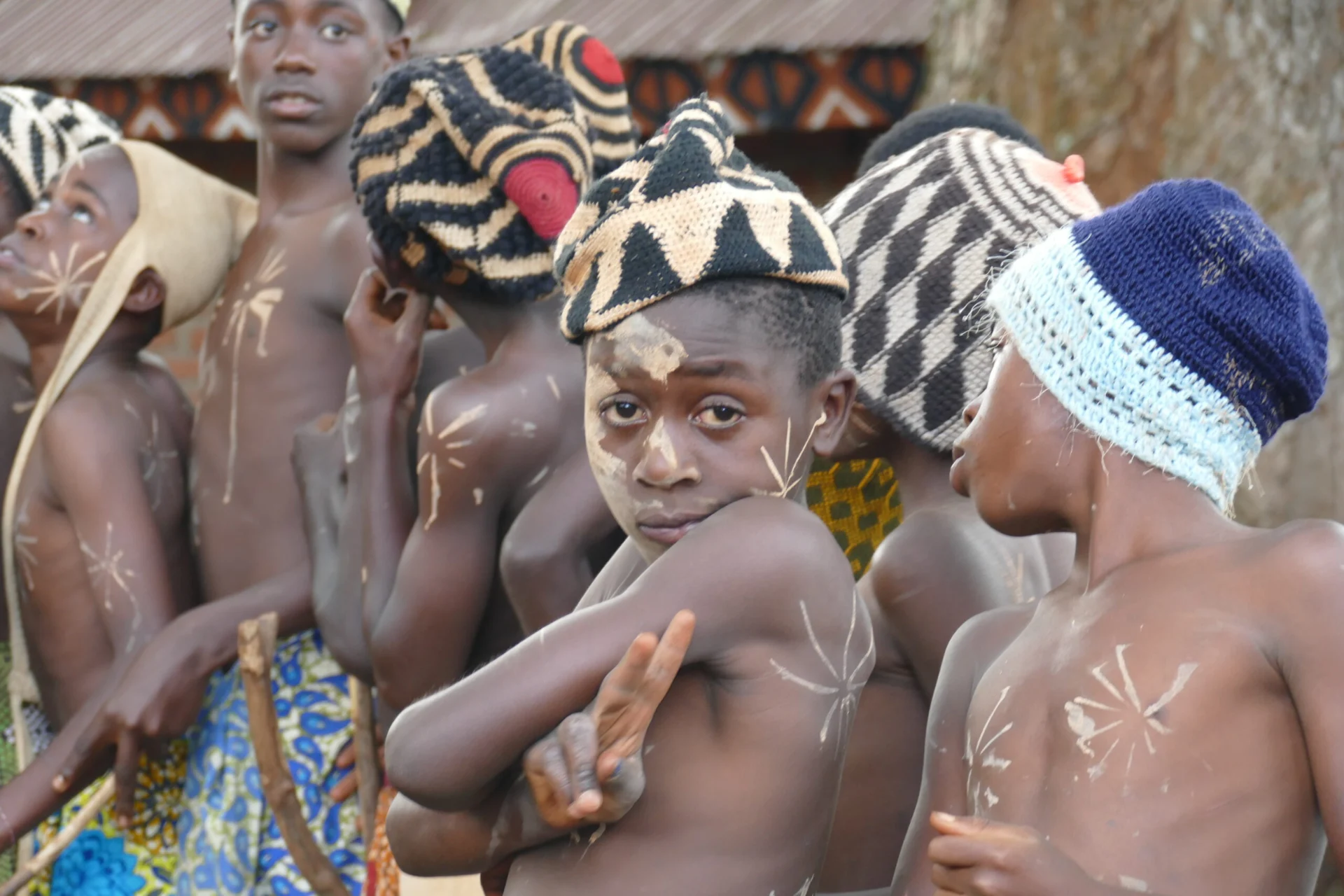
Children preparing for the Kang dance
Tcheu’ (cœ̀')
Nguemba

The word means hat. There are many different types, from royal headdresses to simple hats, Nkam (ŋkǎm)' hats and headdresses worn by the members of t...

offering, Bapa village (Cameroon), 26.07.2025, by Maeva PIMO
Pↄↄ’
Yemba

It refers to the offering made to deities during Bamiléké religious ceremonies. The act of making an offering is called ŋgwā' pↄↄ' (throwing the mushr...

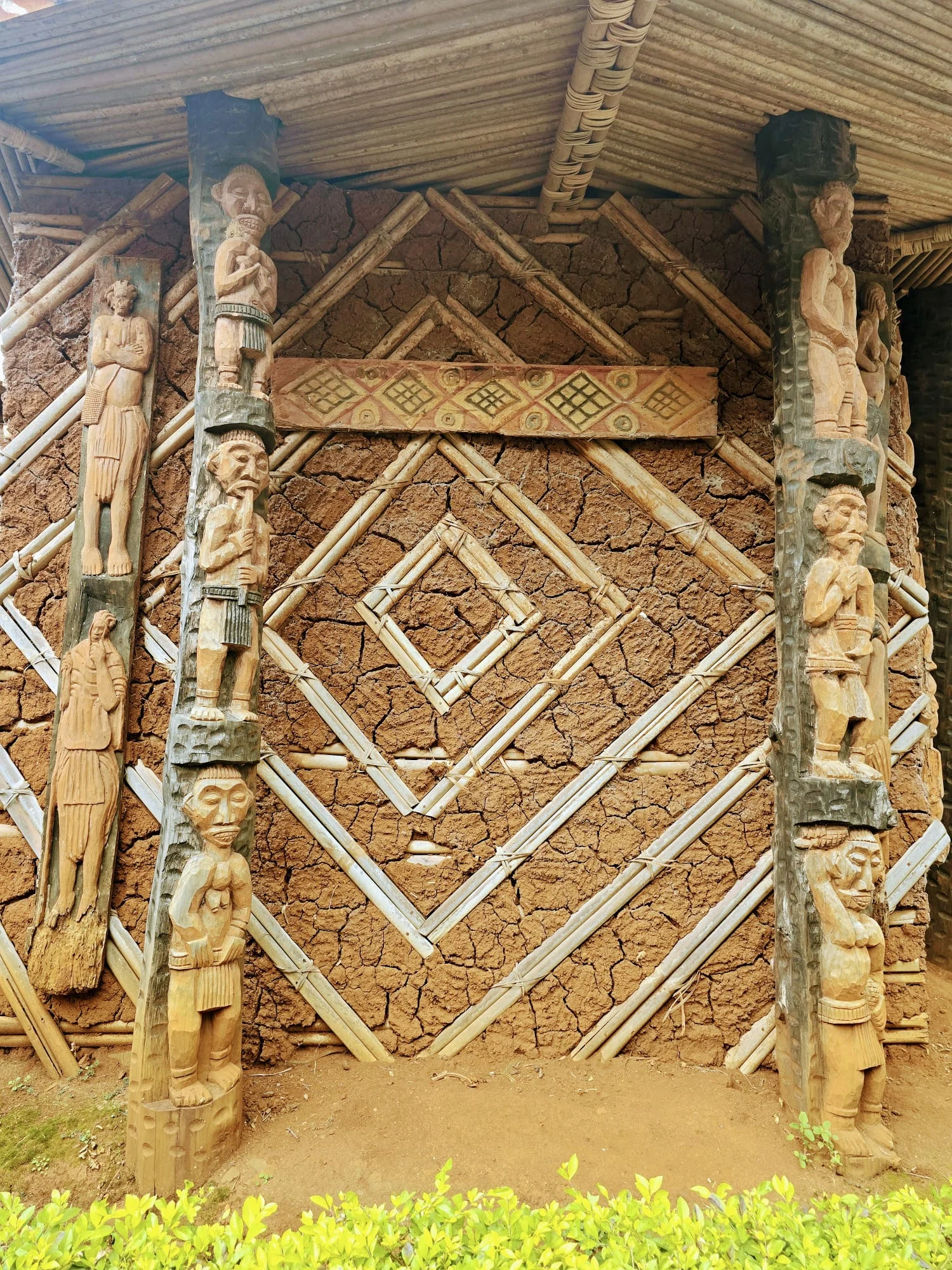
Piliers sculptés, chefferie de Batoufam (Cameroun), 08/2025, par Maeva PIMO
Pilier sculpté
French

Une poutre en bois sur laquelle sont gravées des informations, lesquelles renseignent généralement sur l’importance du lieu, les valeurs ainsi que la ...

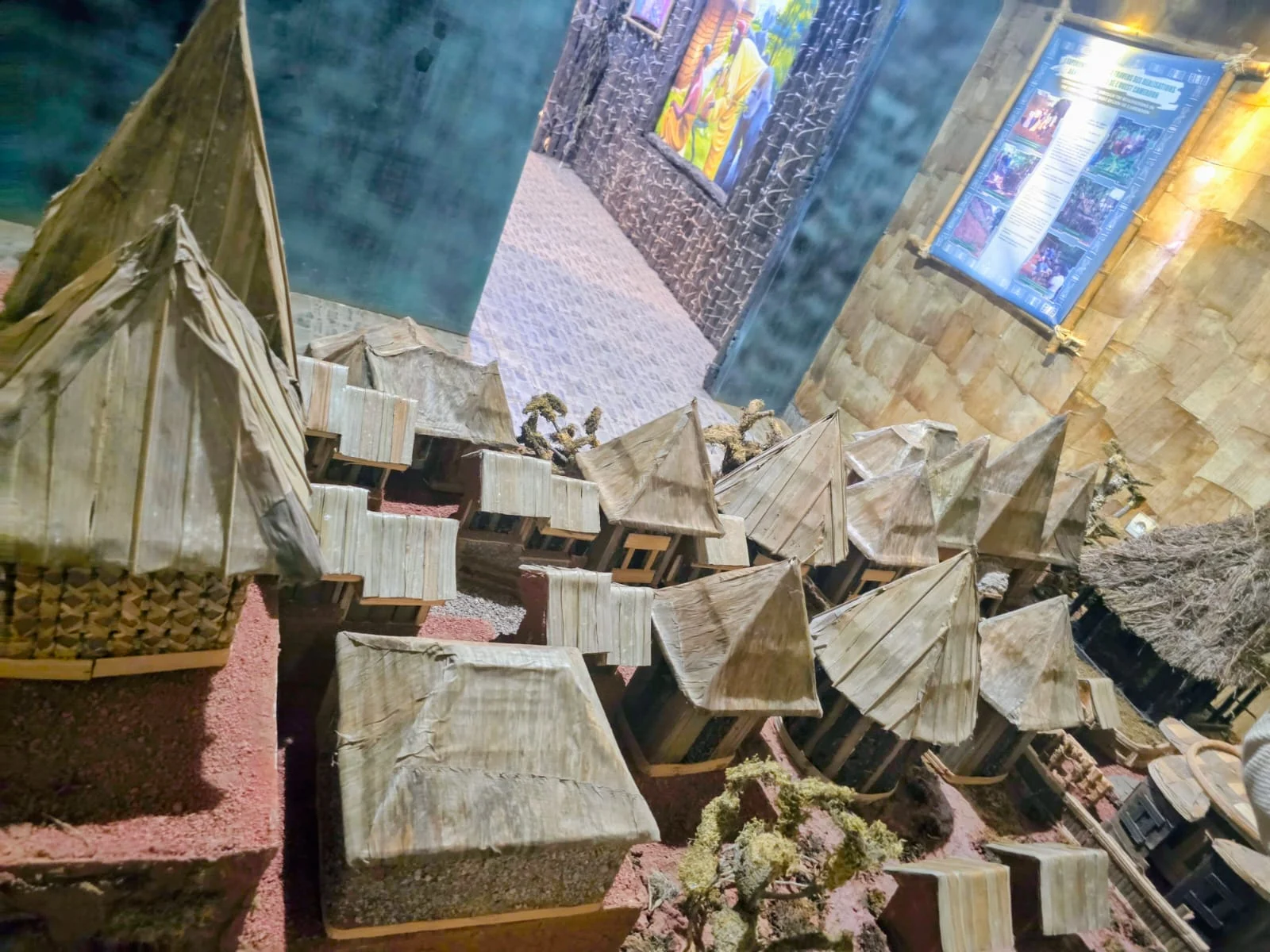
Bapa chiefdom model, Bapa (Cameroon), 07/2025, by Maeva PIMO
No'h (nɔ̀')
Nguemba

It refers to the chiefdom, which is the most important place in the village. The chiefdom has a dual definition. Firstly, it refers to the territorial...

Peace_Tree, Bapa chiefdom (Cameroon), 26.07.2025, by Maeva PIMO
Nkeŋ/ pfʉǝkeŋ/ Kwetkeng (kwɛ̀tŋkǝ̂ŋ) (Draceana Déléistéliana)
Yemba/Ghomala’/Nguemba

The peace tree is a shrub that can grow up to five meters high. In Bamiléké chiefdoms, it is one of the constituent plants of the bocage*, specific to...

Nkam Ssi (ŋkám Ssí)
Nguemba

A person with clairvoyant abilities. (See Djwisī/Nkemsī).

Nkam Bangoua - Right-hand man of Chief Bangoua
Nkam (ŋkǎm)
Nguemba

A notable is a person occupying a high rank in a chiefdom (See No’h (nɔ̀’)). A notable acquires his title and rank either by succession or by recognit...

Nkà shin (kǎ shìn)
Nguemba

The grouping of people of a certain age category. The gaps between two age groups vary from chiefdom to chiefdom. The gap considered for a generation ...

Ngaŋnga/Gegↄm
Yemba/ Ghomela

Literally the man of the tarantula, he is a doctor and a diviner. He uses tarantulas or cowrie shells for divination. He also uses plants and sacred w...

Nganafhu working on a patient, Yaounde (Cameroon), 06/2025, by Maeva PIMO
Nganafhū/Gaghĕ
Yemba/ Ghomela

The man of leaves or medicine is the community's chief doctor. He has a thorough knowledge of medicinal plants, but also of anatomy (Notue/Perrois 198...

error: