Crapaud, lézard

Language: French

Description

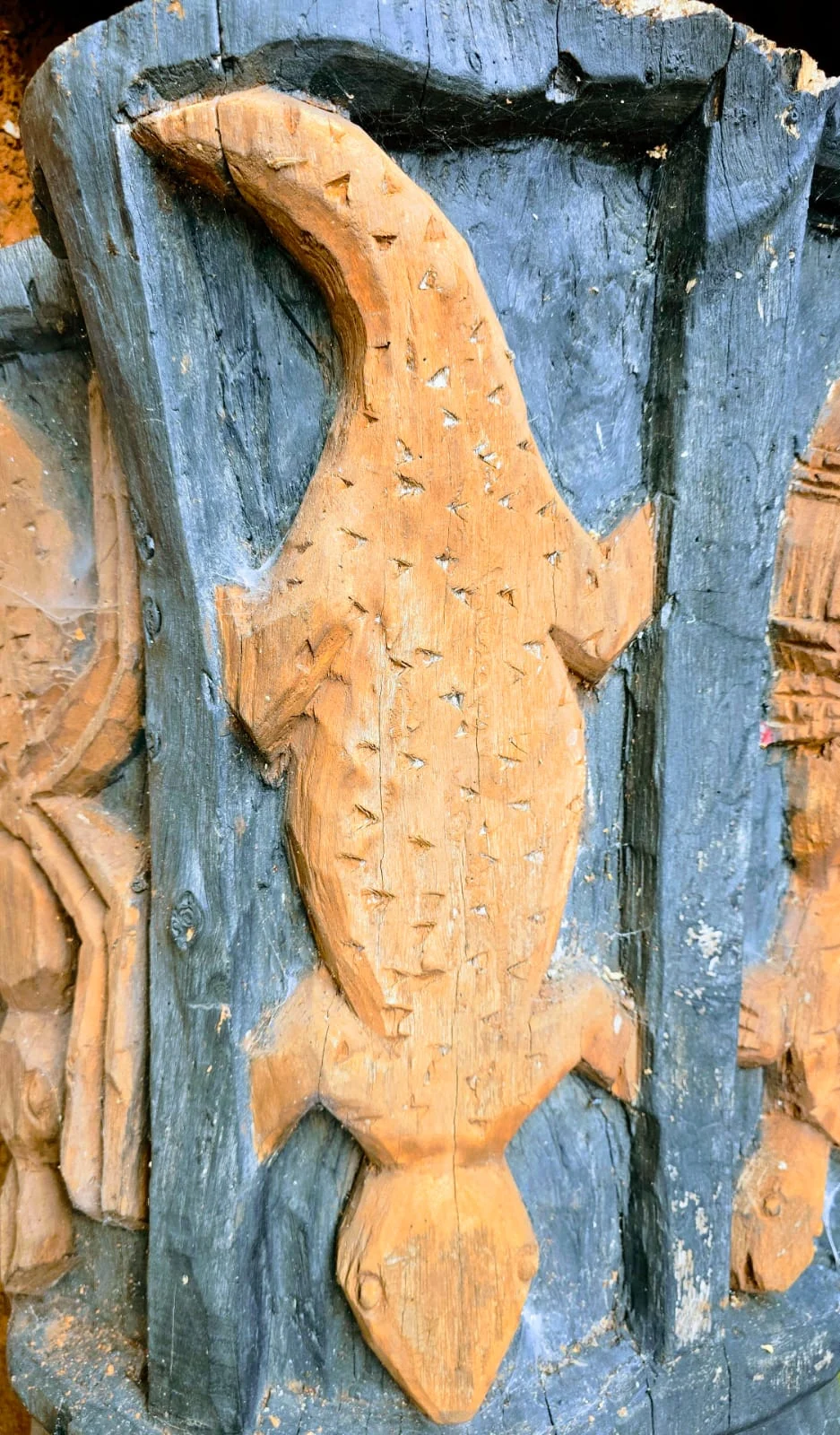
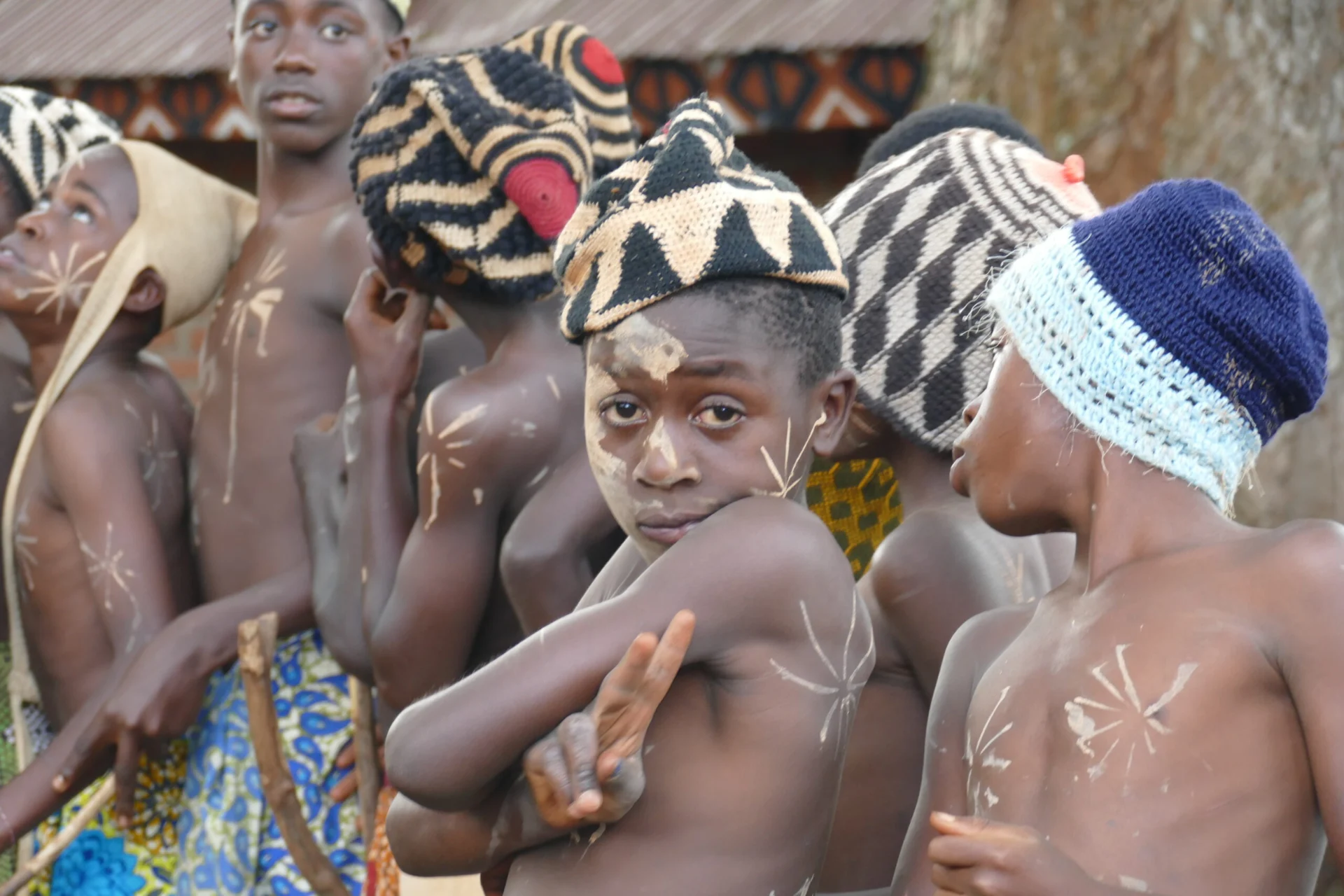
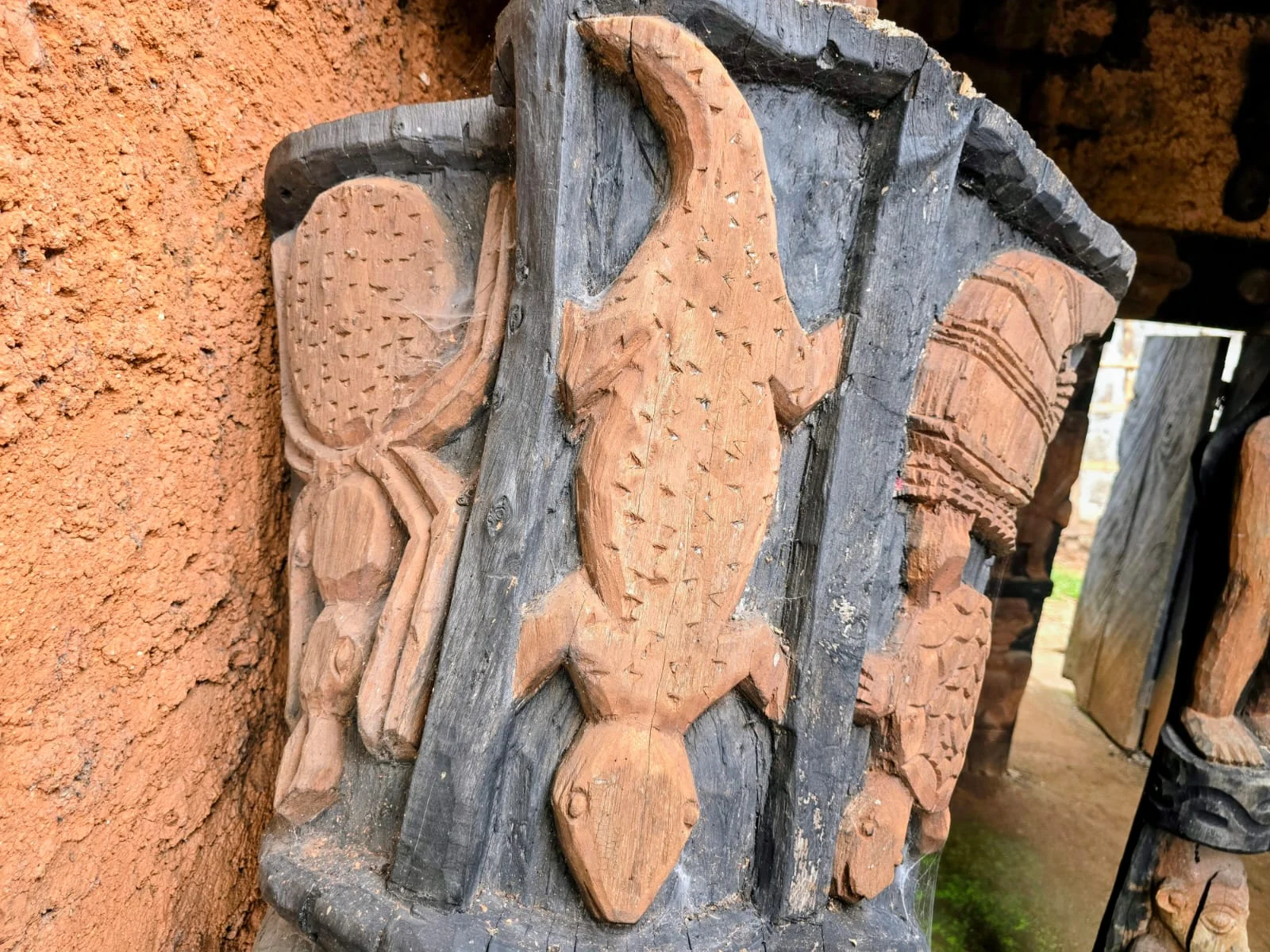
Il s’agit de deux animaux symboliques et mythiques dans la culture bamiléké. Leur représentation stylisée est très présente dans l’art, parfois sous forme d’élément décoratif. Dans l’un ou l’autre des cas, ils symbolisent la fécondité et la vie. Ils sont liés au mythe de la mort selon lequel, ils auraient dupé le caméléon et auraient apporté le message divin de la mort aux hommes, rompant ainsi leur immortalité. Ce mythe connait des variantes avec, dans l’une, le crapaud comme porteur du message de la mort (Harter, P, 1986, p. 342) et, dans l’autre, le lézard (Djaché Nzefa, S, 1994, p.153), ce qui explique leur usage symbolique similaire (Mveng, E, 1974, p. 77). Leur rôle de messagers de la mort fait d’eux le symbole de la continuité puisque, chez les Bamilékés, la vie est un cycle continu qui se renouvelle après la mort. La mort n’est donc pas un drame, ni une fin en soi, mais le recommencement d’un nouveau cycle. Ces deux animaux sont représentés comme le symbole de la dichotomie de la vie et de la mort. Ils sont particulièrement utilisés dans les représentations artistiques ornant les meubles, dans l’architecture et même dans les représentations et tatouages corporels. Les présentations les plus significatives sont celles qu’on retrouve sur les tabourets rituels et les trônes royaux.

Read more

These two animals are symbolic and mythical in Bamiléké culture. Their stylized representation is very present in the arts, sometimes as a decorative element. In either case, they symbolize fertility and life. They are linked to the myth of death, according to which they fooled the chameleon and brought the divine message of mortality to mankind, thus breaking their immortality. There are several variations of the myth, one using the toad as the messanger of death (Harter, P, 1986, p.342) and the other the lizard (Djaché Nzefa, S, 1994, p.153). This explains their similar symbolism (Mveng, E, 1974, p.77). Their role as messengers of death has made them symbols of perpetuity, since for the Bamiléké, life is a continuous cycle that renews itself after death. Death is therefore not a tragedy or an end, but the beginning of a new cycle. These two animals are represented as symbols of the dichotomy of life and death. They are often adorning furniture, architecture and even on bodies with tattoos. The most significant presentations are those found on ritual stools and royal thrones, celebrating their relationship with life and fertility.

Toads and lizards also embody fecundity, through their natural ability to produce numerous eggs. Their stylistic representation in an elongated diamond shape with an incised center, similar to that of the female sex, underlines their relationship to fertility.

Date of entry: August 12, 2025
Lezard sculpté, Chefferie Batoufam, 08.2025, par Maeva Pimo
The name you would like to be credited with for your contribution.
The word you wish to contribute
Your email for contact and updates regarding your submission.
The language you are contributing the word in
Maximum file size: 3 MB
Maximum file size: 5 MB
By proceeding, I acknowledge and agree to GloCo's Legal notice and Terms of use
and the Guidelines for Contributors *

Related Words

Children preparing for the Kang dance
Tcheu’ (cœ̀')
Nguemba

The word means hat. There are many different types, from royal headdresses to simple hats, Nkam (ŋkǎm)' hats and headdresses worn by the members of t...

offering, Bapa village (Cameroon), 26.07.2025, by Maeva PIMO
Pↄↄ’
Yemba

It refers to the offering made to deities during Bamiléké religious ceremonies. The act of making an offering is called ŋgwā' pↄↄ' (throwing the mushr...

Piliers sculptés, chefferie de Batoufam (Cameroun), 08/2025, par Maeva PIMO
Pilier sculpté
French

Une poutre en bois sur laquelle sont gravées des informations, lesquelles renseignent généralement sur l’importance du lieu, les valeurs ainsi que la ...

Bapa chiefdom model, Bapa (Cameroon), 07/2025, by Maeva PIMO
No'h (nɔ̀')
Nguemba

It refers to the chiefdom, which is the most important place in the village. The chiefdom has a dual definition. Firstly, it refers to the territorial...

Peace_Tree, Bapa chiefdom (Cameroon), 26.07.2025, by Maeva PIMO
Nkeŋ/ pfʉǝkeŋ/ Kwetkeng (kwɛ̀tŋkǝ̂ŋ) (Draceana Déléistéliana)
Yemba/Ghomala’/Nguemba

The peace tree is a shrub that can grow up to five meters high. In Bamiléké chiefdoms, it is one of the constituent plants of the bocage*, specific to...

Nkam Ssi (ŋkám Ssí)
Nguemba

A person with clairvoyant abilities. (See Djwisī/Nkemsī).

Nkam Bangoua - Right-hand man of Chief Bangoua
Nkam (ŋkǎm)
Nguemba

A notable is a person occupying a high rank in a chiefdom (See No’h (nɔ̀’)). A notable acquires his title and rank either by succession or by recognit...

Nkà shin (kǎ shìn)
Nguemba

The grouping of people of a certain age category. The gaps between two age groups vary from chiefdom to chiefdom. The gap considered for a generation ...

Ngaŋnga/Gegↄm
Yemba/ Ghomela

Literally the man of the tarantula, he is a doctor and a diviner. He uses tarantulas or cowrie shells for divination. He also uses plants and sacred w...

Nganafhu working on a patient, Yaounde (Cameroon), 06/2025, by Maeva PIMO
Nganafhū/Gaghĕ
Yemba/ Ghomela

The man of leaves or medicine is the community's chief doctor. He has a thorough knowledge of medicinal plants, but also of anatomy (Notue/Perrois 198...

error: