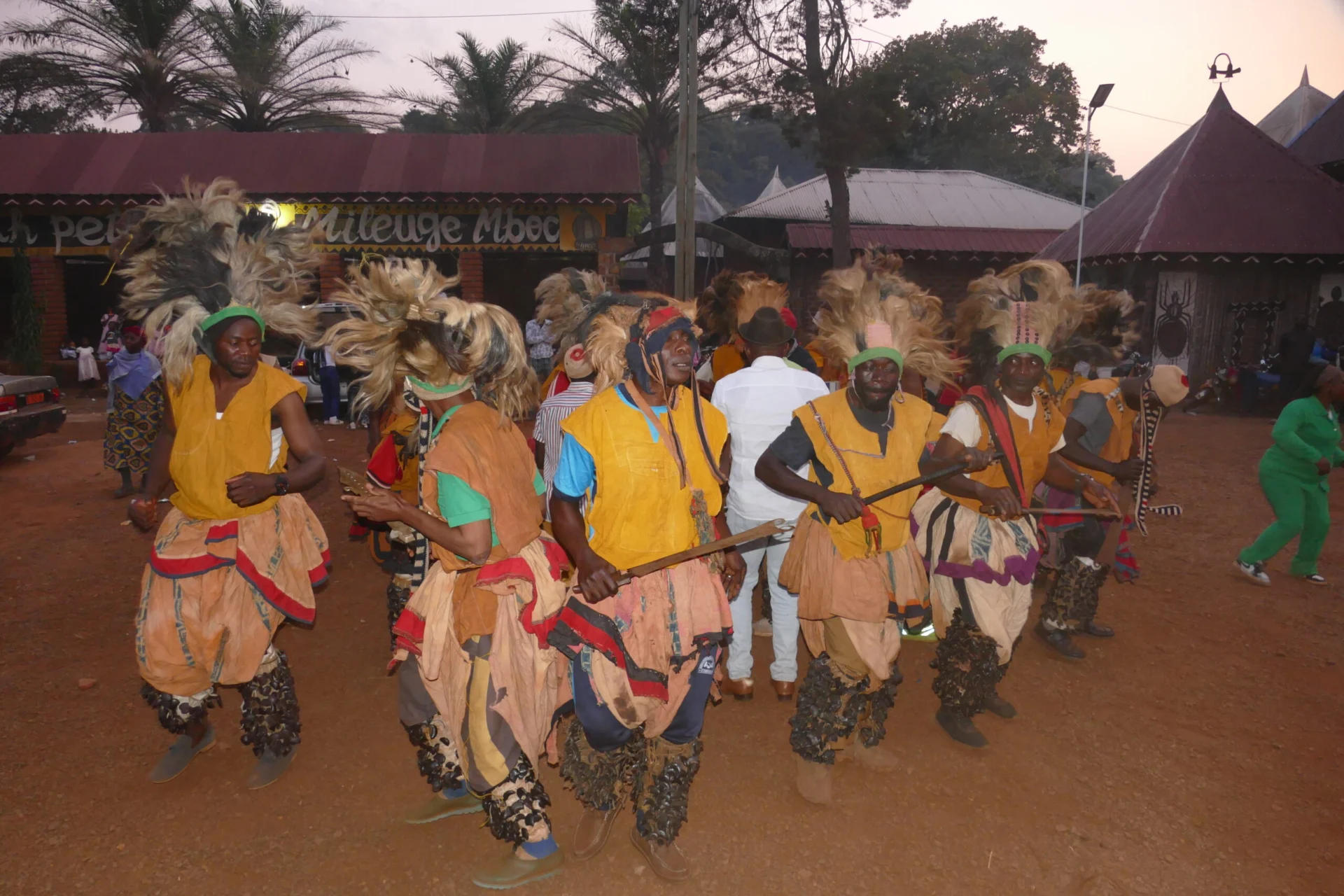
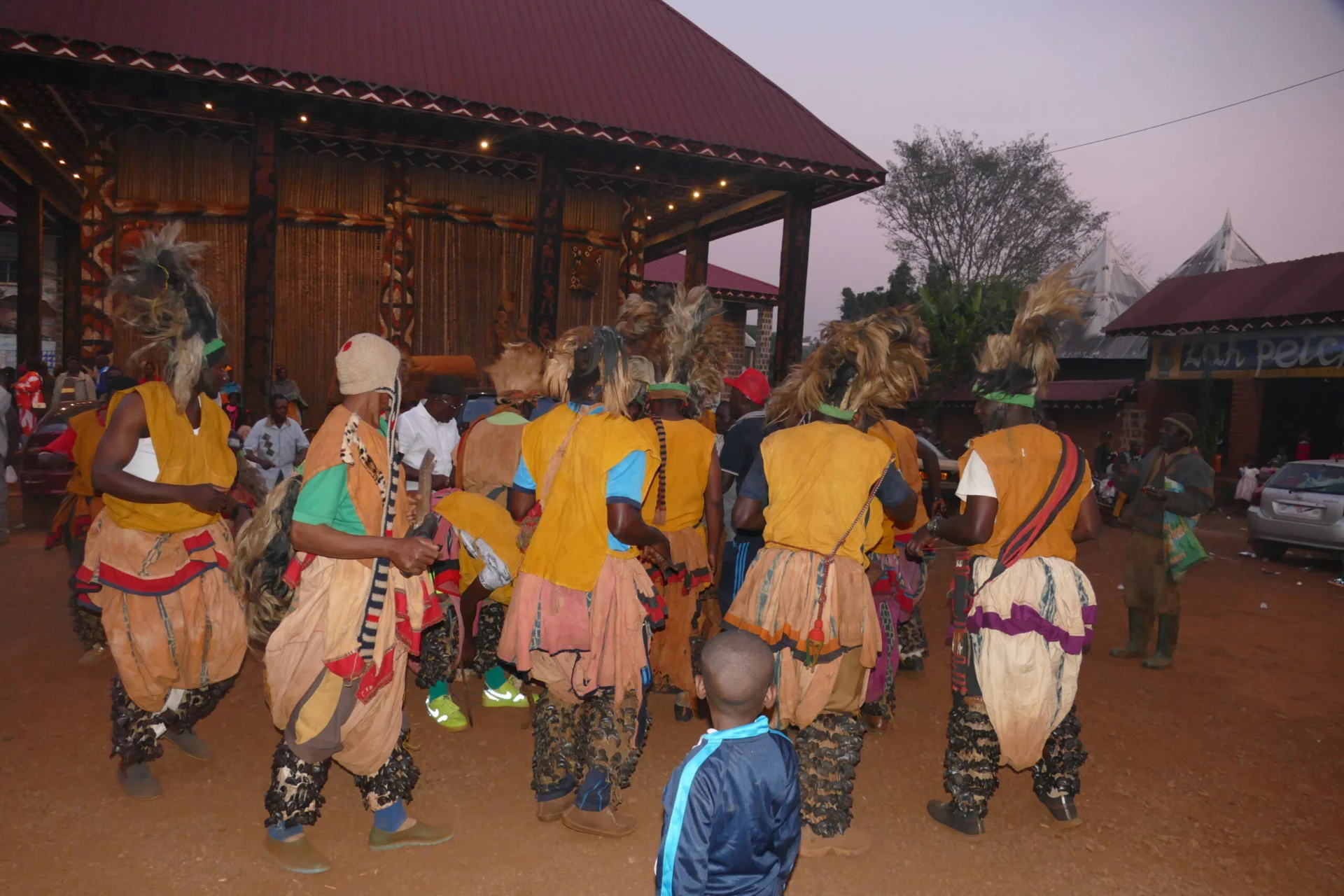
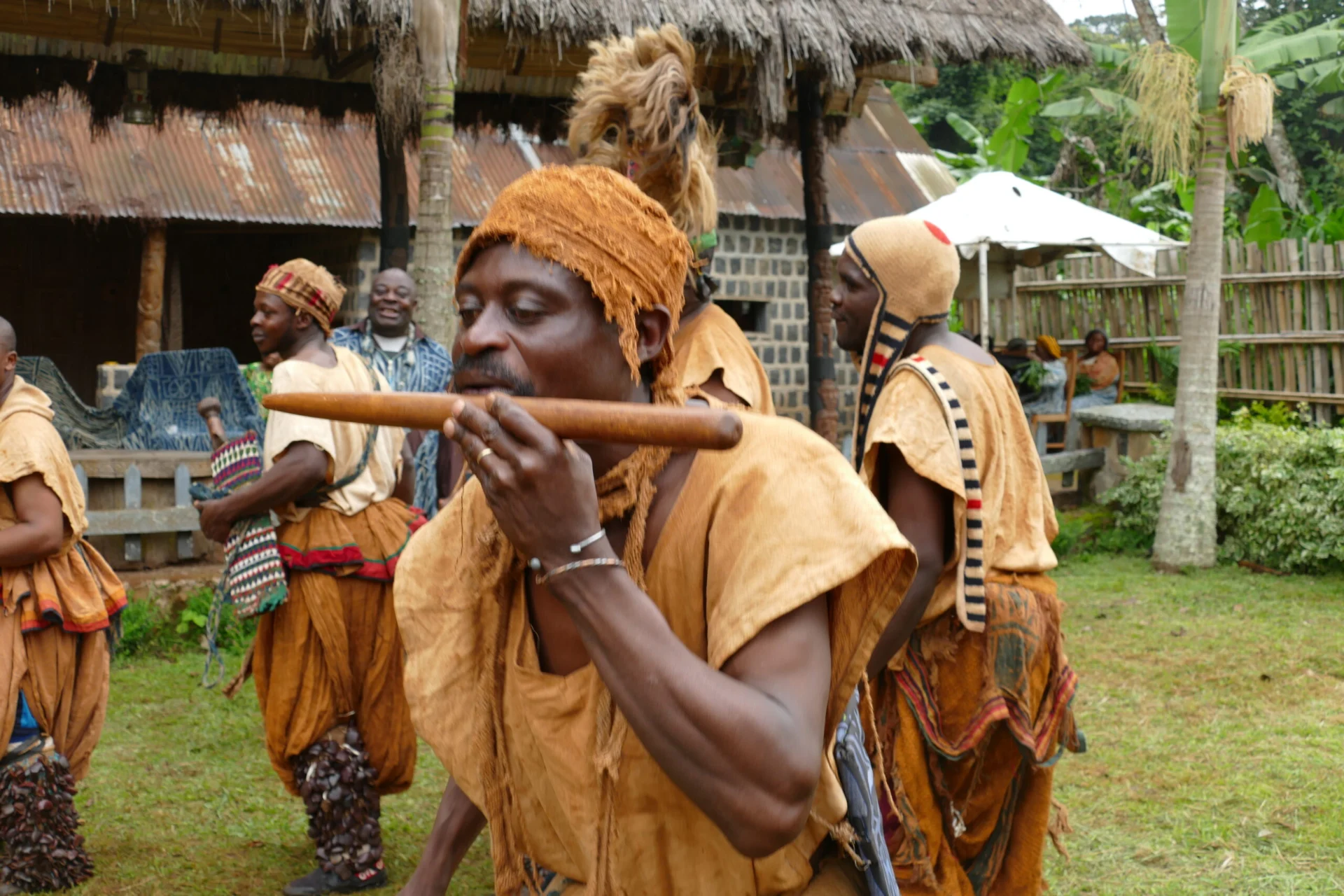
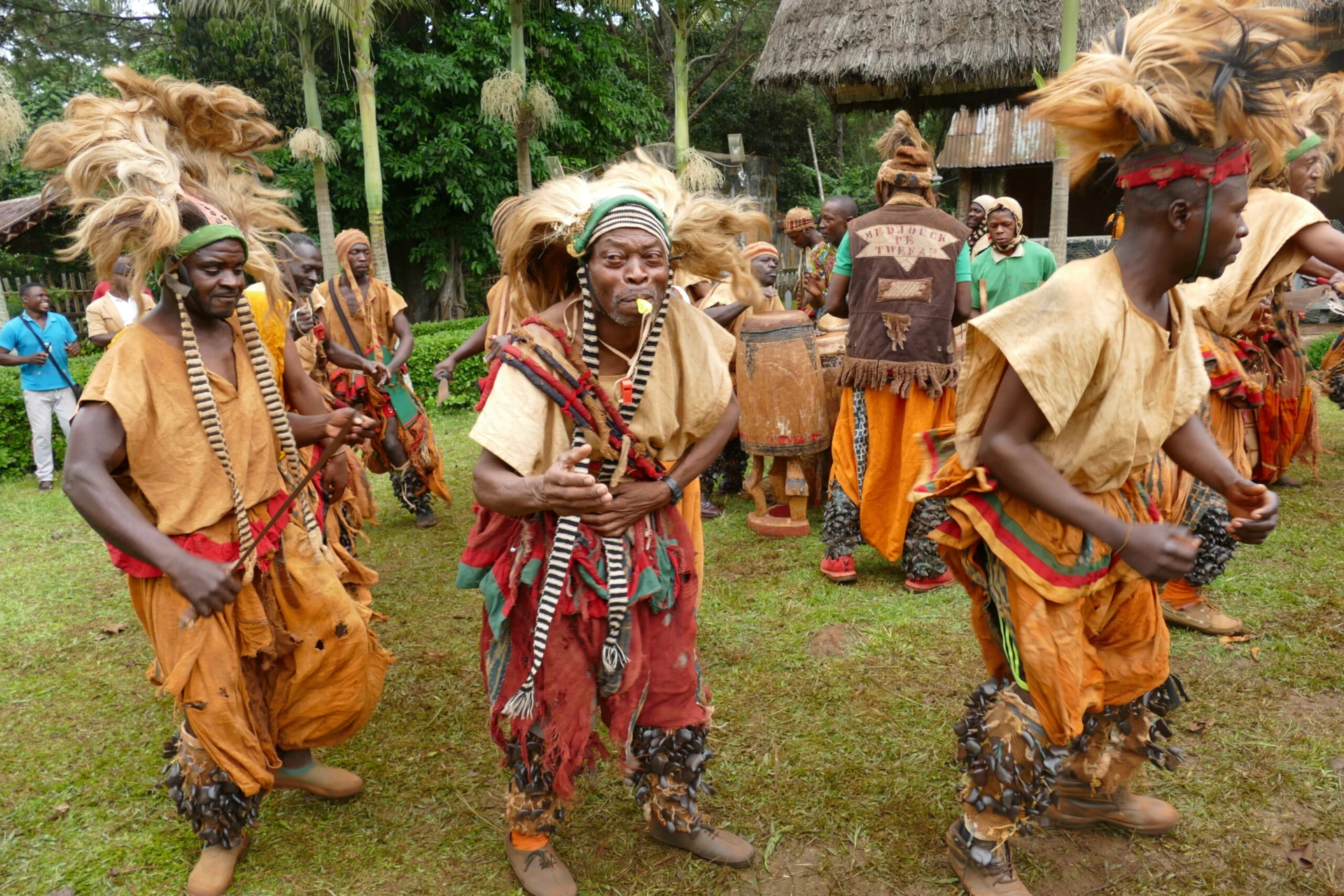
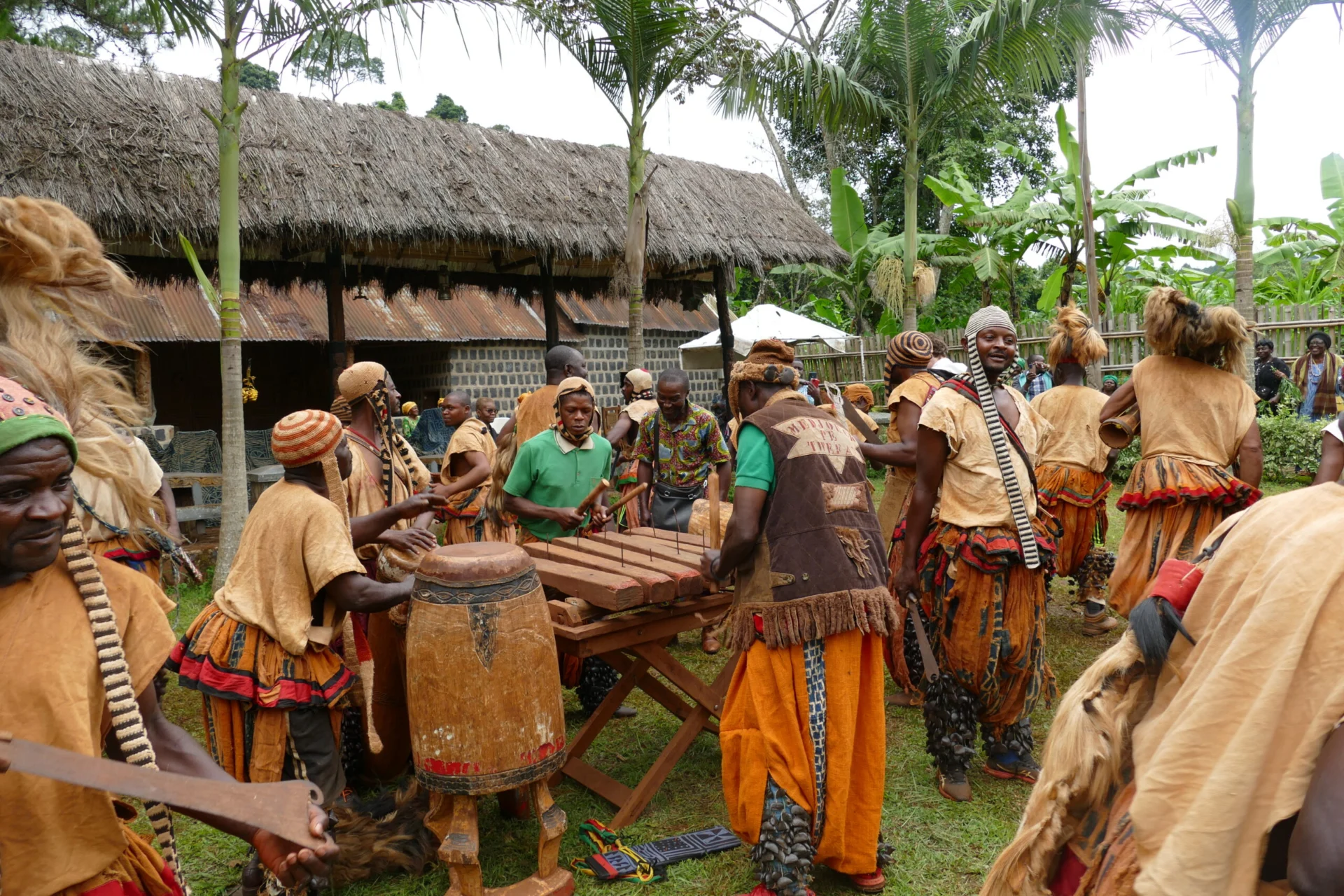
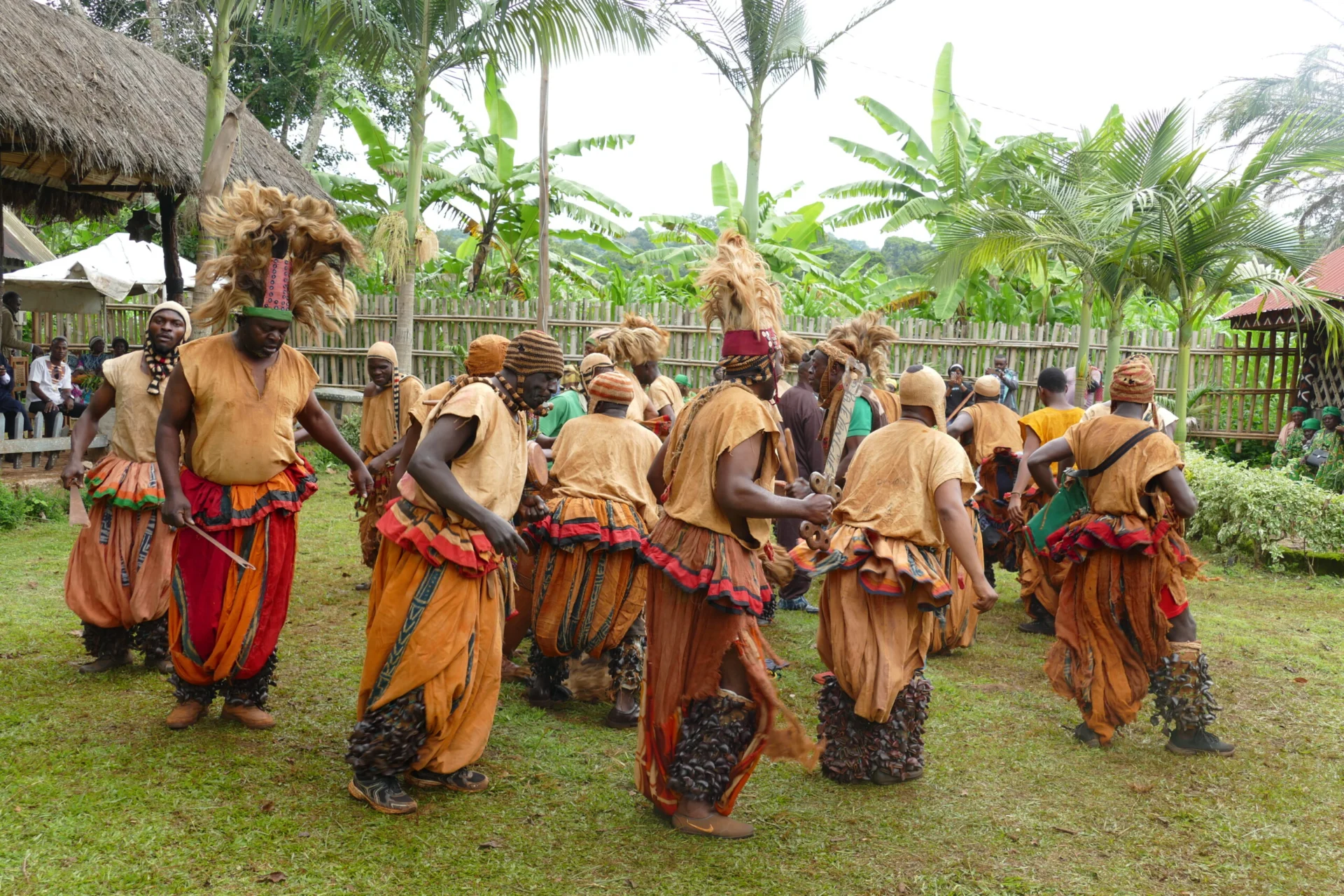
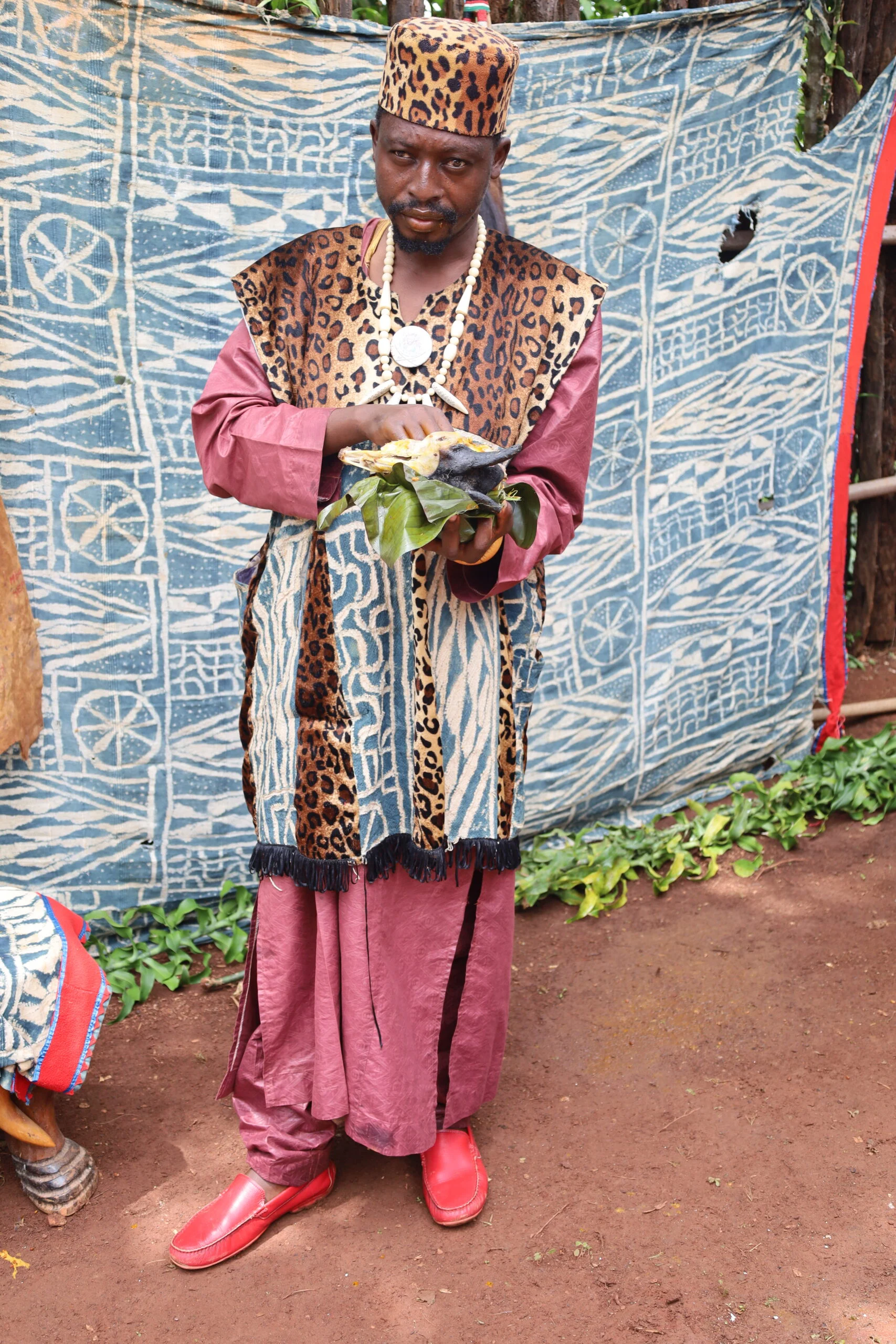
An army of warriors dedicated to protect the Feuh(fœ)/Fôh/Fon/Vū, defend the territorial integrity of a chiefdom (see La’ah (lá’áh) and No’h (nɔ̀’)) and ensure its expansion if necessary. It is made up of the chieftaincy’s most robust and battle-hardened men. Today, with the reorganization and administrative division of chieftaincies, the Mandjong are mainly confined to display exercises during major chieftaincy ceremonies or the Newou (newhú) of one of their own.
Une armée de guerriers destinée à assurer la protection du Feuh(fœ)/Fôh/Fon/Vū, à défendre l’intégrité territoriale d’une chefferie (Voir La’ah (lá’áh) et No’h (nɔ̀’) et à en assurer l’expansion si nécessaire. Elle est constituée des hommes les plus robustes et aguerris au combat de la chefferie. De nos jours, du fait de la réorganisation et du découpage administratif des chefferies, les Mandjong se limitent désormais à des exercices de démonstration au cours des grandes cérémonies dans les chefferies ou lors des cérémonies Newou (newhú) de l’un des leurs.

The word means hat. There are many different types, from royal headdresses to simple hats, Nkam (ŋkǎm)' hats and headdresses worn by the members of t...
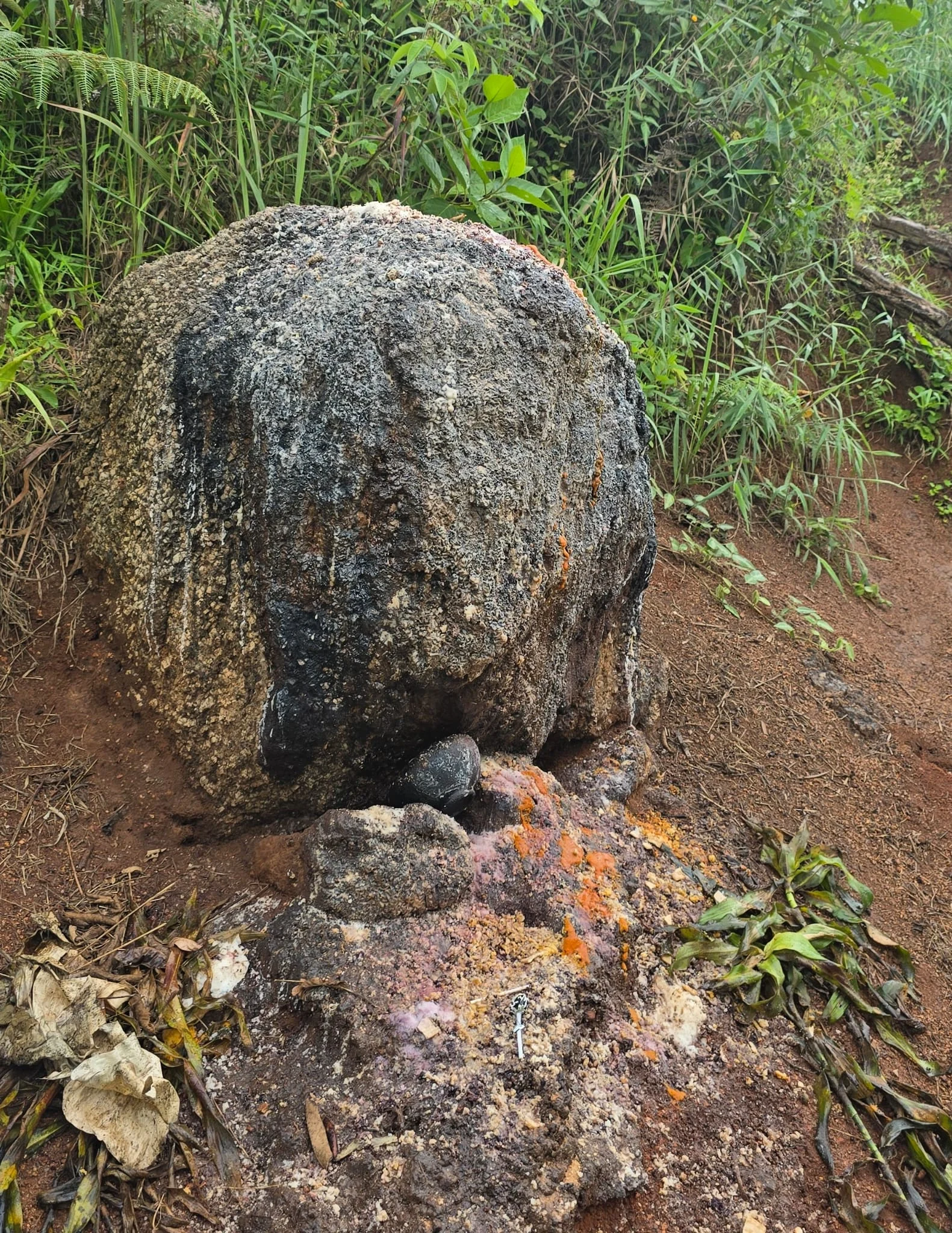
It refers to the offering made to deities during Bamiléké religious ceremonies. The act of making an offering is called ŋgwā' pↄↄ' (throwing the mushr...
Une poutre en bois sur laquelle sont gravées des informations, lesquelles renseignent généralement sur l’importance du lieu, les valeurs ainsi que la ...
It refers to the chiefdom, which is the most important place in the village. The chiefdom has a dual definition. Firstly, it refers to the territorial...
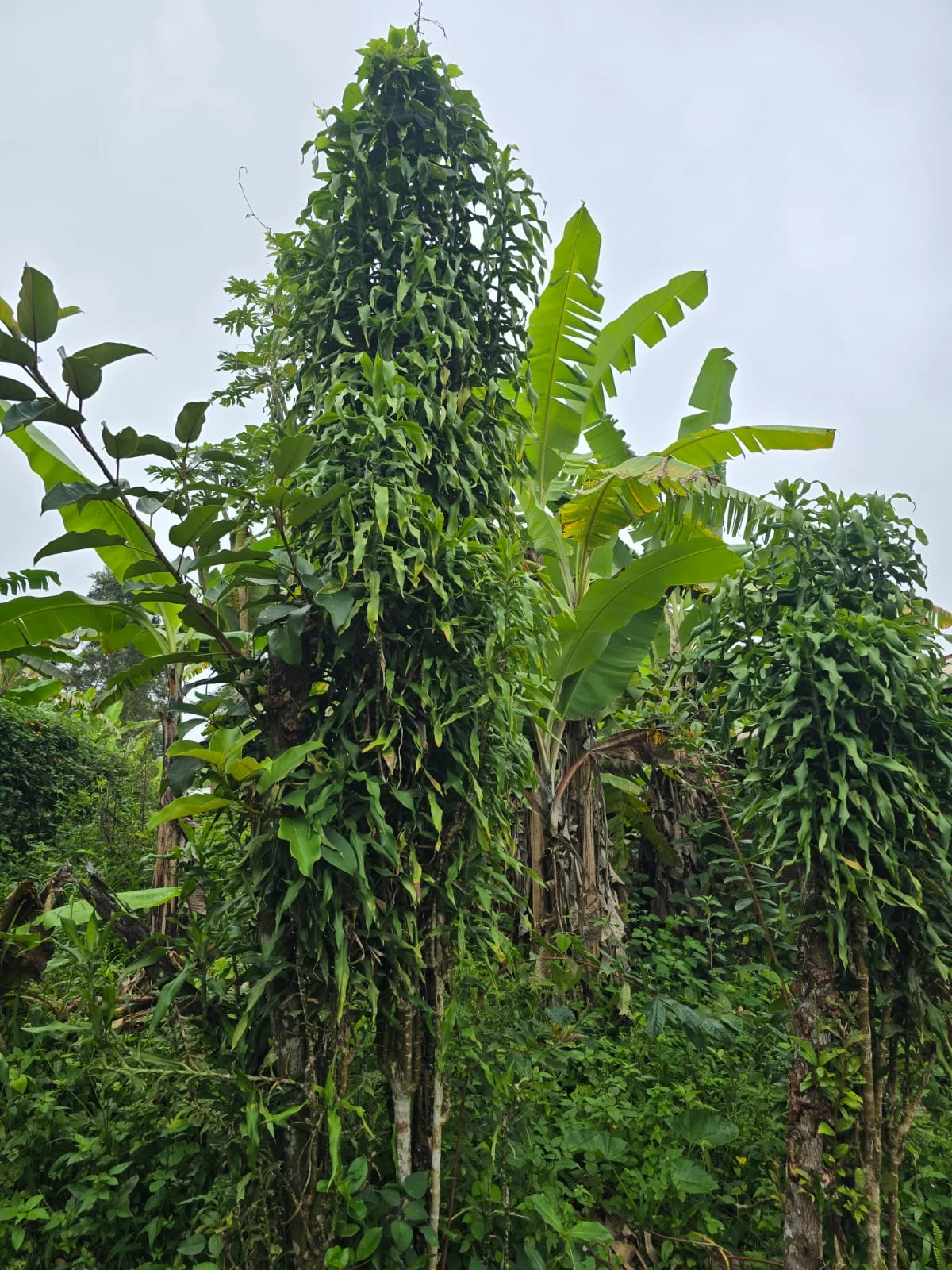
The peace tree is a shrub that can grow up to five meters high. In Bamiléké chiefdoms, it is one of the constituent plants of the bocage*, specific to...
A notable is a person occupying a high rank in a chiefdom (See No’h (nɔ̀’)). A notable acquires his title and rank either by succession or by recognit...
The grouping of people of a certain age category. The gaps between two age groups vary from chiefdom to chiefdom. The gap considered for a generation ...
Literally the man of the tarantula, he is a doctor and a diviner. He uses tarantulas or cowrie shells for divination. He also uses plants and sacred w...
The man of leaves or medicine is the community's chief doctor. He has a thorough knowledge of medicinal plants, but also of anatomy (Notue/Perrois 198...
This website uses strictly necessary cookies to function. We would also like to use functional and analytical cookies to improve your experience. You can choose to accept or decline.