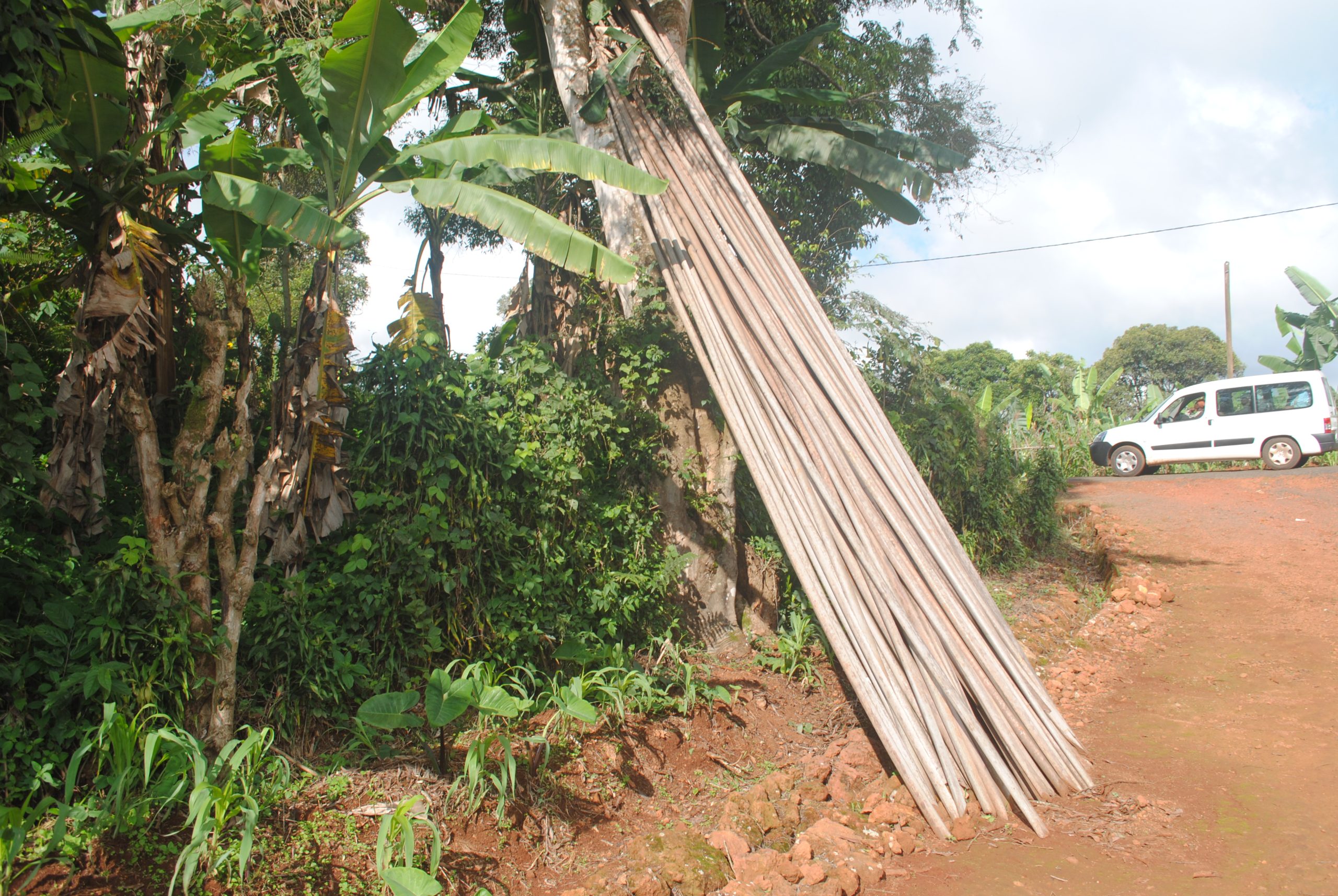
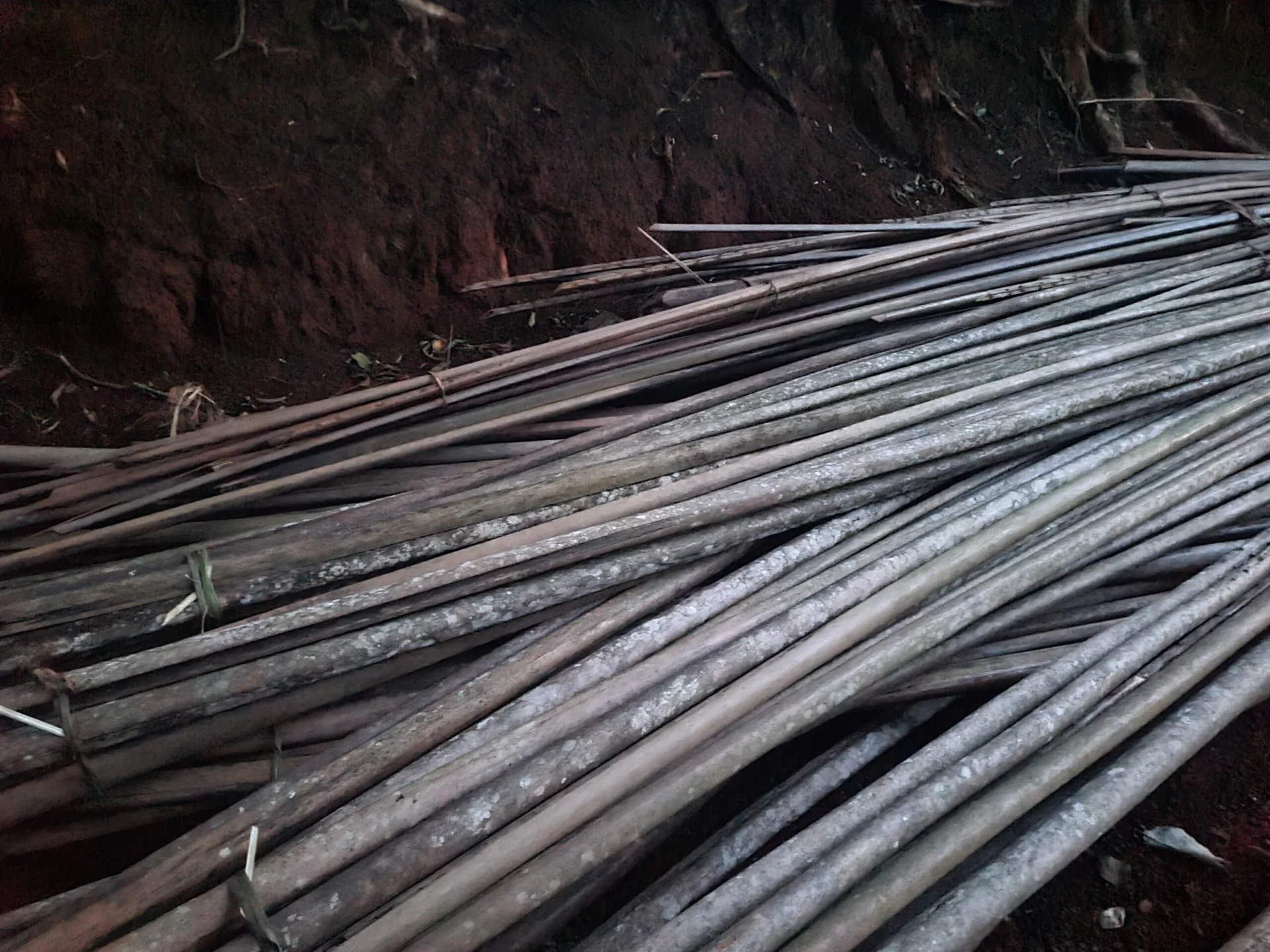
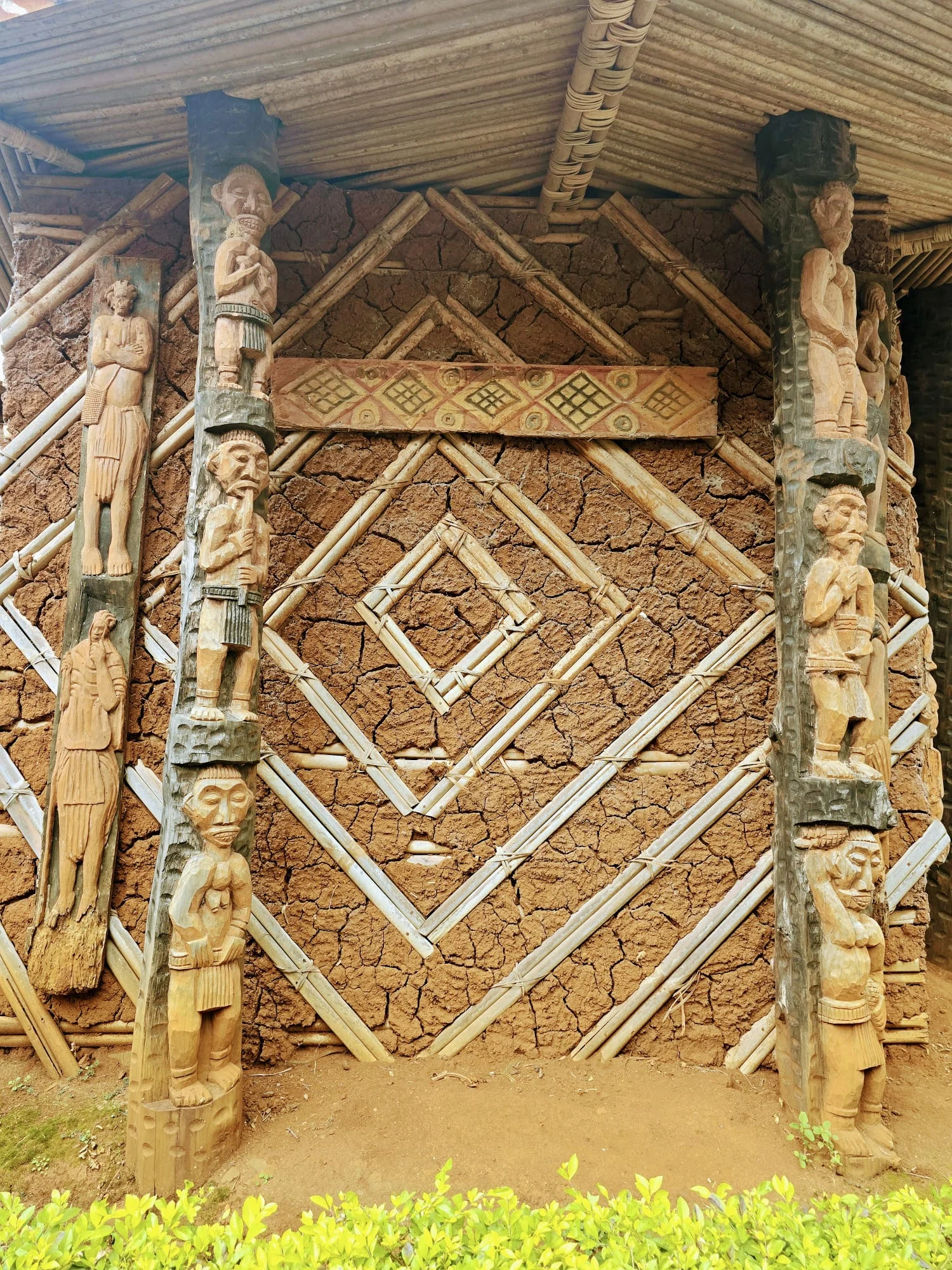
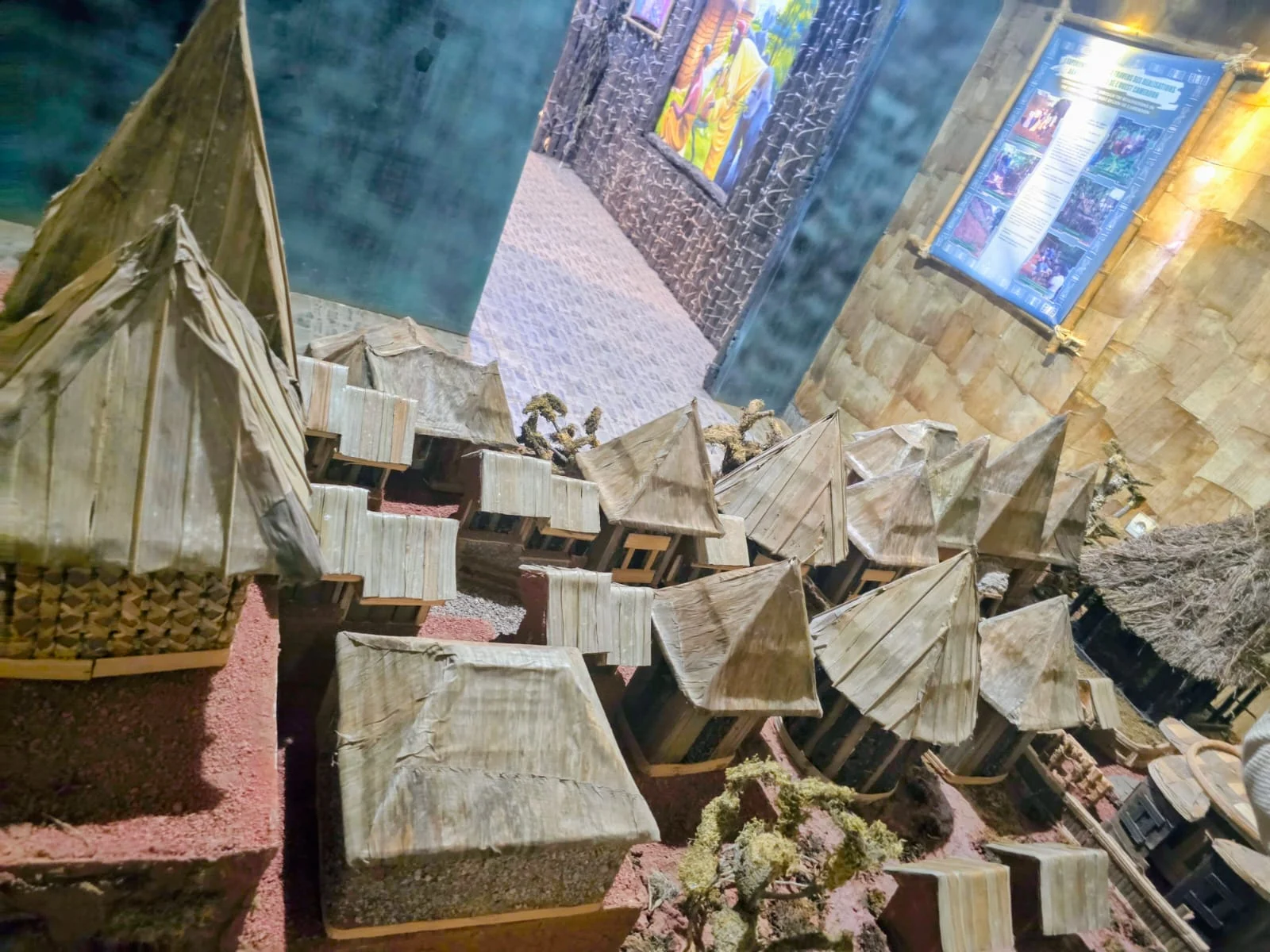
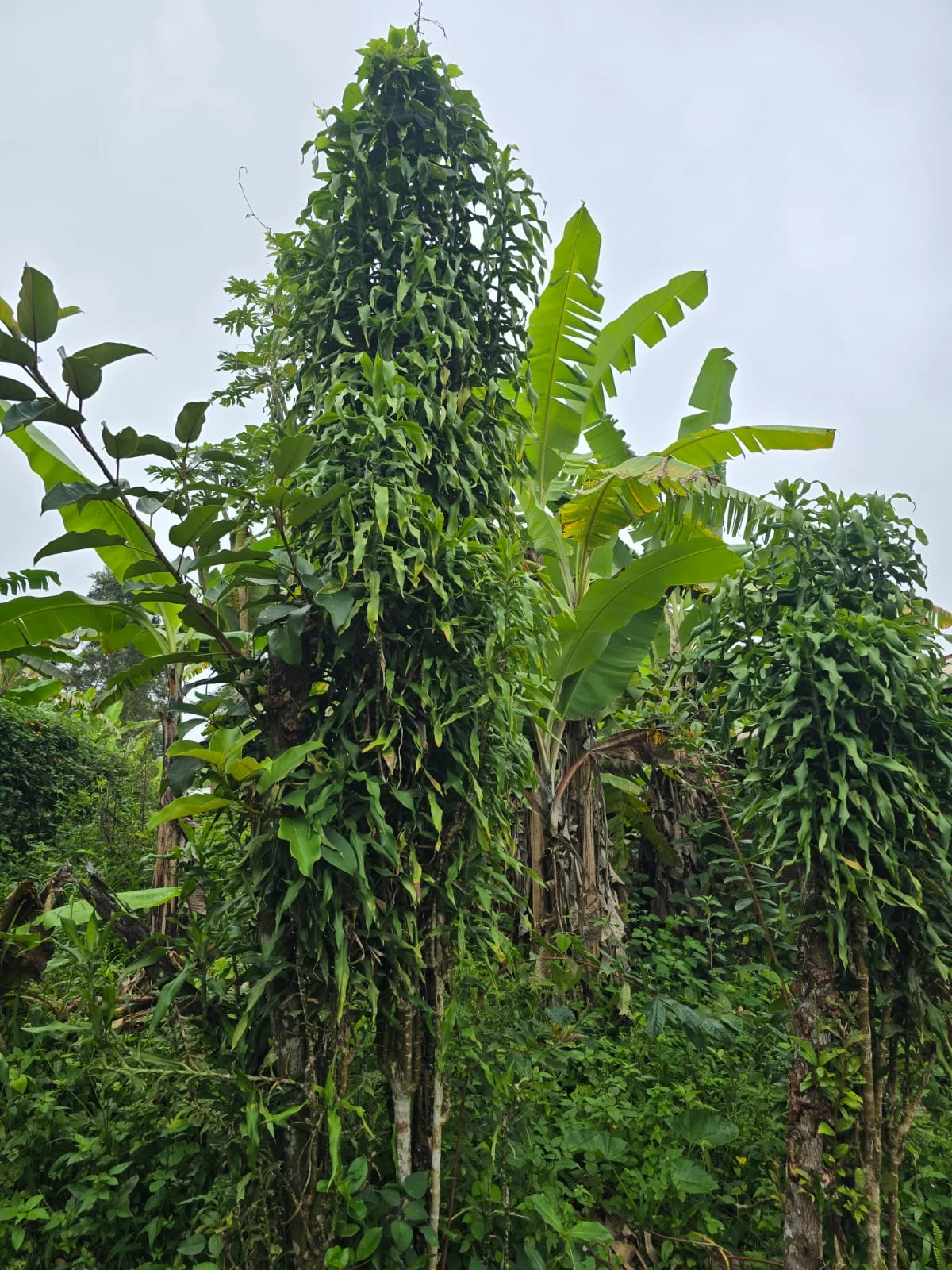
From the Latin bambousa vulgaris, this plant is found in the valleys of the Grassfields. It has been domesticated and integrated into the daily life of the chiefdoms. The main products derived from this domestication are stools, mats, shutters, and mobile granaries (see Ŋkiŋ/chýɛ̀ ndǝ́). Bamboo is also used in the construction of houses, notably for walls, granaries, and framework.
Du latin bambousa vulgaris, cette plante se trouve dans les vallées des Grassfields. Elle a été domestiquée et intégrée dans la vie quotidienne des chefferies. Les principaux produits dérivés de cette domestication sont les tabourets, les nattes, les volets et les greniers mobiles (voir Ŋkiŋ/chýɛ̀ ndǝ́). Le bambou est également utilisé dans la construction des maisons, notamment pour les murs, les greniers et les charpentes.

The word means hat. There are many different types, from royal headdresses to simple hats, Nkam (ŋkǎm)' hats and headdresses worn by the members of t...
It refers to the offering made to deities during Bamiléké religious ceremonies. The act of making an offering is called ŋgwā' pↄↄ' (throwing the mushr...
Une poutre en bois sur laquelle sont gravées des informations, lesquelles renseignent généralement sur l’importance du lieu, les valeurs ainsi que la ...
It refers to the chiefdom, which is the most important place in the village. The chiefdom has a dual definition. Firstly, it refers to the territorial...
The peace tree is a shrub that can grow up to five meters high. In Bamiléké chiefdoms, it is one of the constituent plants of the bocage*, specific to...
A notable is a person occupying a high rank in a chiefdom (See No’h (nɔ̀’)). A notable acquires his title and rank either by succession or by recognit...
The grouping of people of a certain age category. The gaps between two age groups vary from chiefdom to chiefdom. The gap considered for a generation ...
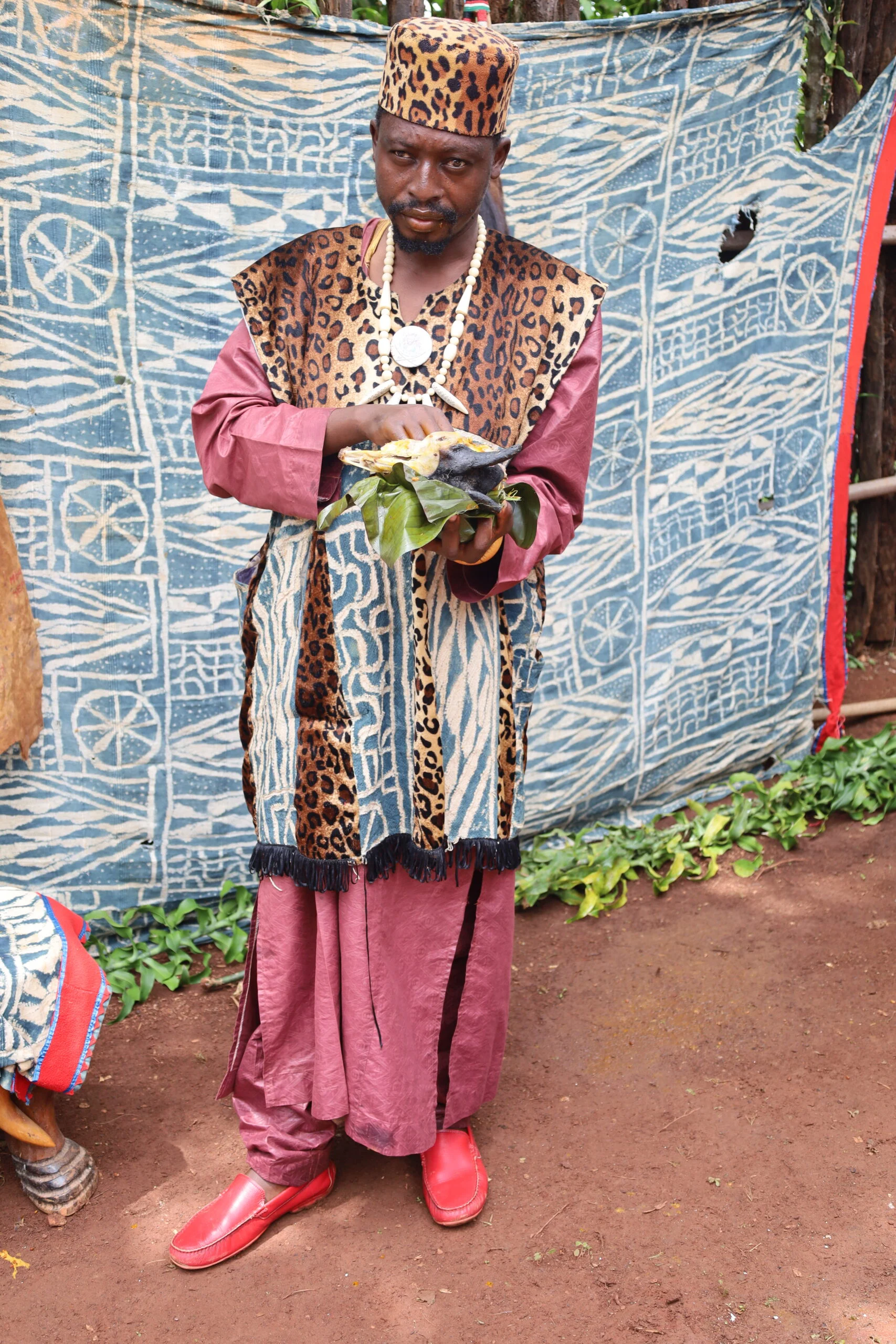
Literally the man of the tarantula, he is a doctor and a diviner. He uses tarantulas or cowrie shells for divination. He also uses plants and sacred w...
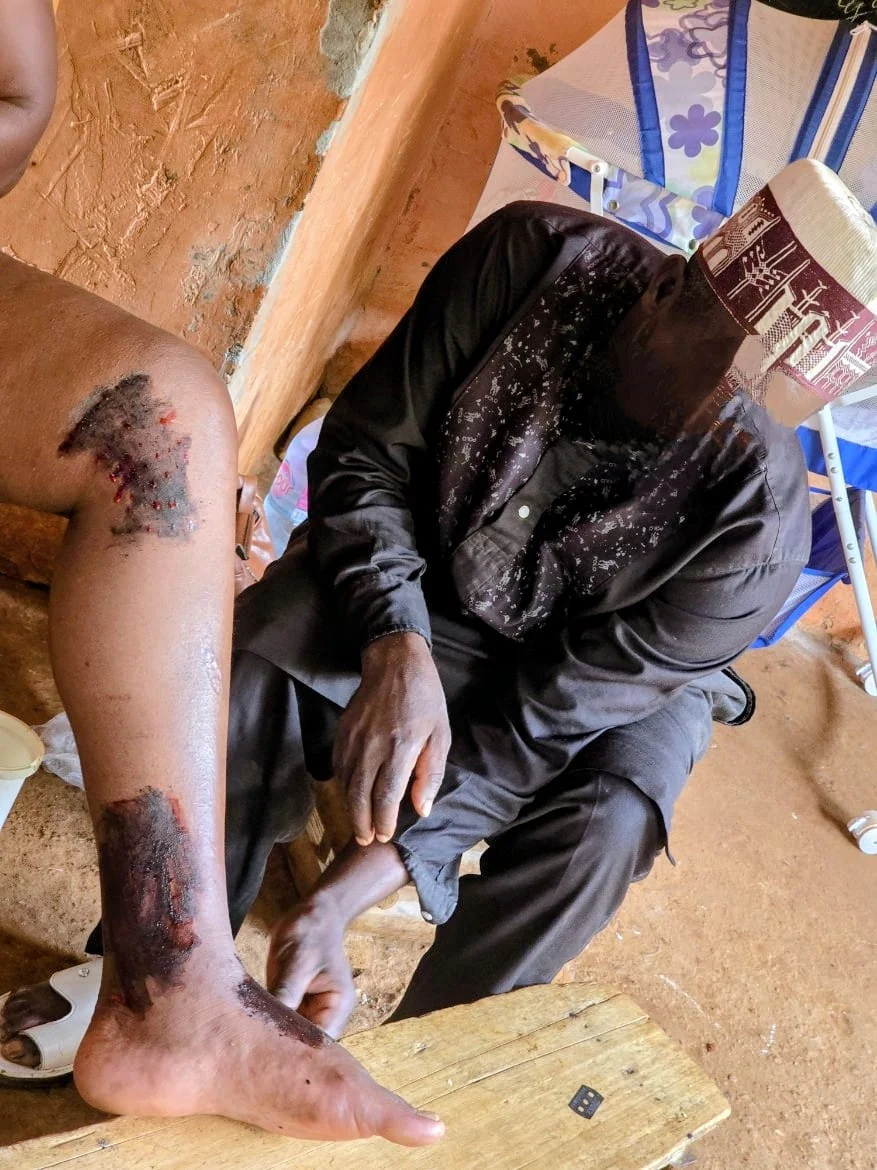
The man of leaves or medicine is the community's chief doctor. He has a thorough knowledge of medicinal plants, but also of anatomy (Notue/Perrois 198...
This website uses strictly necessary cookies to function. We would also like to use functional and analytical cookies to improve your experience. You can choose to accept or decline.