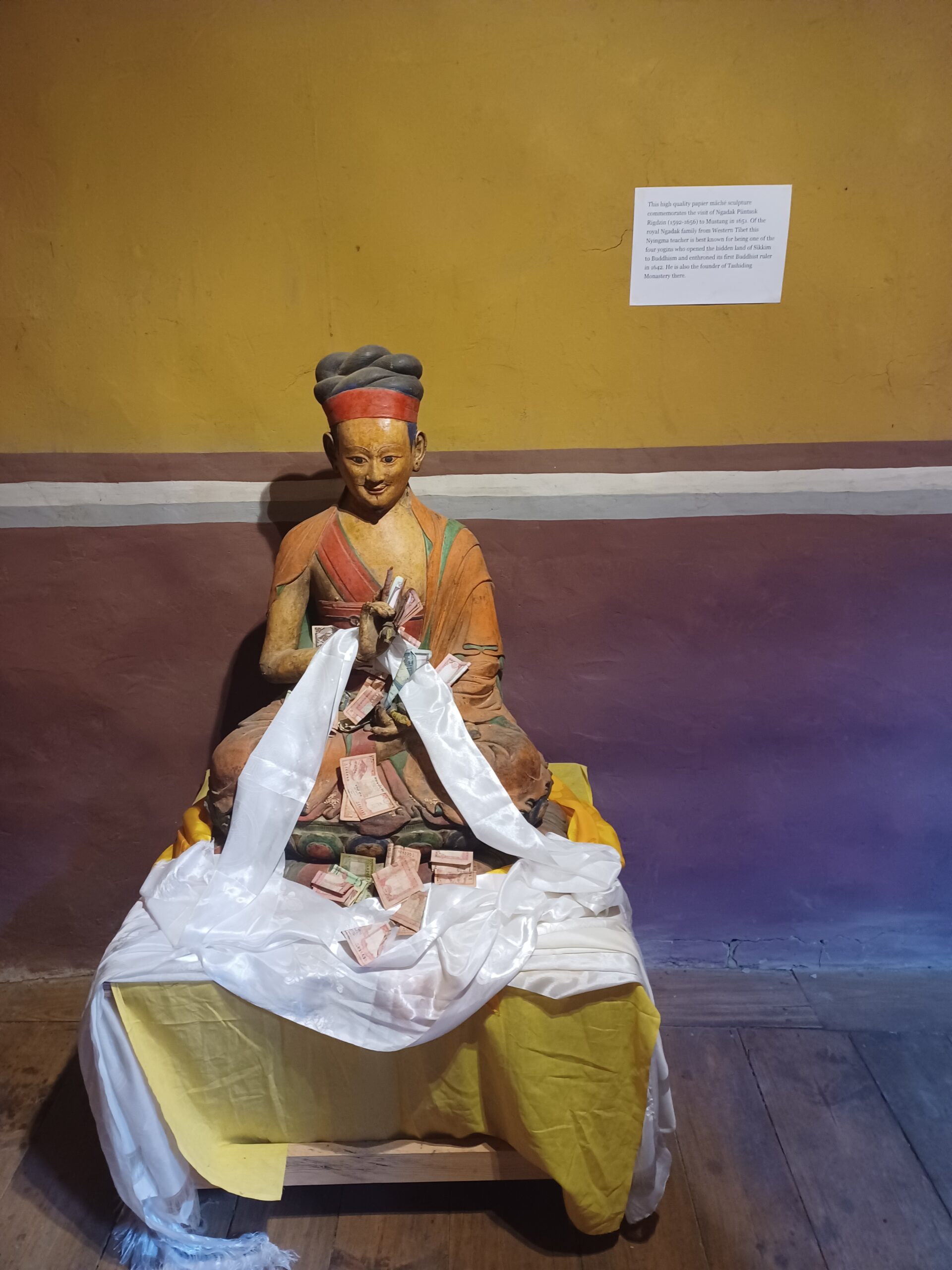
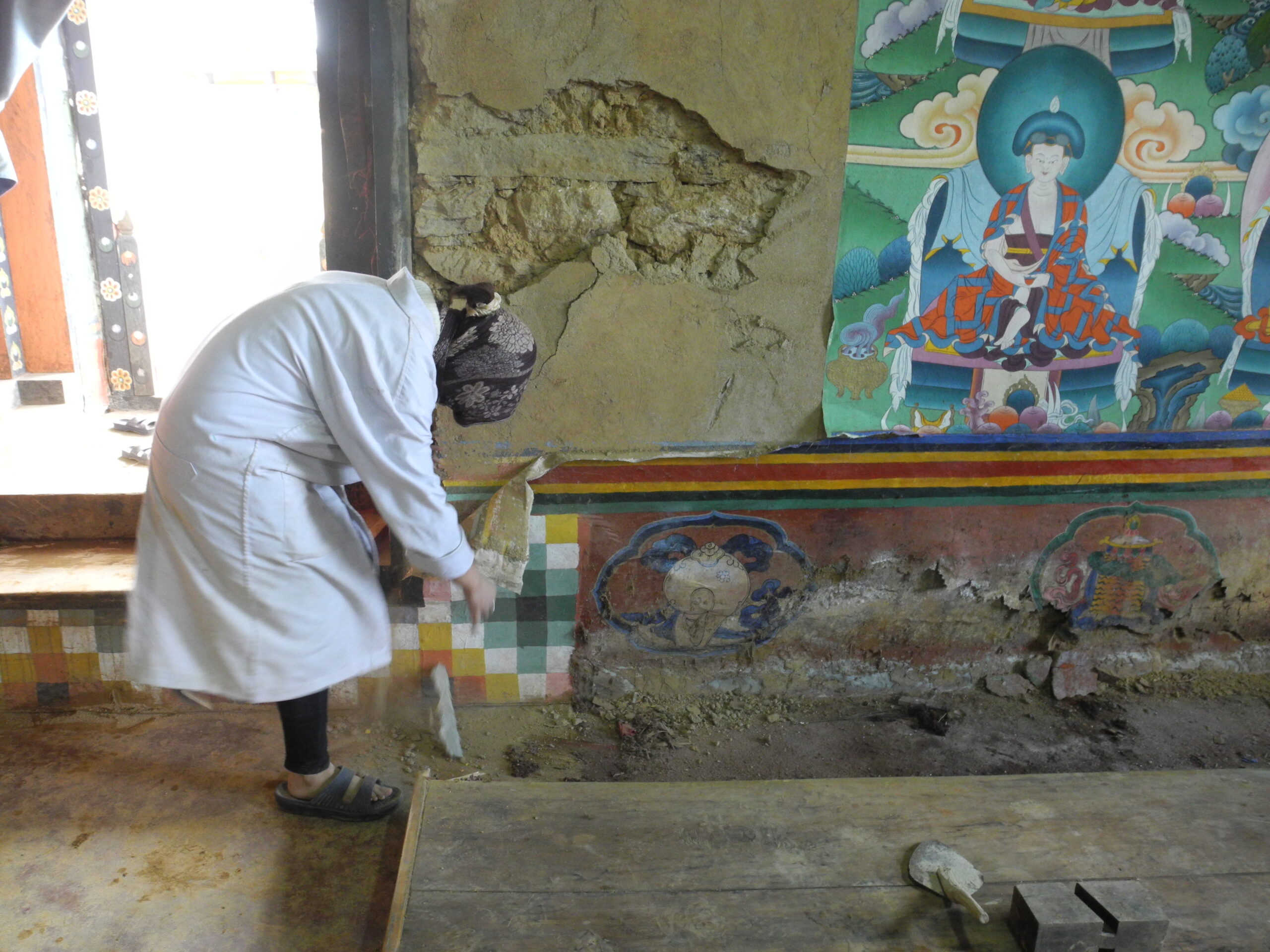
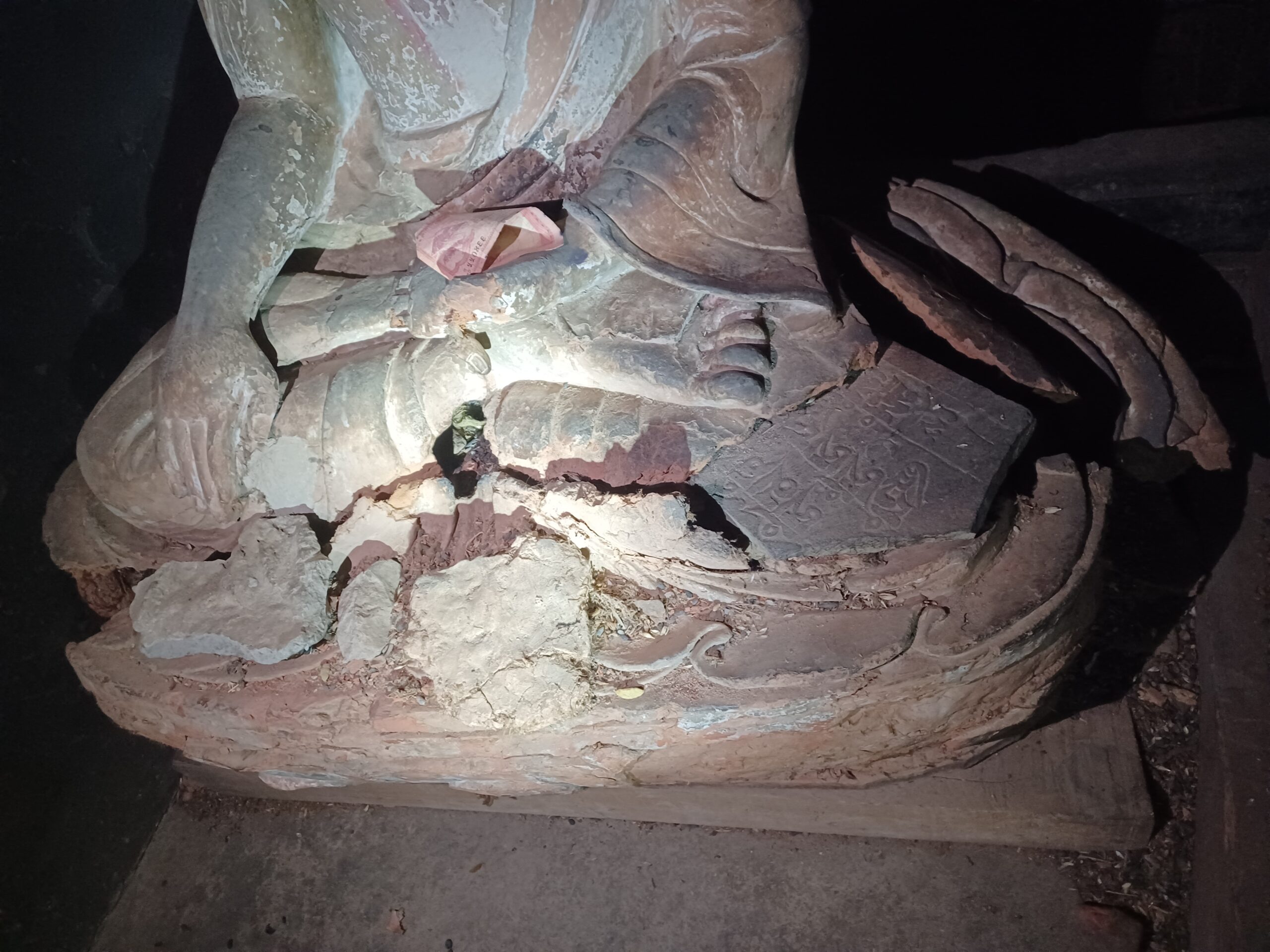
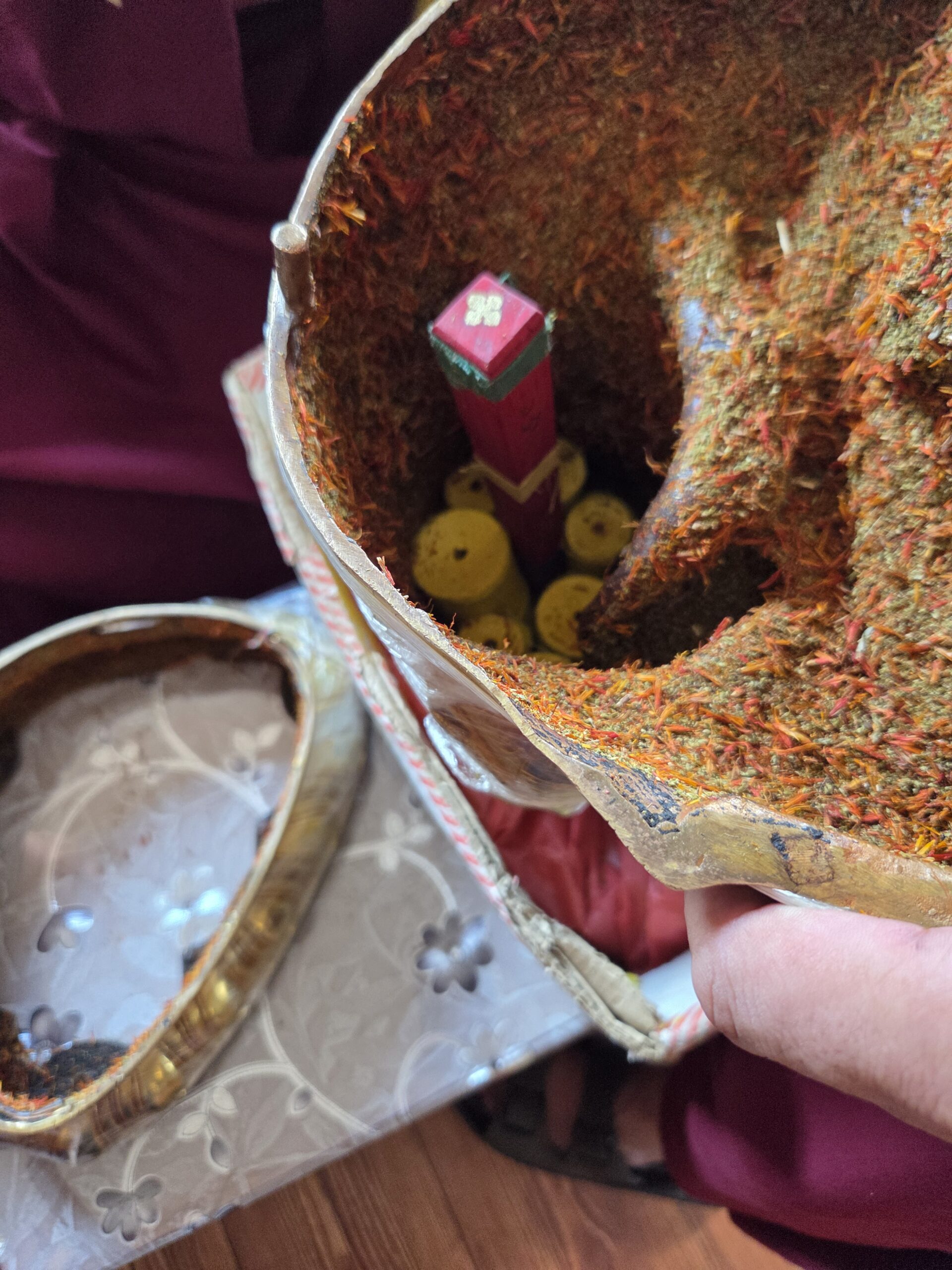
‘Ku’ is the honorific word for ‘body’ in Tibetan and describes the image or likeness of deities, teachers and religious authorities who embody Buddha-nature. Ku are seen as paintings, sculptures, carvings, votive photographs, manuscript illustrations and other forms of material religion. Ku which have been consecrated – and which often contain or are treated as analogous to body relics of the Buddha – are considered the highest priority for care and are generally placed above texts and other forms of material culture in storage or display. Ku can refer to human-fabricated and consecrated figures like metal statues or thang ka (hanging scrolls) but also to recognisable images of deities, etc. that are self-arisen in natural objects or surfaces. Practitioners often interact with ku by giving them offerings of incense, money, water or butter, or by touching them with their hands or foreheads. Maintaining ku as complete figures is a priority for treatment, e.g. restoring lost iconographic details and body parts, and their faces are often repainted or re-gilded as an offering made by patrons.

The word karma - used in Tibetan along with ‘jinley’ - and derived from the Sanskrit verb kṛ meaning ‘to make, do or create’. It describes the accumul...
Often translated from Tibetan as ‘blessing’, jinlap can describe the accumulated evidence of an object’s effective use and maintenance and/or its capa...
Tibetan and Himalayan Buddhist three-dimensional figures, sculptures and monuments often contain materials - collectively referred to as ‘zung’, in Ti...
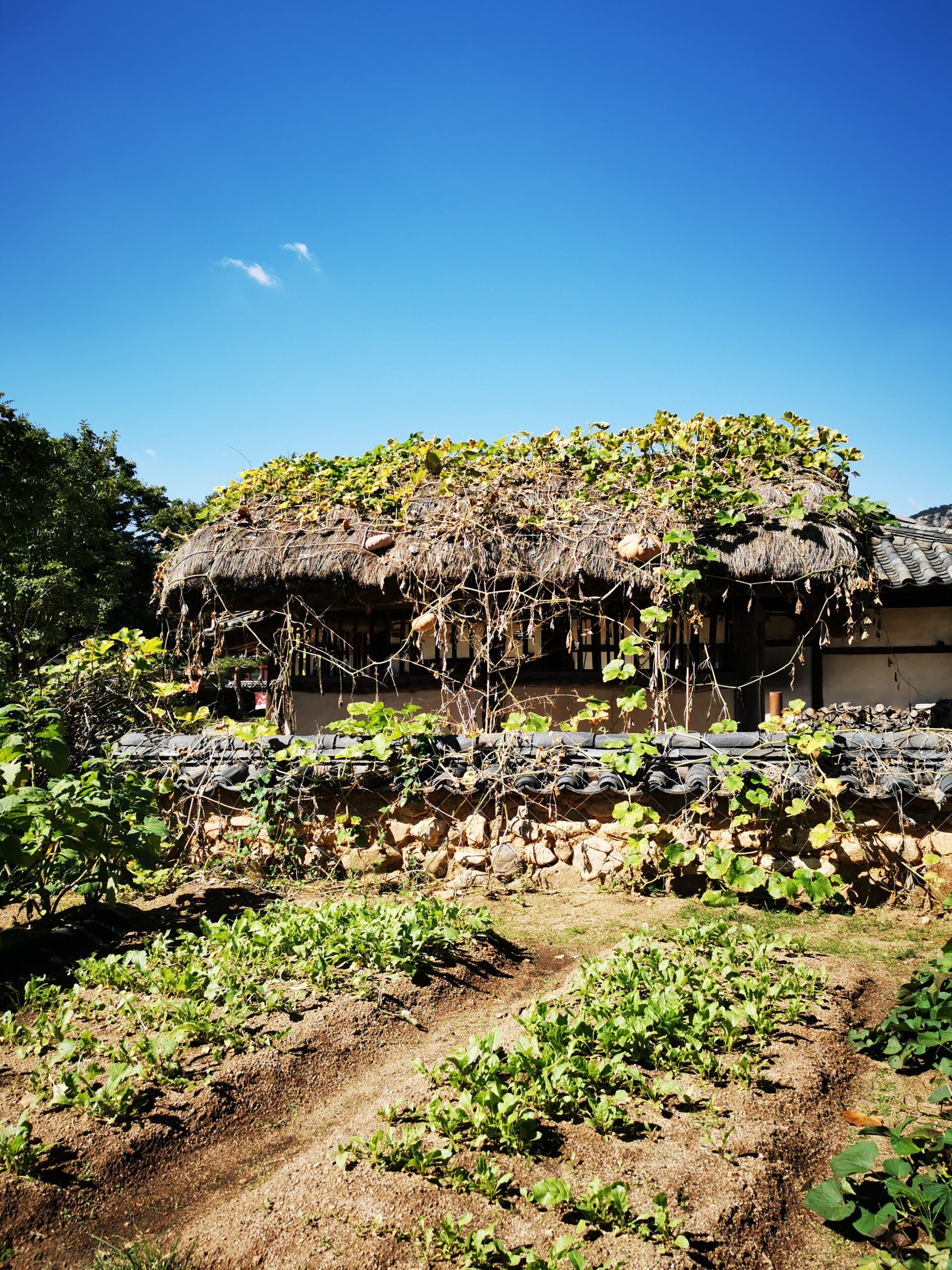
Choga is a traditional type of Korean housing, which is characterised by a thatched roof. The materials used vary depending on region; rice straw was ...
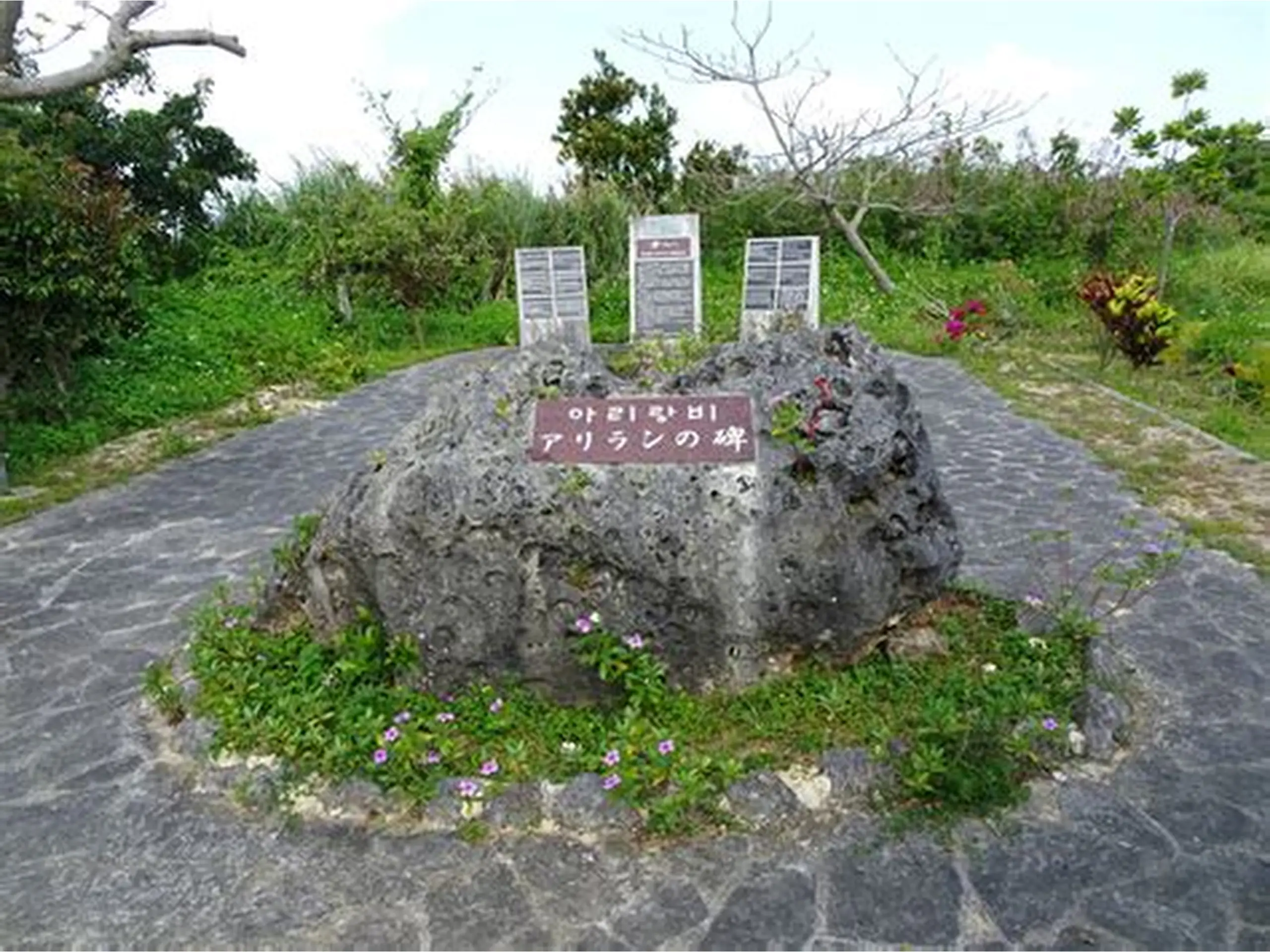
Arirang is a Korean folk song that gained significance during the Japanese occupation of the Korean Peninsula as a form of resistance. The origin of t...
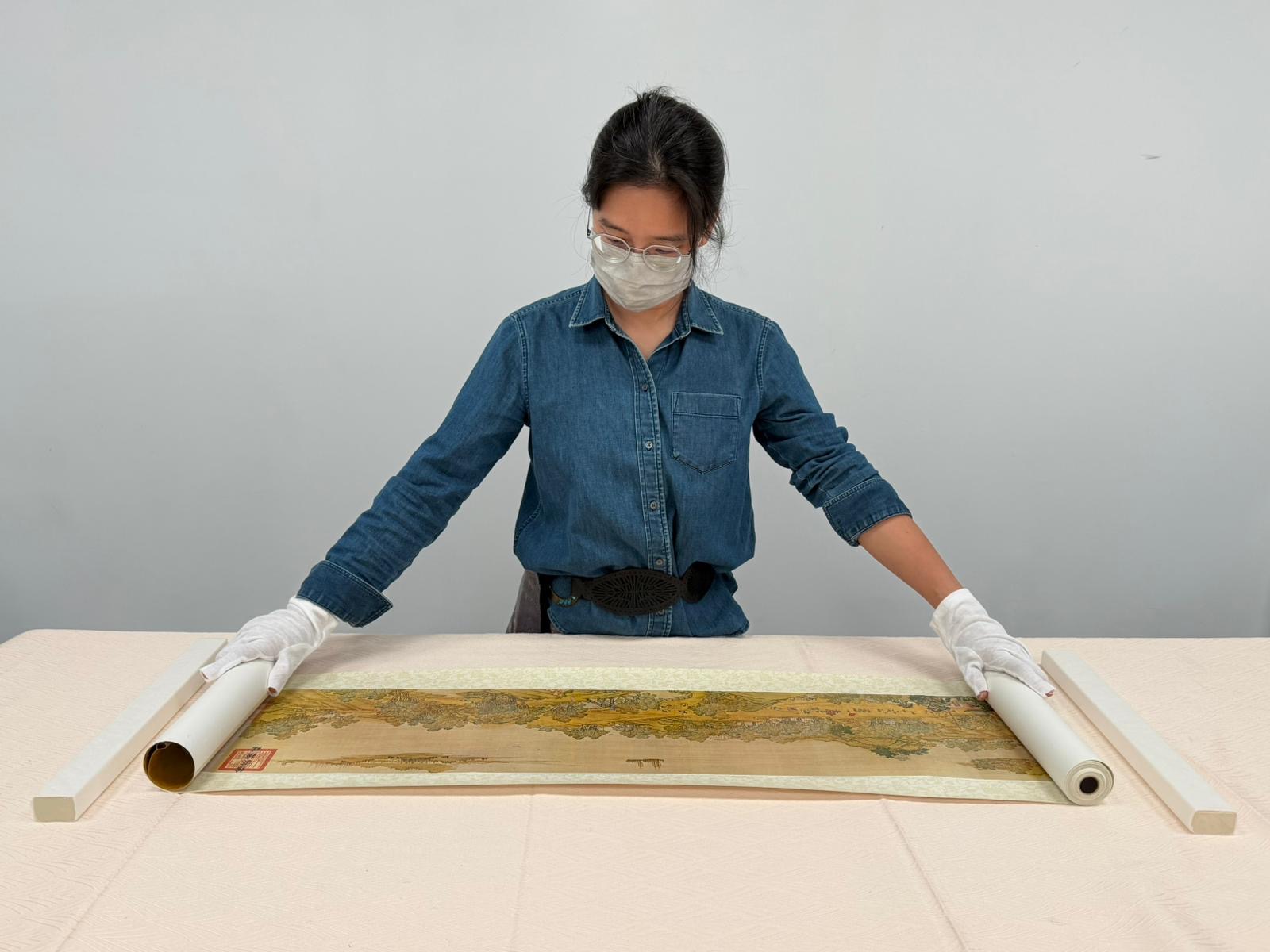
在东亚和部分东南亚文化中,手卷是重要的绘画或书法装裱形式(另一种为立轴)。手卷一般由右自左横向展开,其长度通常可达数米,高度约为25至40厘米。 动态的观...
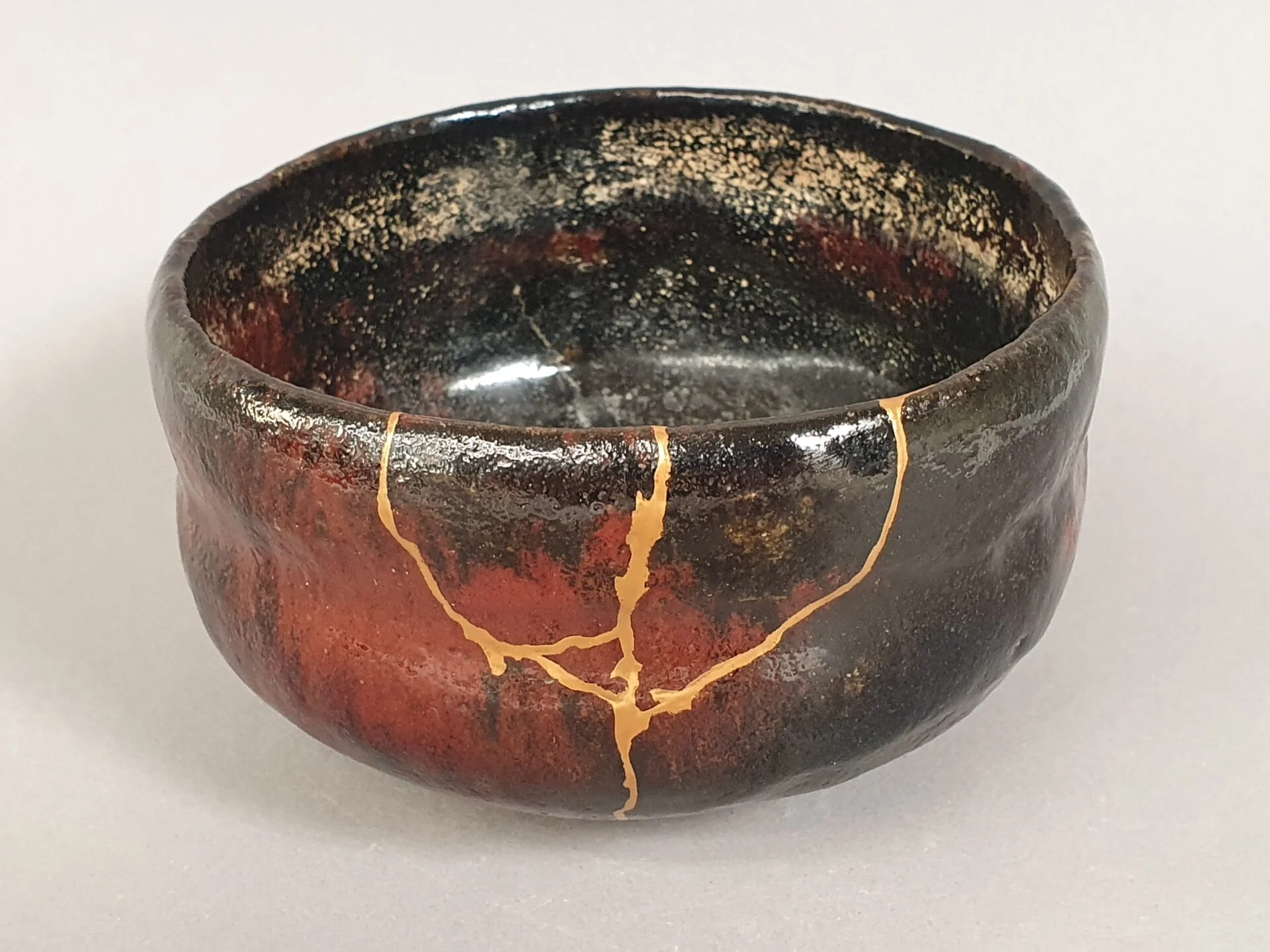
Kintsugi setzt sich aus folgenden Zeichen zusammen: 金 (kin) – Gold, Metall, Geld und 継ぎ (tsugi) – Verbindung / Reparatur / Zusammenfügen Kintsugi i...
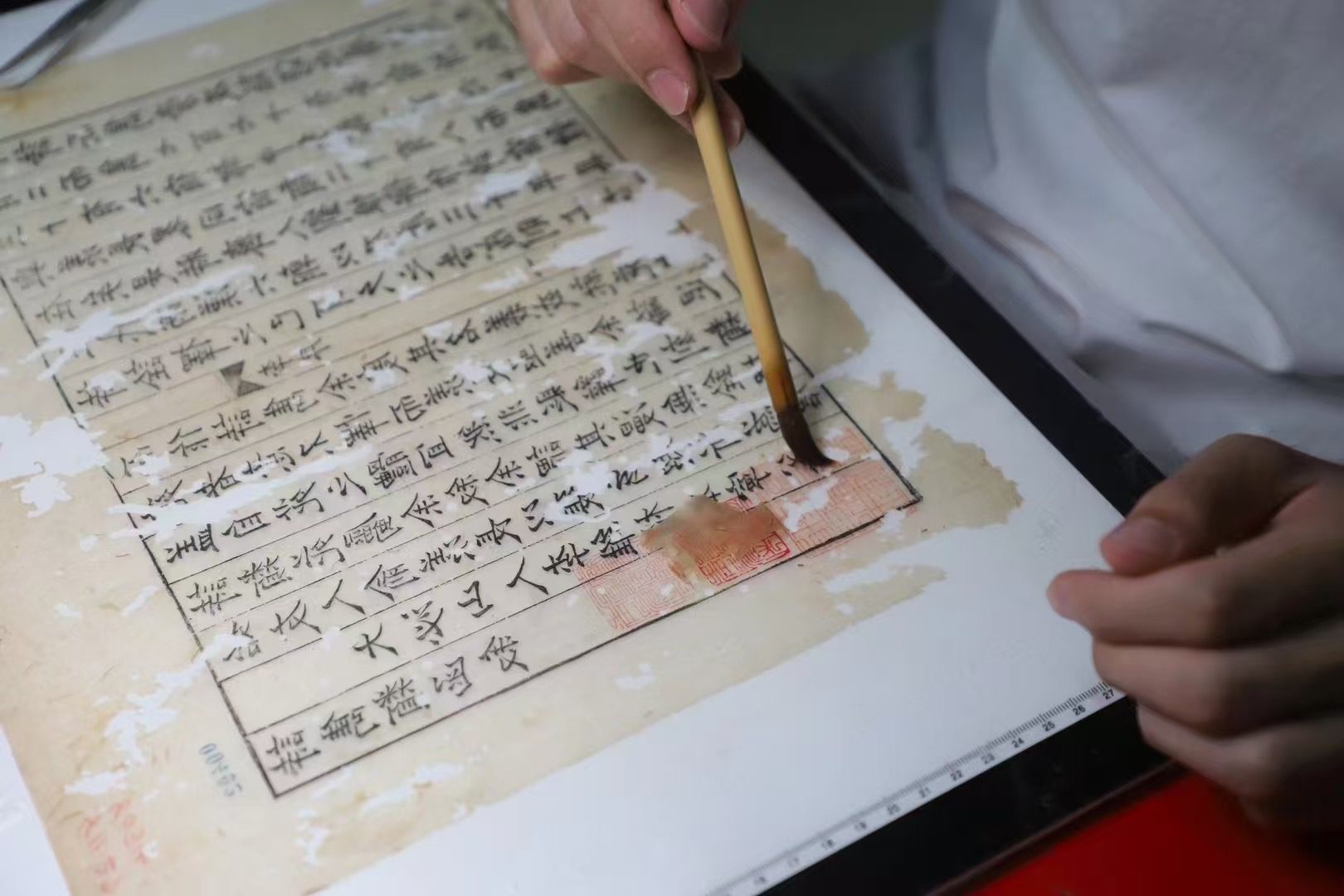
Dans la langue chinoise moderne, le terme « 装潢/ zhuāng huáng » (zhuānghuáng) revêt trois sens, dont l’un fait référence à l’utilisation de papier te...
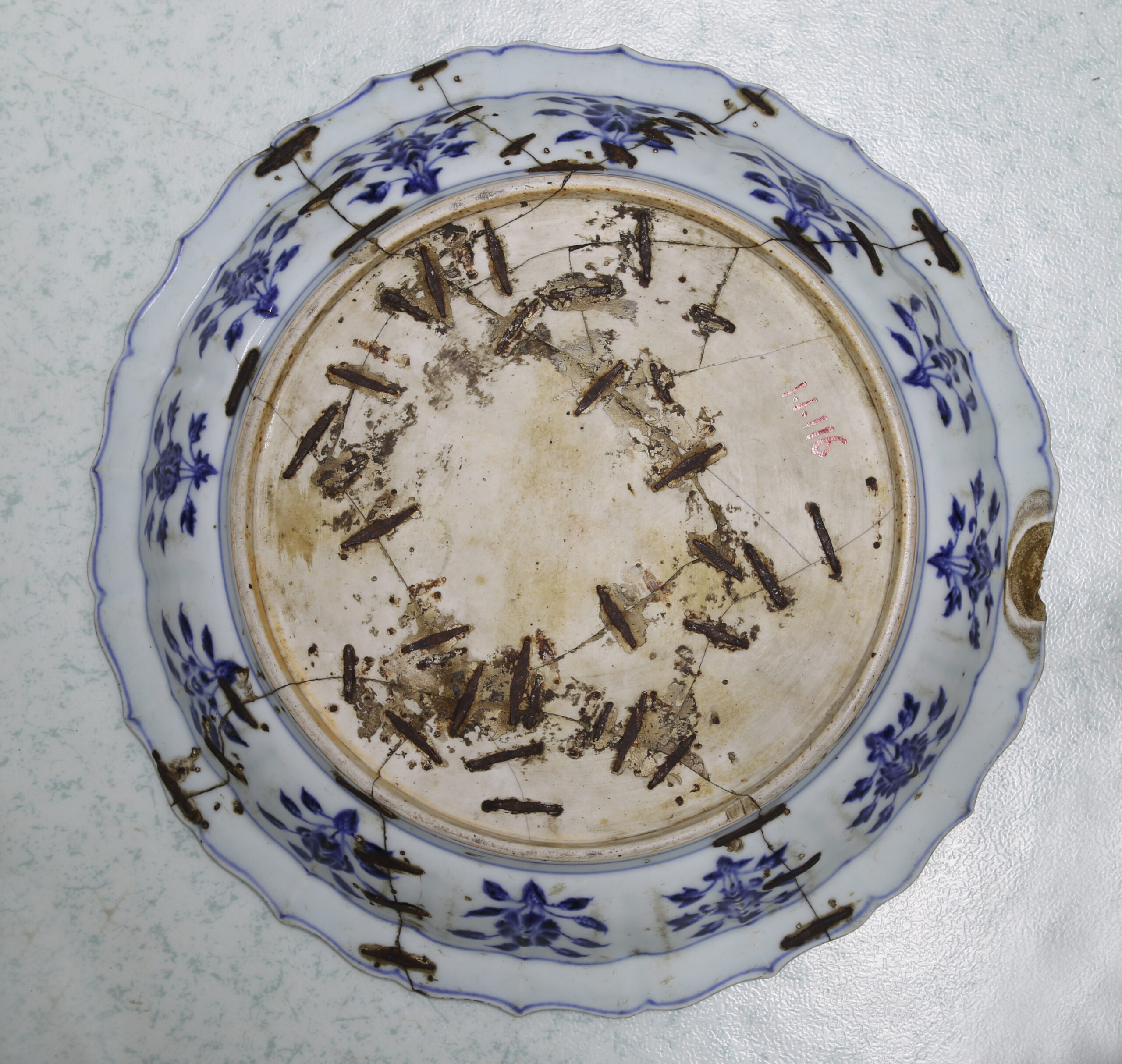
In contemporary Chinese, the term 锔瓷/jū cí refers to a traditional technique for repairing ceramics using metal staples. Prior to the twentieth cent...
According to modern Chinese language dictionaries, the term 锔子/jū zi refers to an instrument, usually fashioned from copper, iron, or another materi...
This website uses strictly necessary cookies to function. We would also like to use functional and analytical cookies to improve your experience. You can choose to accept or decline.