Masques sacrés d’origine goun. De façon littérale, ce concept signifie « gardien de nuit »(République du Bénin, 13), « zan » signifiant « nuit » et « bétɔ » signifiant « gardien de nuit. » Dans leur communauté, les Zangbétɔ jouent un rôle fondamental, en ce qu’ils contribuent à maintenir l’ordre et la discipline chez les citoyens. « Le Zangbétɔ est un gardien invisible qui patrouille dans les rues des quartiers agissant comme une présence dissuasive contre les malfaiteurs » (République du Bénin, 13).
De façon générale, les Zangbétɔ ne se présentent que la nuit. Cependant, il peut arriver qu’à certaines périodes de l’année, ils sortent pendant la journée. Ils sont animés par des Vodun qui sont à l’origine de leurs différents mouvements, danses, pirouettes, et paroles. Les Zangbétɔ ne sortent jamais seuls, mais sont toujours accompagnés de percussionnistes initiés appelés Ahouanto et du guide du Vodun Sihounto, lequel comprend la langue du Vodun et sert d’interprète.
Read more
Alternative Description
Sacred masks of Goun origin. Literally, Zangbétɔ means “night watchman” (République du Bénin, 13), “zan” meaning “night” and “gbétɔ” meaning “night watchman.”
Zangbétɔ play a fundamental role in their community, helping to maintain order and discipline among citizens. “The Zangbétɔ is an invisible guardian who patrols the streets of neighborhoods acting as a deterrent presence against wrongdoers” (République du Bénin, 13).
Usually, the Zangbétɔ only appear at night, though they may also come out during the day for certain ceremonies. They are animated by Vodun spirits who are responsible for their various movements, dances, pirouettes, and words. The Zangbétɔ never go out alone, but are instead always accompanied by initiated percussionists called Ahouanto and the Vodun guide, Sihounto, who acts as an interpreter of the Vodun language.
Resources
République du Bénin. Abécédaire des Voduns days. Ouidah, 2024.
Date of entry: December 29, 2024
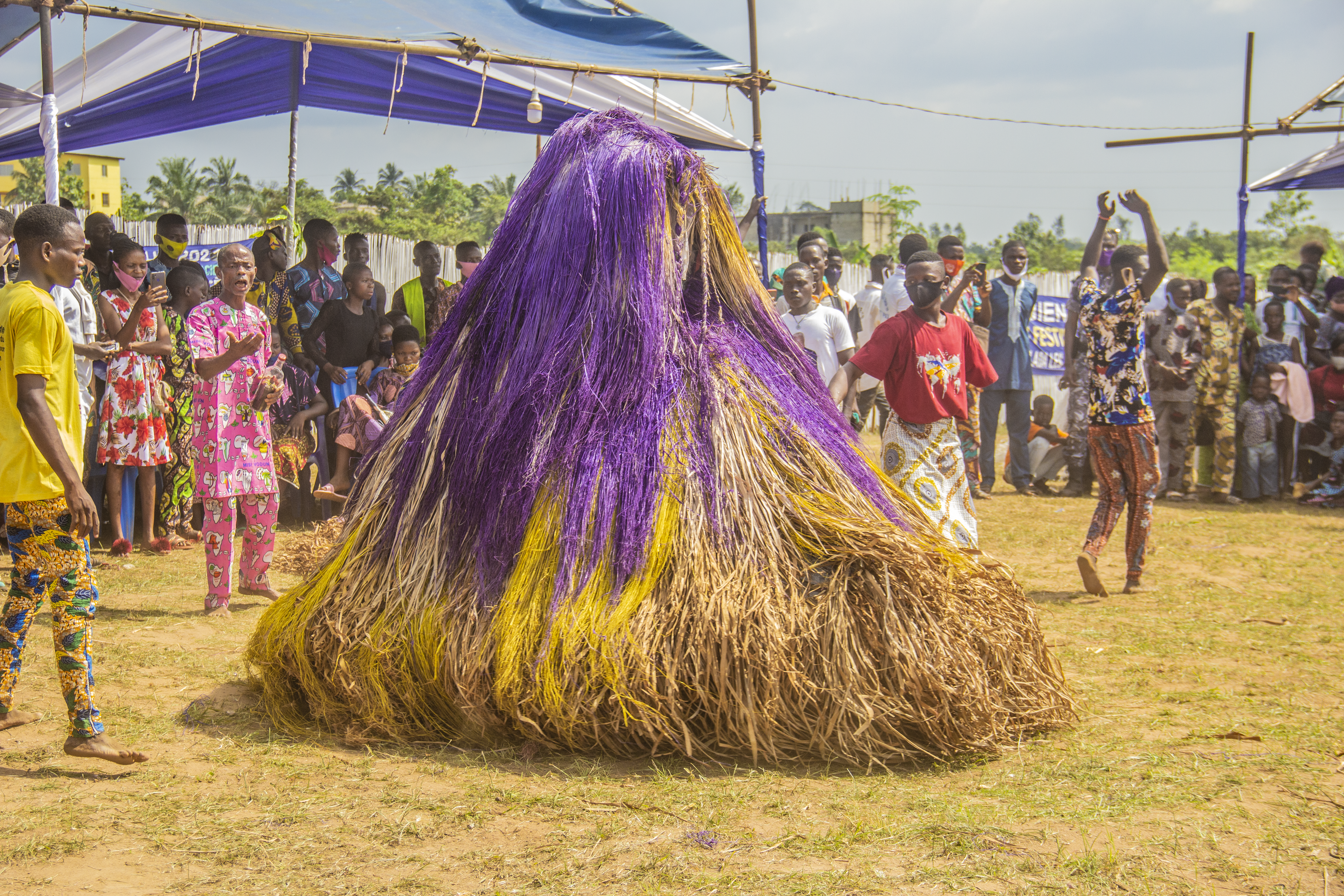
Zangbétɔ in coloured raffia in the middle of a crowd. Allada (Benin), 10.01.2021, by Montcho, Crystallin.
Zangbétɔ in coloured raffia in the middle of a crowd. Allada (Benin), 10.01.2021, by Montcho, Crystallin.
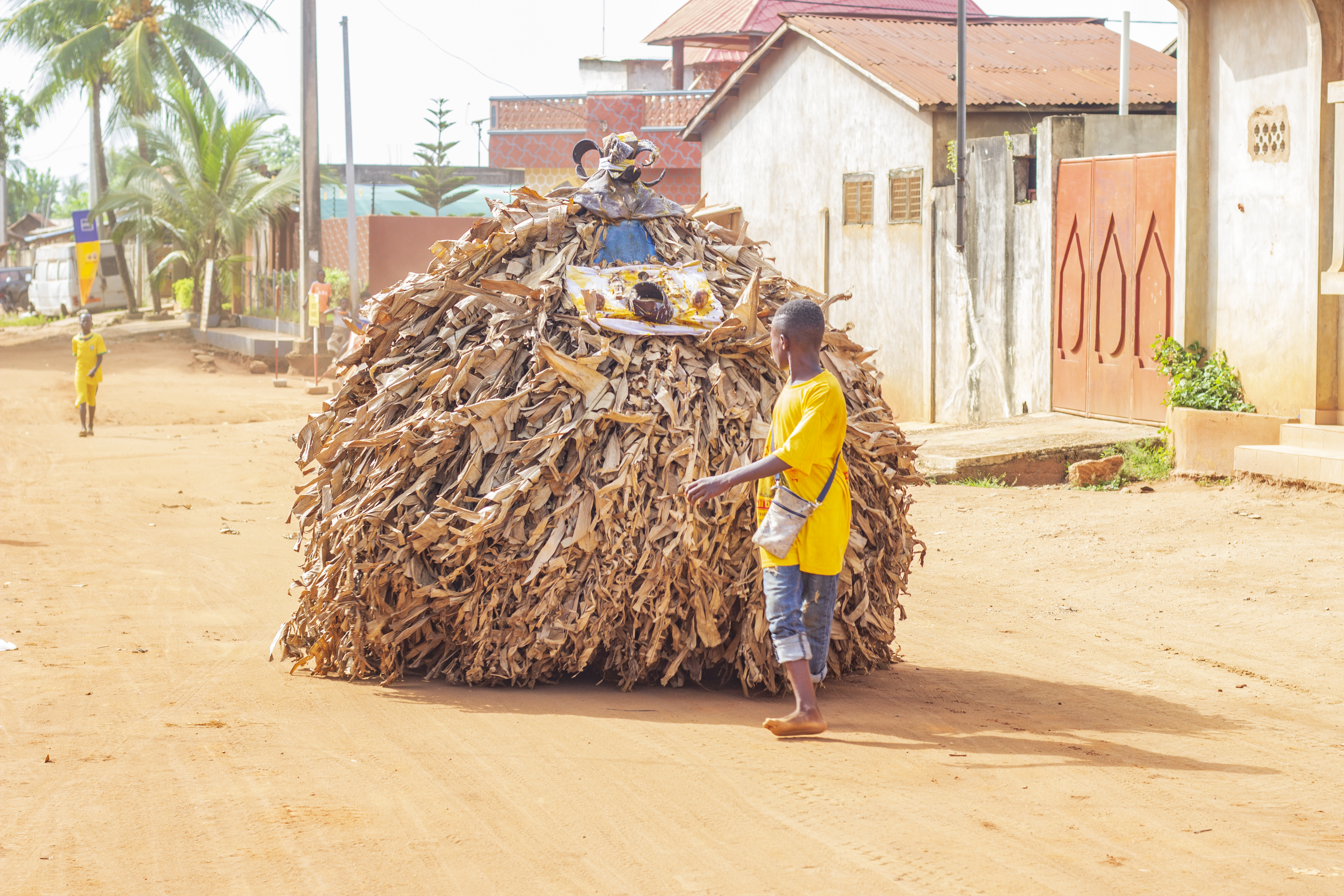
Inner structure of a Zangbétɔ mask made from raffia. Porto-Novo (Benin), 10.01.2021, by Montcho, Crystallin.
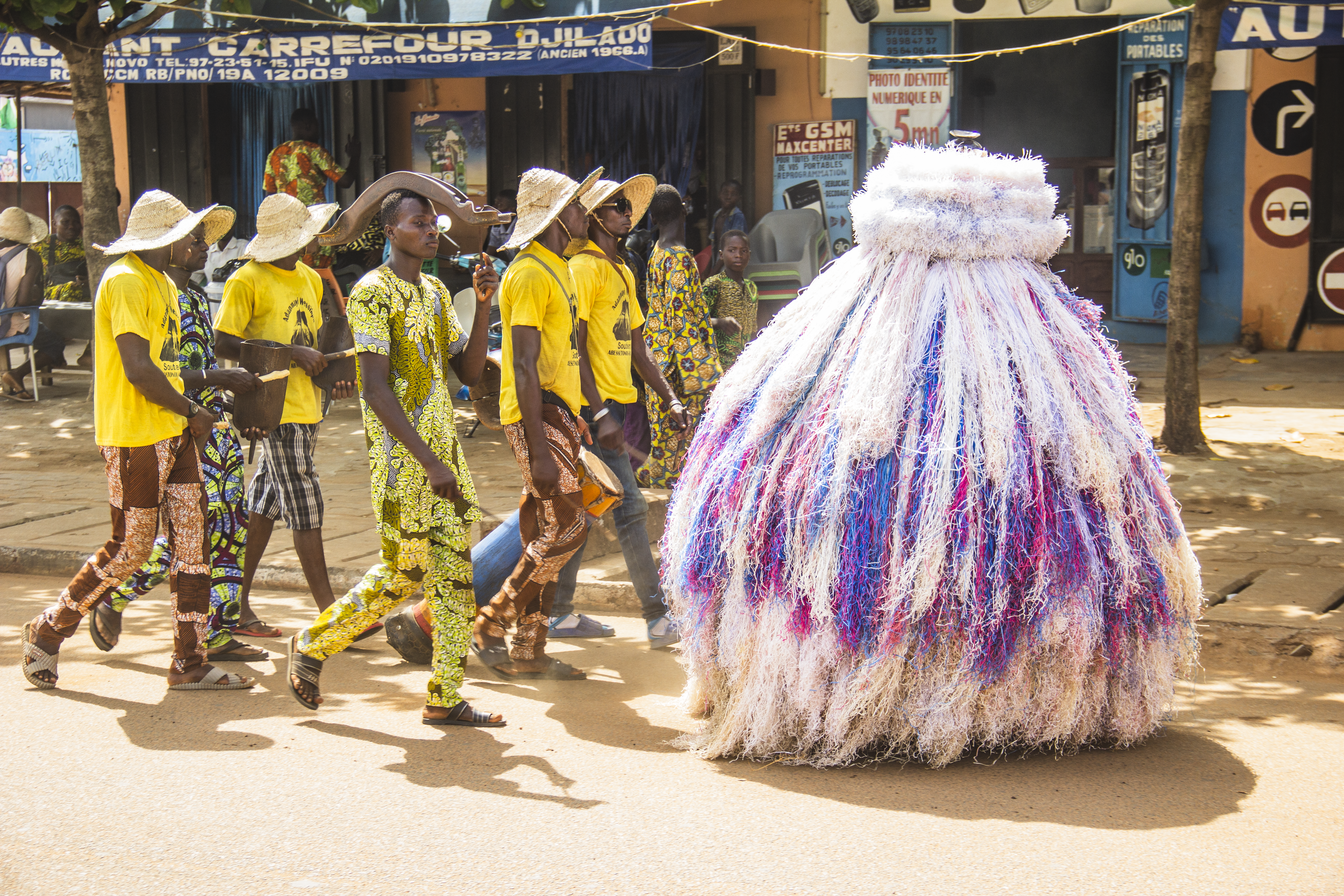
The departure of a Zangbétɔ made of coloured synthetic fibres in the middle of a crowd. Porto-Novo (Benin), 24.05.2021, by Montcho, Crystallin.
Add to this entry
Related Words
Géwél
Wolof
A person whose role is to be a historian, storyteller, poet and musician. They ensure the transmission of culture and oral history by preserving the m...
Originellement issu du Fɔ̀ngbè, le terme désigne un autel portatif fait de métal principalement, et réalisé pour commémorer un-e défunt-e qui, de son ...
Bracelet whose name means “metal of the Tchamba,” the tchambaga symbolizes the iron shackles of enslaved people and is used to contact ancestors, as w...
Protective amulet common in Togo and other parts of West Africa in various forms. The term gris-gris is apparently more widespread for protective amul...
Animist people from the Kédougou region (South-East Senegal). Their religion is subject to stereotypes, as is the case for other religions, such as Vo...
Square cap worn by men and women alike. This word, of North African origin, is rejected by certain Senegalese socio-cultural groups, who use Mbakhana*...
This website uses strictly necessary cookies to function. We would also like to use functional and analytical cookies to improve your experience. You can choose to accept or decline.