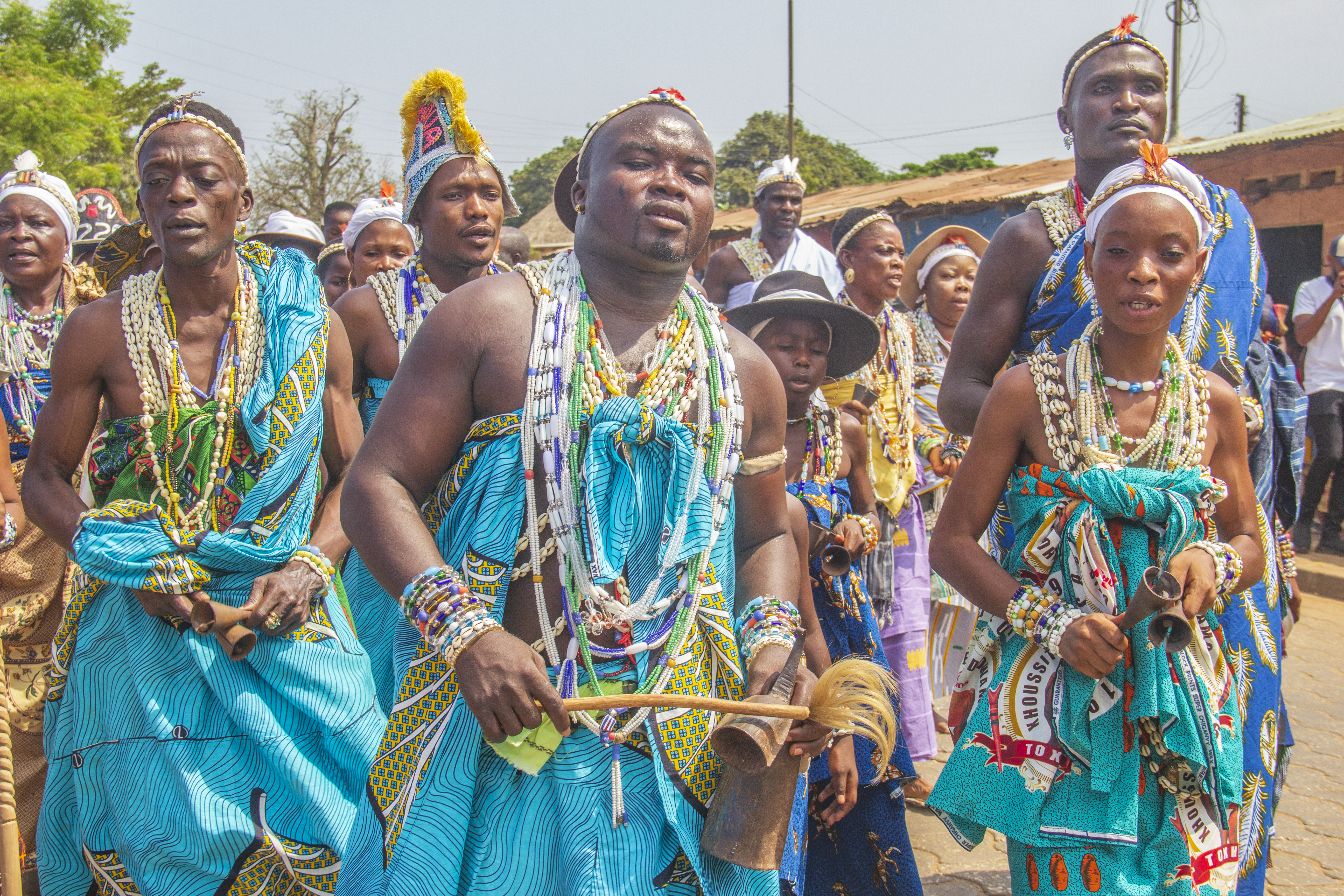
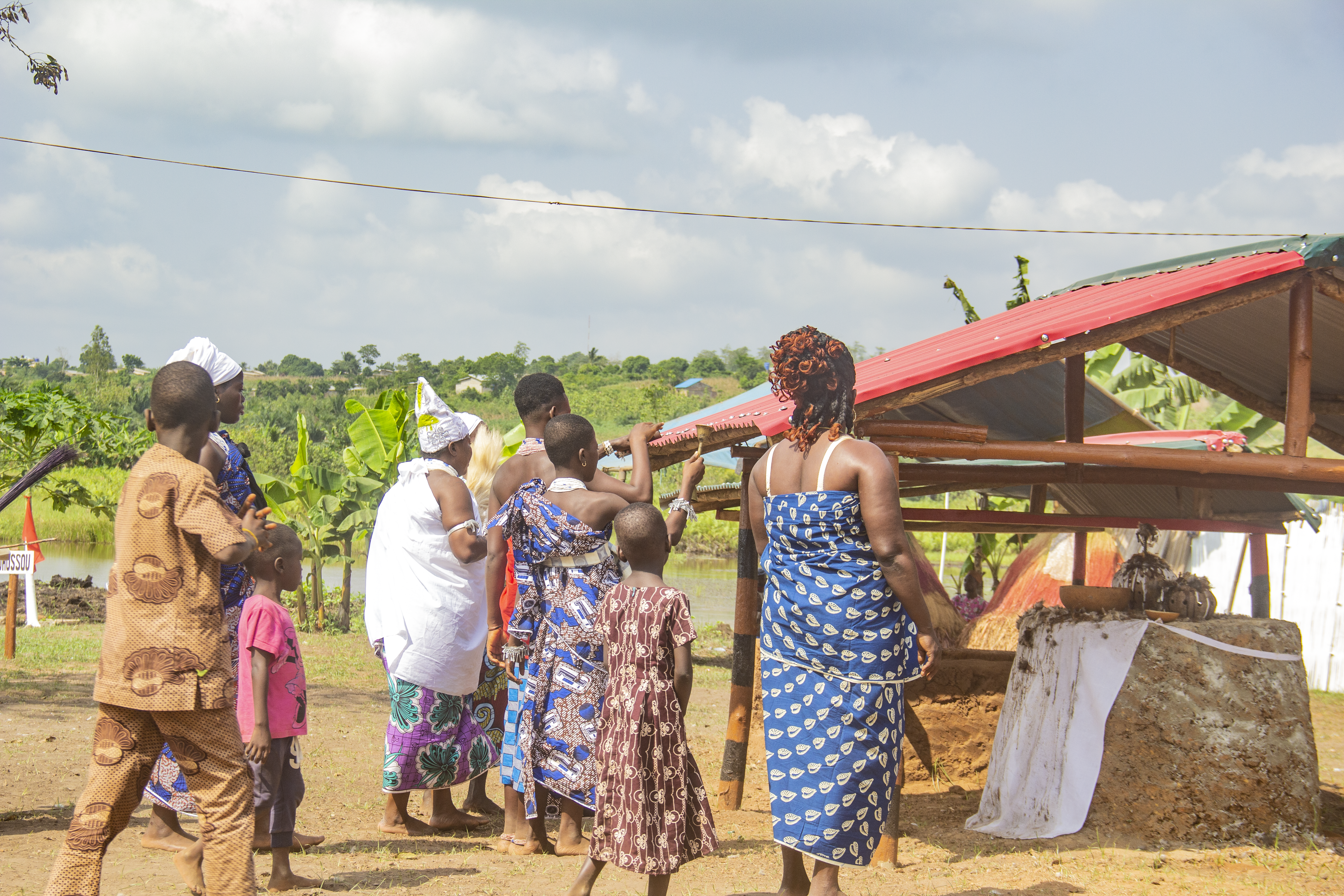
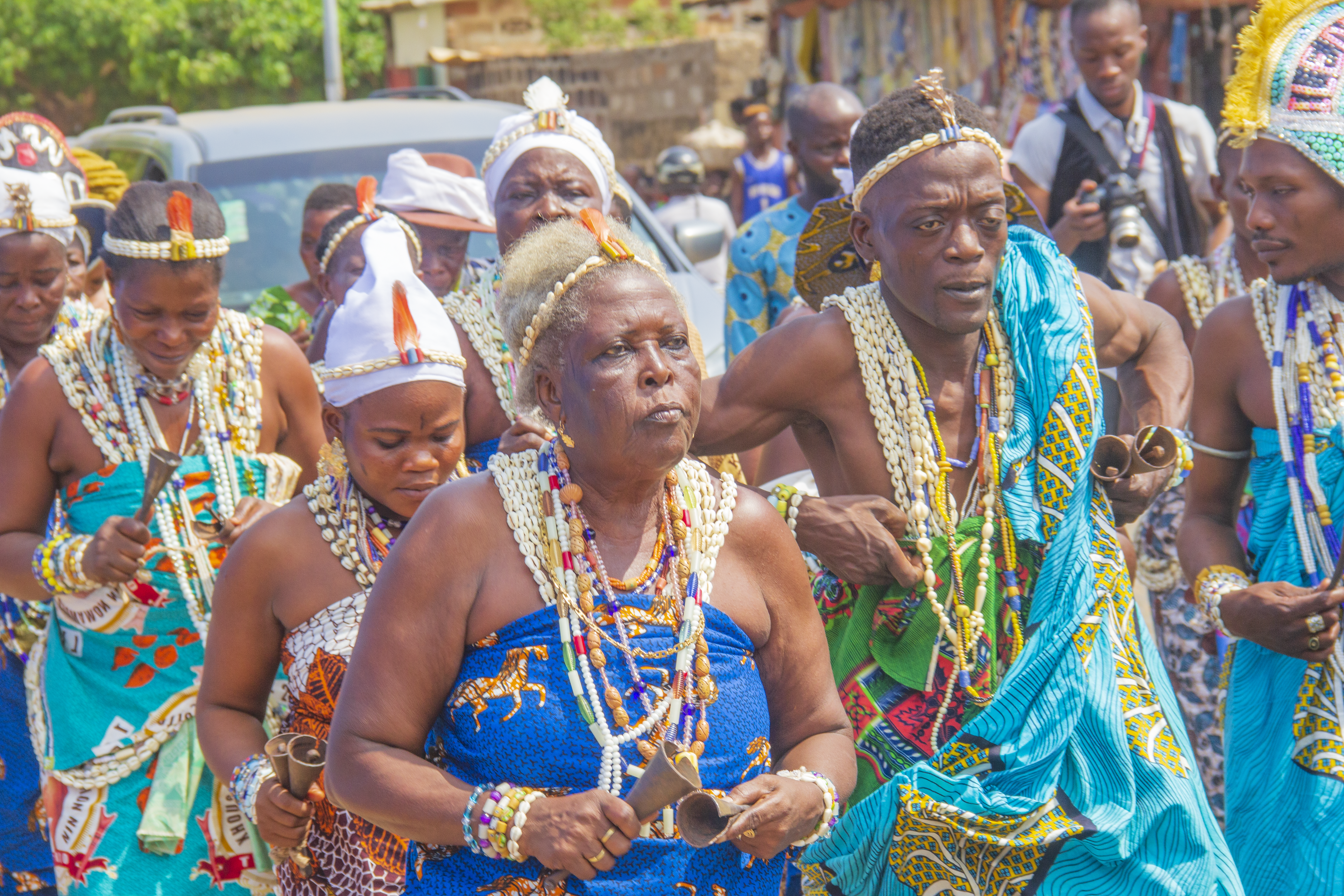
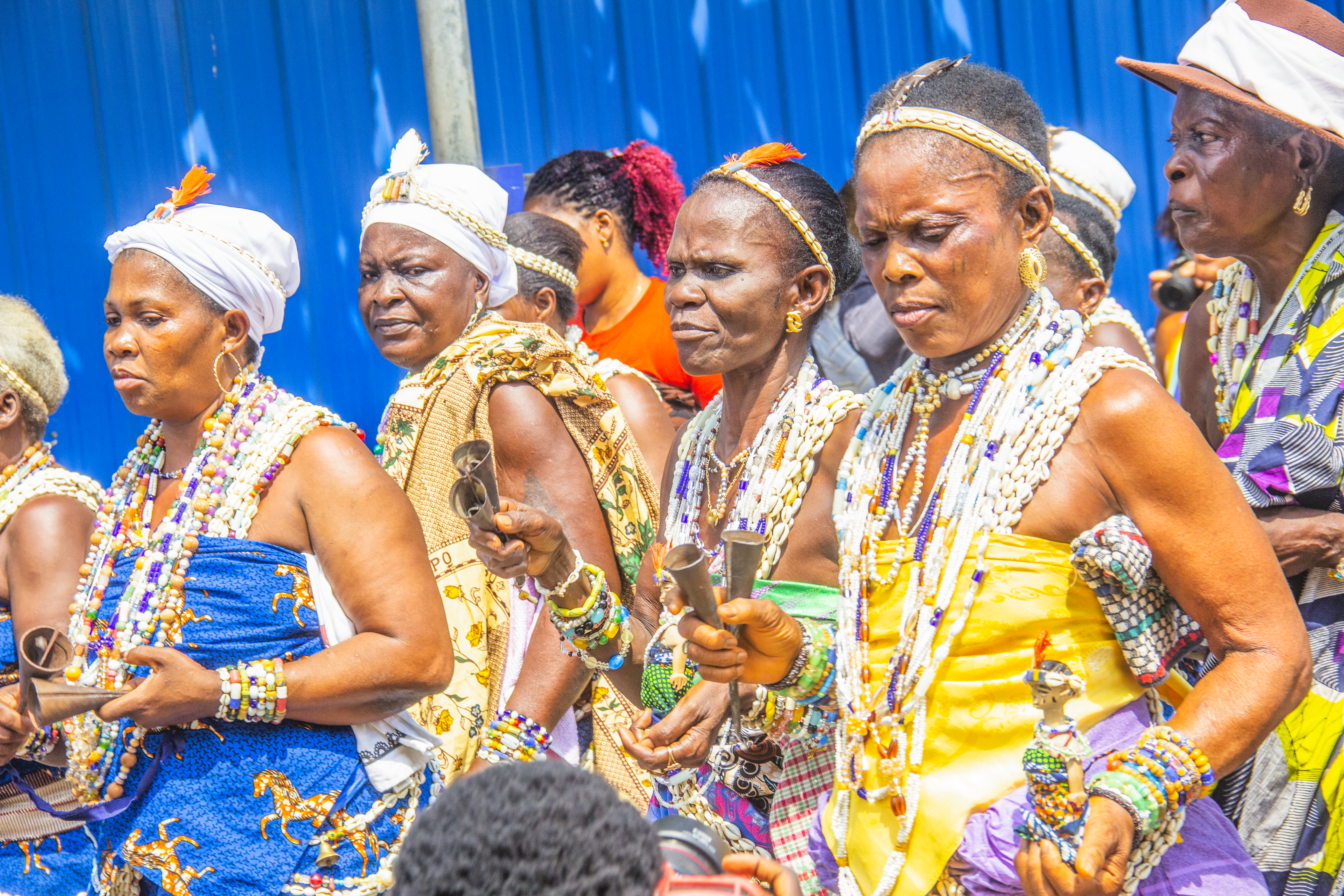
Cortège de fidèles d’un Vodun, qui se déplace d’un lieu à un autre en pratiquant une série de rituels, de mouvements, de chants, et de prières afin d’implorer la protection ou le secours de ce Vodun. Il n’est pas rare de remarquer qu’aux cours de ces processions, les adeptes se munissent de présents. Ces processions font partie intégrante du Vodun. En effet, certaines sont réalisées pour annoncer la fin d’une série d’initiations, d’autres pour annoncer le début d’une cérémonie. Dans un autre cas, la procession permet de pratiquer le tokpikplɔ, qui consiste à se rendre à des points stratégiques du village pour y asperger de l’eau purifiée provenant d’une source sacrée. Dans d’autres circonstances, les processions accompagnent l’enlèvement d’un membre phare du culte qui est passé de vie à trépas, comme dans le cas d’Oro.
Procession in honor of a Vodun deity by devotees, which moves from one place to another calling for the deity’s protection or help through the performance of a series of rituals, movements, songs, and prayers. It is not uncommon to see devotees carrying gifts during these processions. Depending on the Vodun deity, the procession may take any one of a number of forms, and this may affect the offerings, songs, dances, and even the clothing and colors used. Processions are an integral part of the Vodun. Some are held to announce the end of a series of initiations, while others announce the start of a ceremony. Alternatively, the procession may be used to perform the tokpikplɔ, which consists of going to strategic points in the village and sprinkling holy water sought from a sacred spring. In other cults, processions are held to mark the passing of a leading member from life to death, as in the case of Oro.

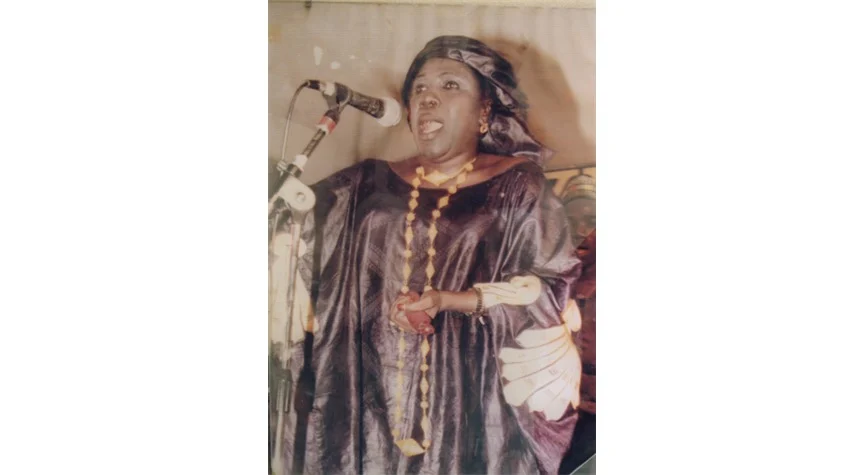
A person whose role is to be a historian, storyteller, poet and musician. They ensure the transmission of culture and oral history by preserving the m...
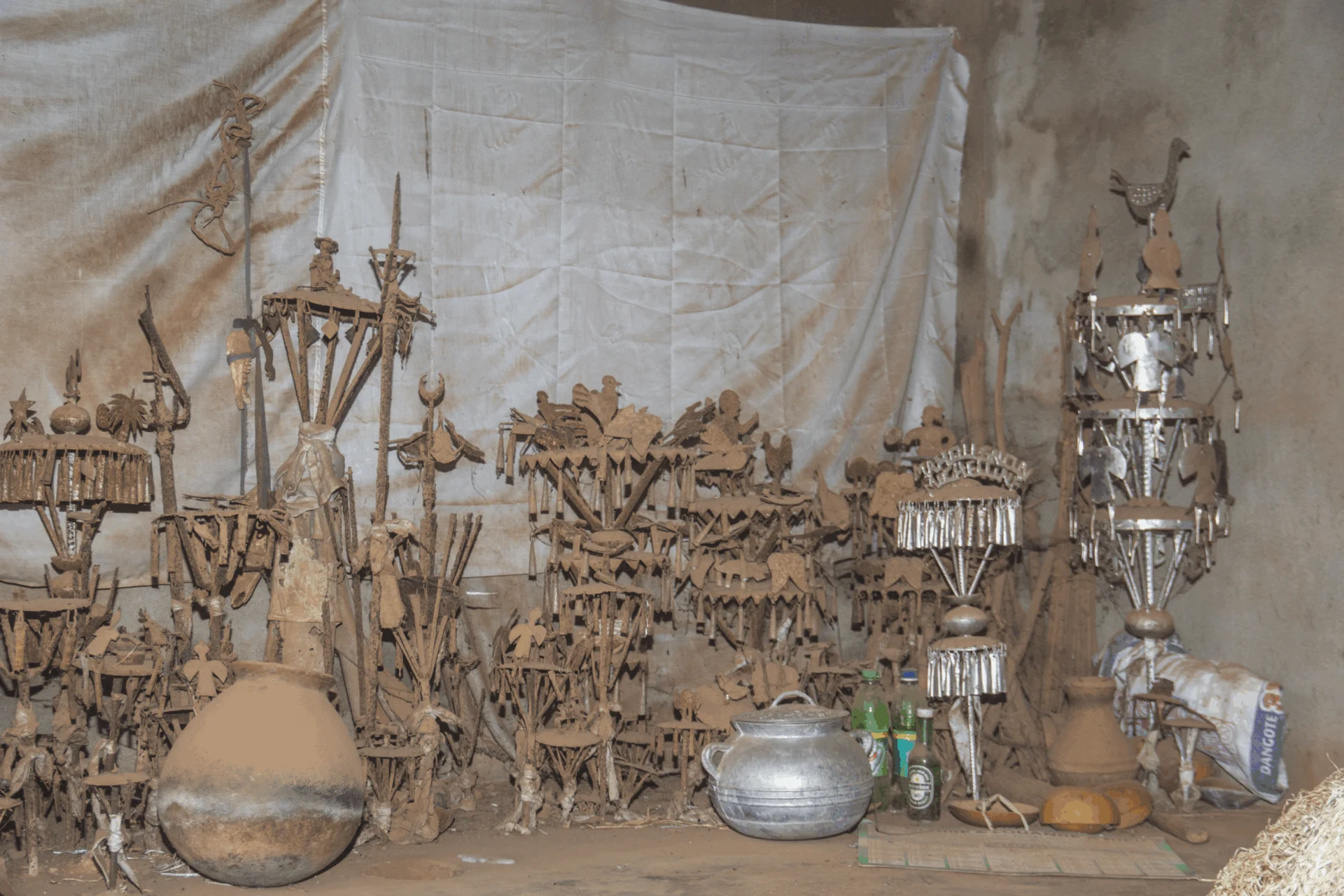
Originellement issu du Fɔ̀ngbè, le terme désigne un autel portatif fait de métal principalement, et réalisé pour commémorer un-e défunt-e qui, de son ...
Bracelet whose name means “metal of the Tchamba,” the tchambaga symbolizes the iron shackles of enslaved people and is used to contact ancestors, as w...
Protective amulet common in Togo and other parts of West Africa in various forms. The term gris-gris is apparently more widespread for protective amul...
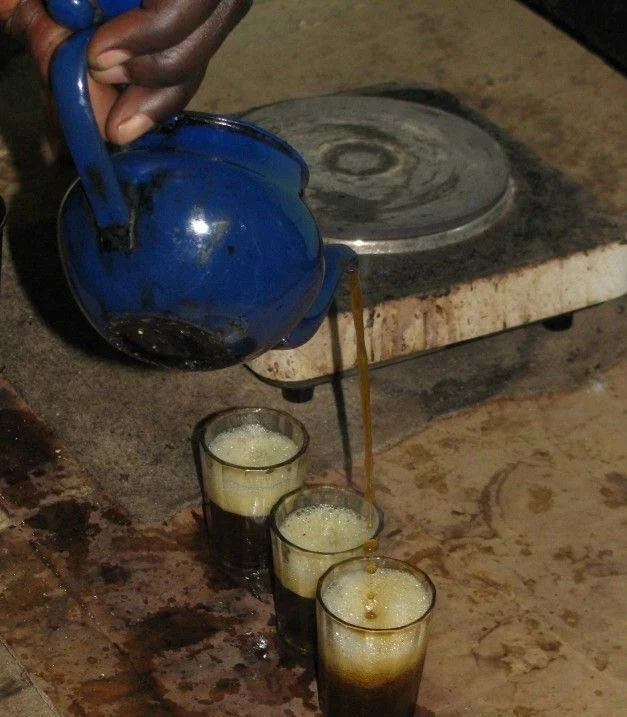
Tea prepared on the ground in a teapot and served in cups. This way of making tea has its roots in the Arab world.
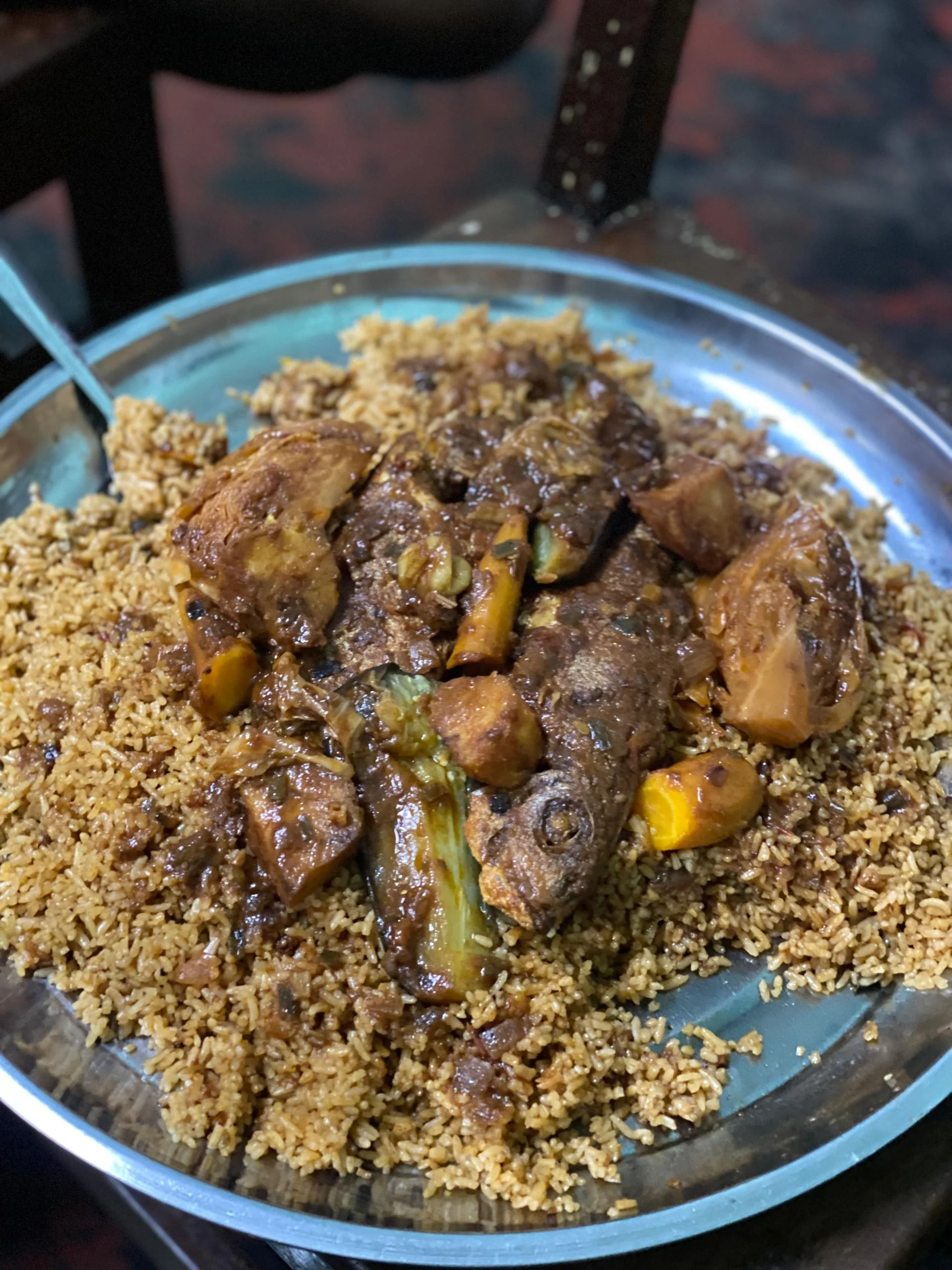
Traditional Senegalese dish with fish, rice, and vegetables. In 2021, the dish was classed by UNESCO as an intangible cultural heritage.
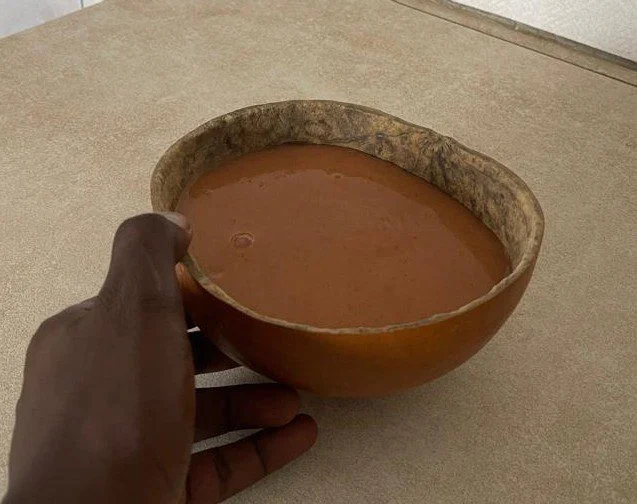
Porridge made with 'Sunguf' cereal flour, such as millet. The term Sunguf is also used to refer to any kind of flour.
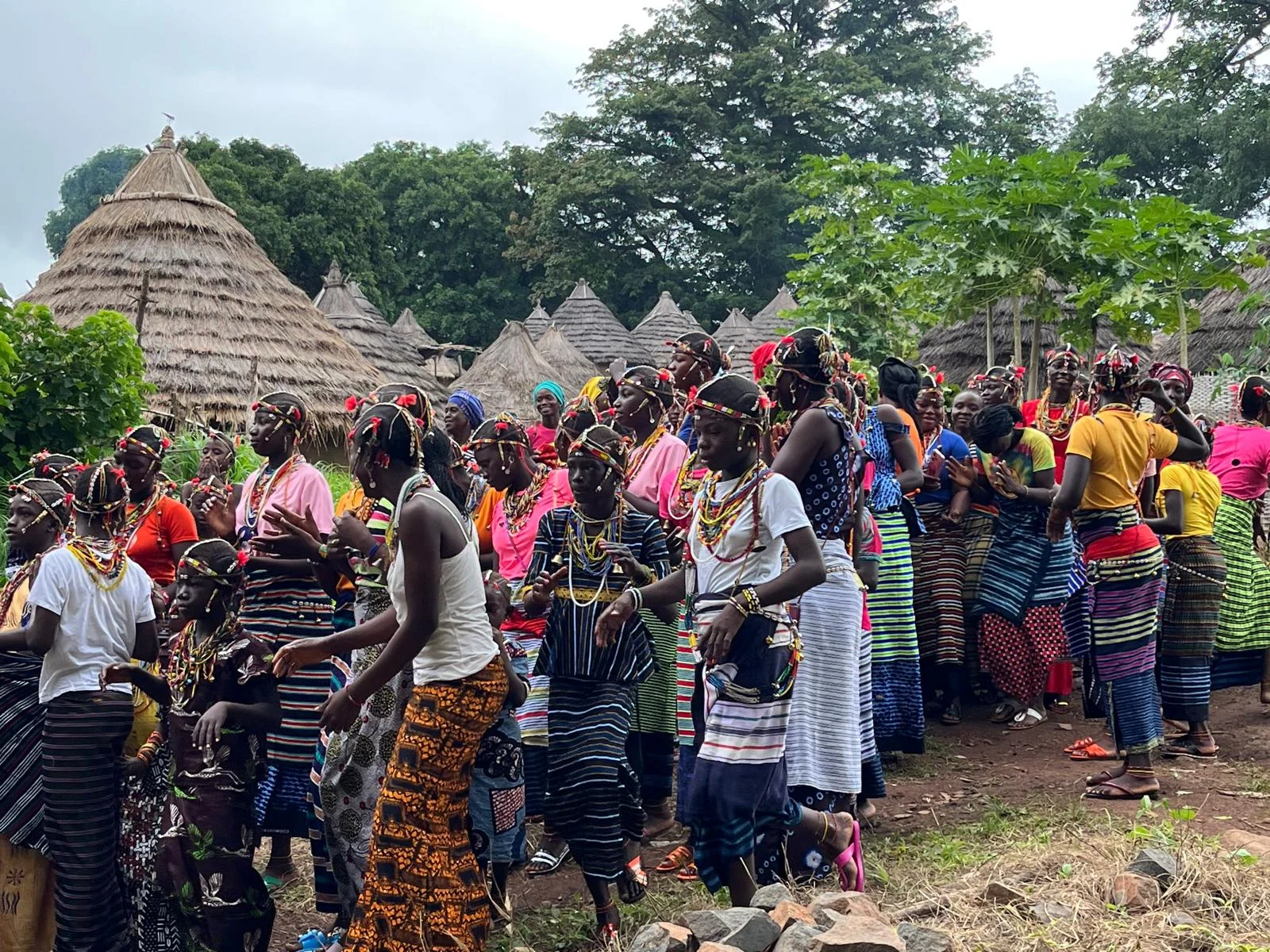
Animist people from the Kédougou region (South-East Senegal). Their religion is subject to stereotypes, as is the case for other religions, such as Vo...
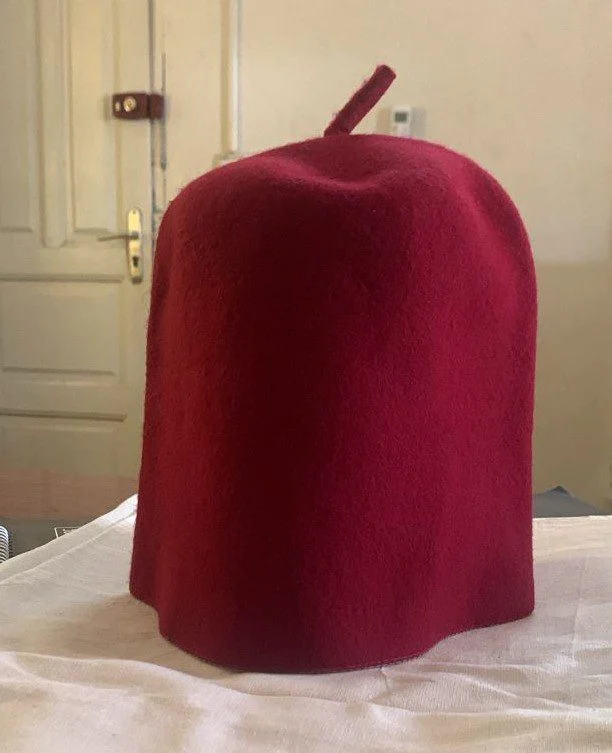
Square cap worn by men and women alike. This word, of North African origin, is rejected by certain Senegalese socio-cultural groups, who use Mbakhana*...
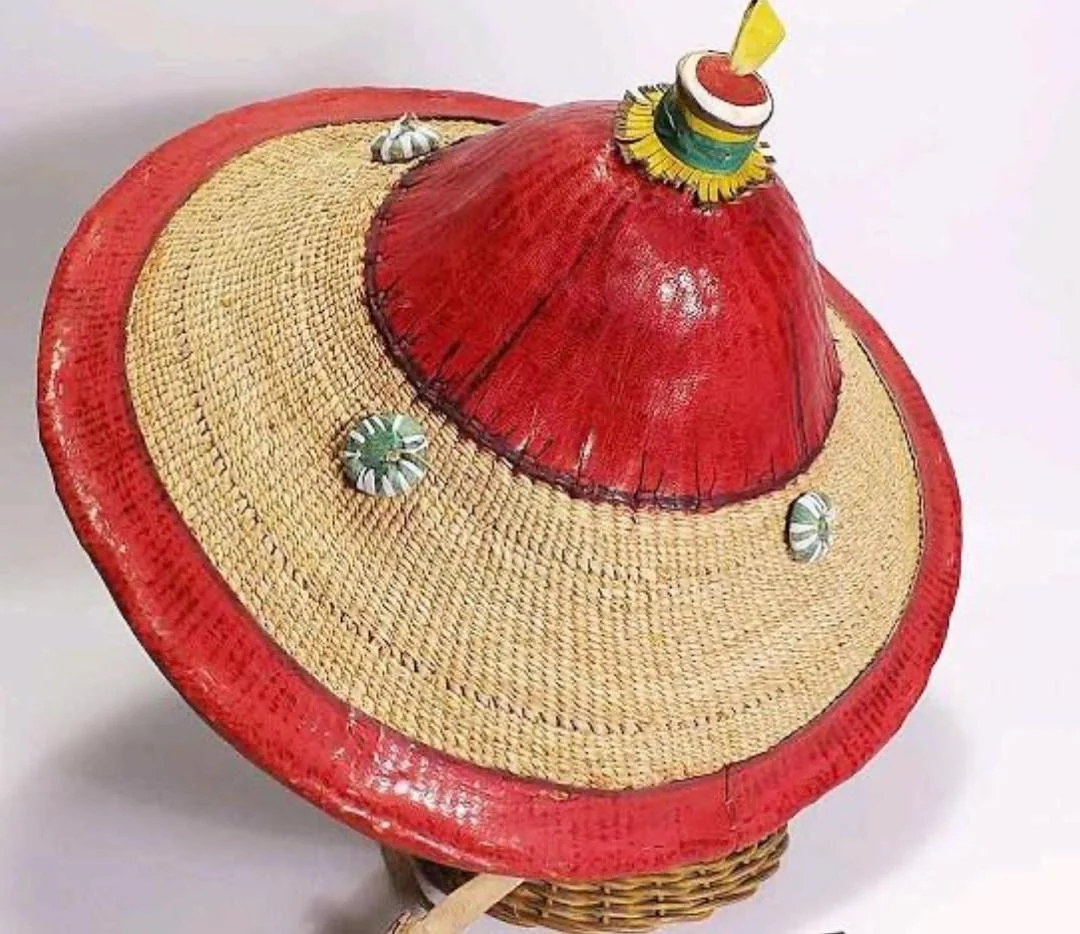
Conical straw hat often used by Fulani people when accompanying their herds.
This website uses strictly necessary cookies to function. We would also like to use functional and analytical cookies to improve your experience. You can choose to accept or decline.