Vodun associée aux « maladies et à la guérison » ainsi qu’à « l’élément Terre » (République du Bénin, 10). Le Vodun Sakpata tire ses origines du pays Nago.
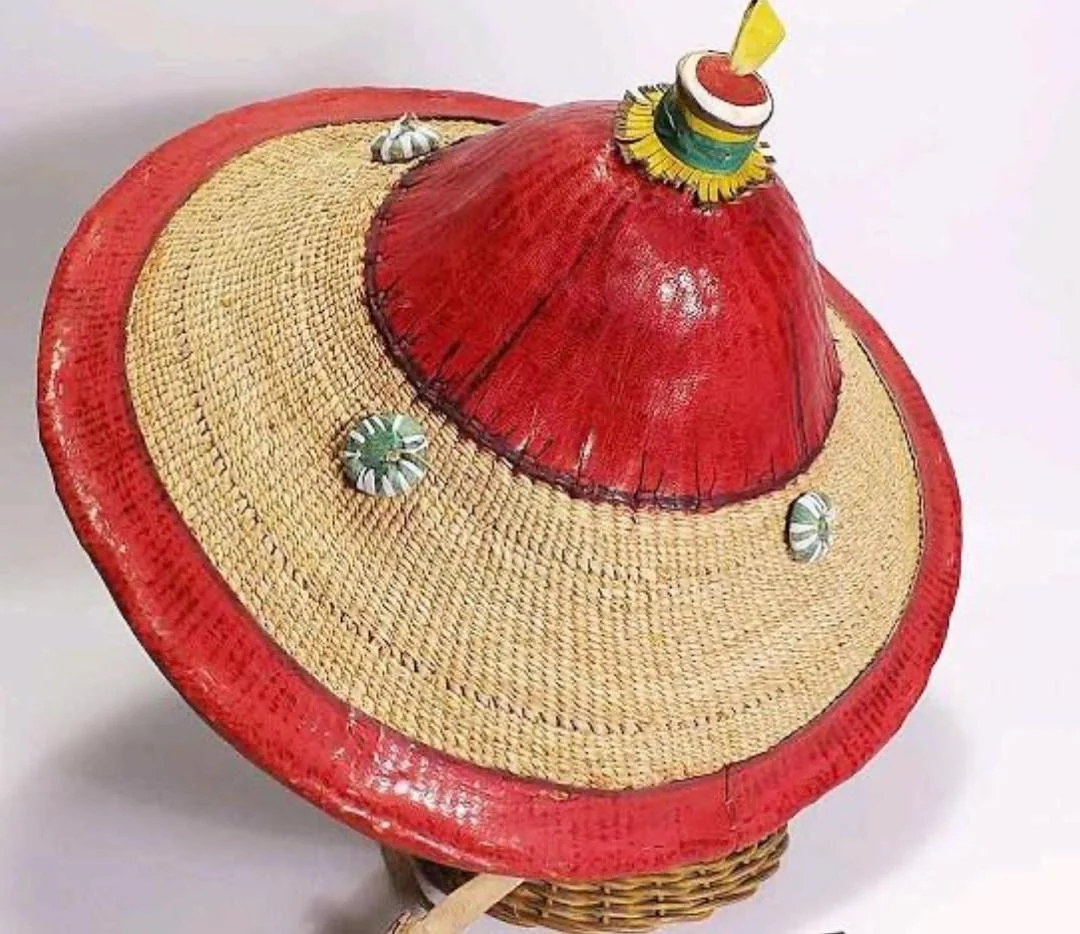
Les fidèles du Vodun Sakpata se remarquent par leur accoutrement. Iels sont vêtu-e-s d’un pagne avec des banderoles de couleur orange sur lesquelles sont inscrites « SAKPATA ». Leur habillement, que ce soit chez l’homme ou la femme, est un élément de distinction des autres Vodun, notamment le pagne noué de façon oblique. Une autre caractéristique de distinction est le chapeau (aza en Fɔ̀ngbè) porté par les fidèles pendant l’exécution des pas de danse et dont la forme peut varier d’un fidèle à l’autre. En effet, seul-e-s les fidèles du Vodun Sakpata ont l’habitude de porter un chapeau, même si tous les fidèles n’en portent pas forcément.
Vodun deity associated with “illness and healing” and “the element Earth” (République du Bénin, 10). The origins of Vodun Sakpata are to be found in the Nago region. The distinguishing features of the diety’s devotees vary from one community to another. They may, for example, be identified by the fact that they wear a loincloth with orange motifs bearing the word “SAKPATA.” Their clothing, for both men and women, sets them apart from followers of other Vodun, particularly the obliquely tied loincloth for men. Another distinguishing feature is the hat (aza in Fɔ̀ngbè) worn by devotees while performing dance choreographies, the shape of which can vary from one devotee to another. Only Vodun Sakpata devotees usually wear a hat, although not all devotees do.

République du Bénin. Abécédaire des Voduns days. Ouidah, 2024.
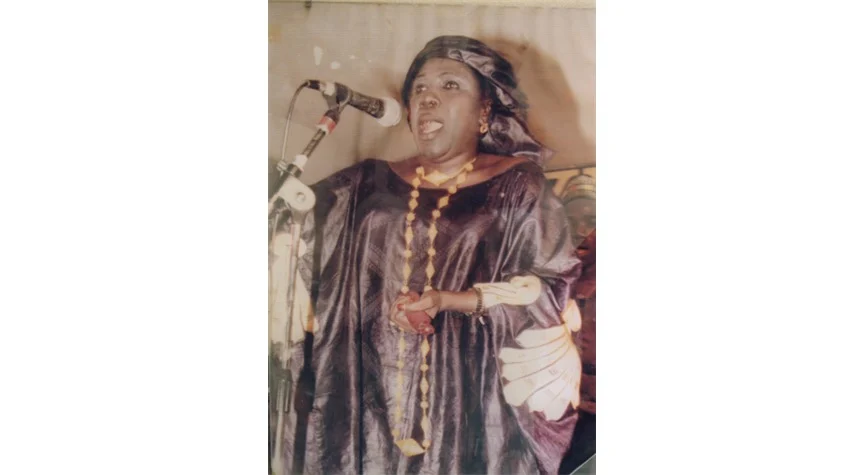
A person whose role is to be a historian, storyteller, poet and musician. They ensure the transmission of culture and oral history by preserving the m...
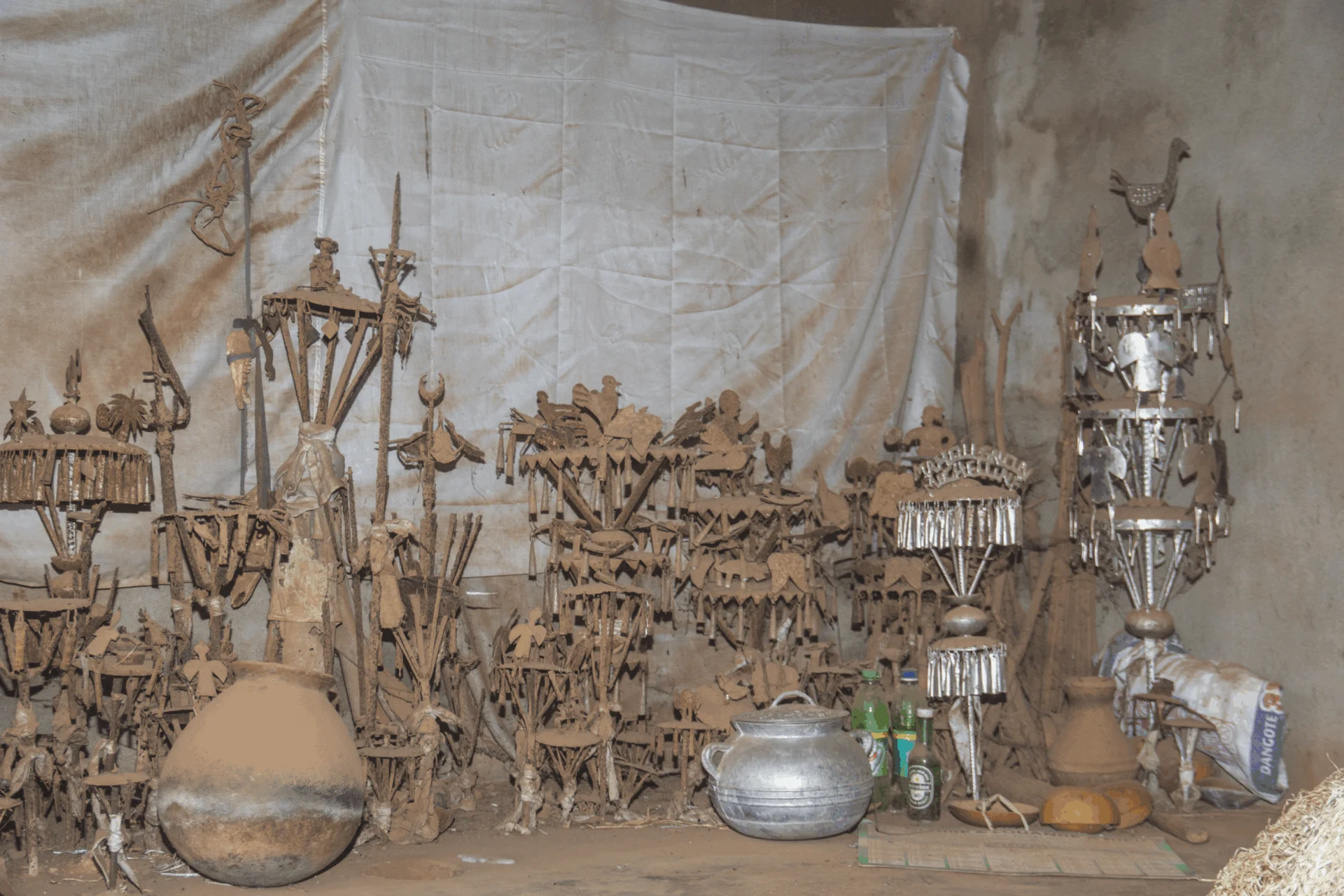
Originellement issu du Fɔ̀ngbè, le terme désigne un autel portatif fait de métal principalement, et réalisé pour commémorer un-e défunt-e qui, de son ...
Bracelet whose name means “metal of the Tchamba,” the tchambaga symbolizes the iron shackles of enslaved people and is used to contact ancestors, as w...
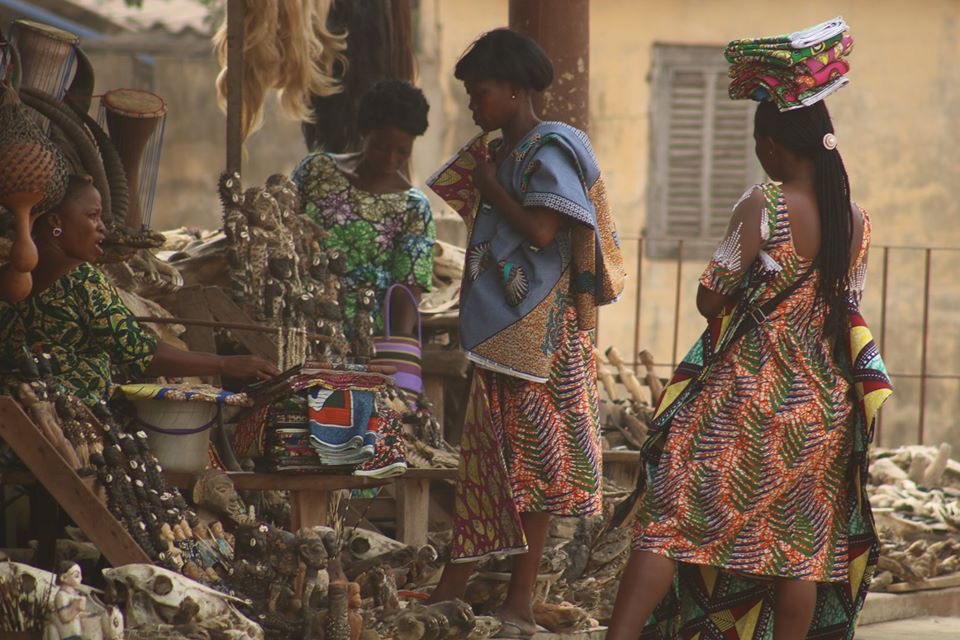
Protective amulet common in Togo and other parts of West Africa in various forms. The term gris-gris is apparently more widespread for protective amul...
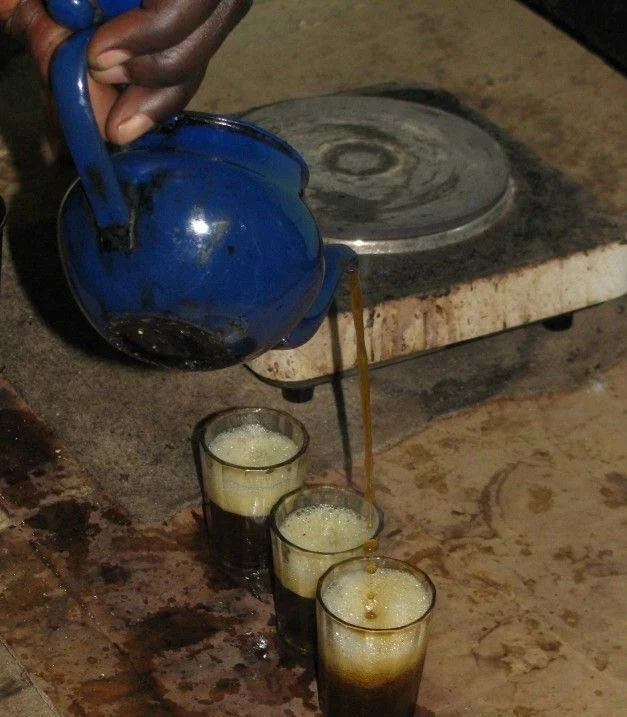
Tea prepared on the ground in a teapot and served in cups. This way of making tea has its roots in the Arab world.
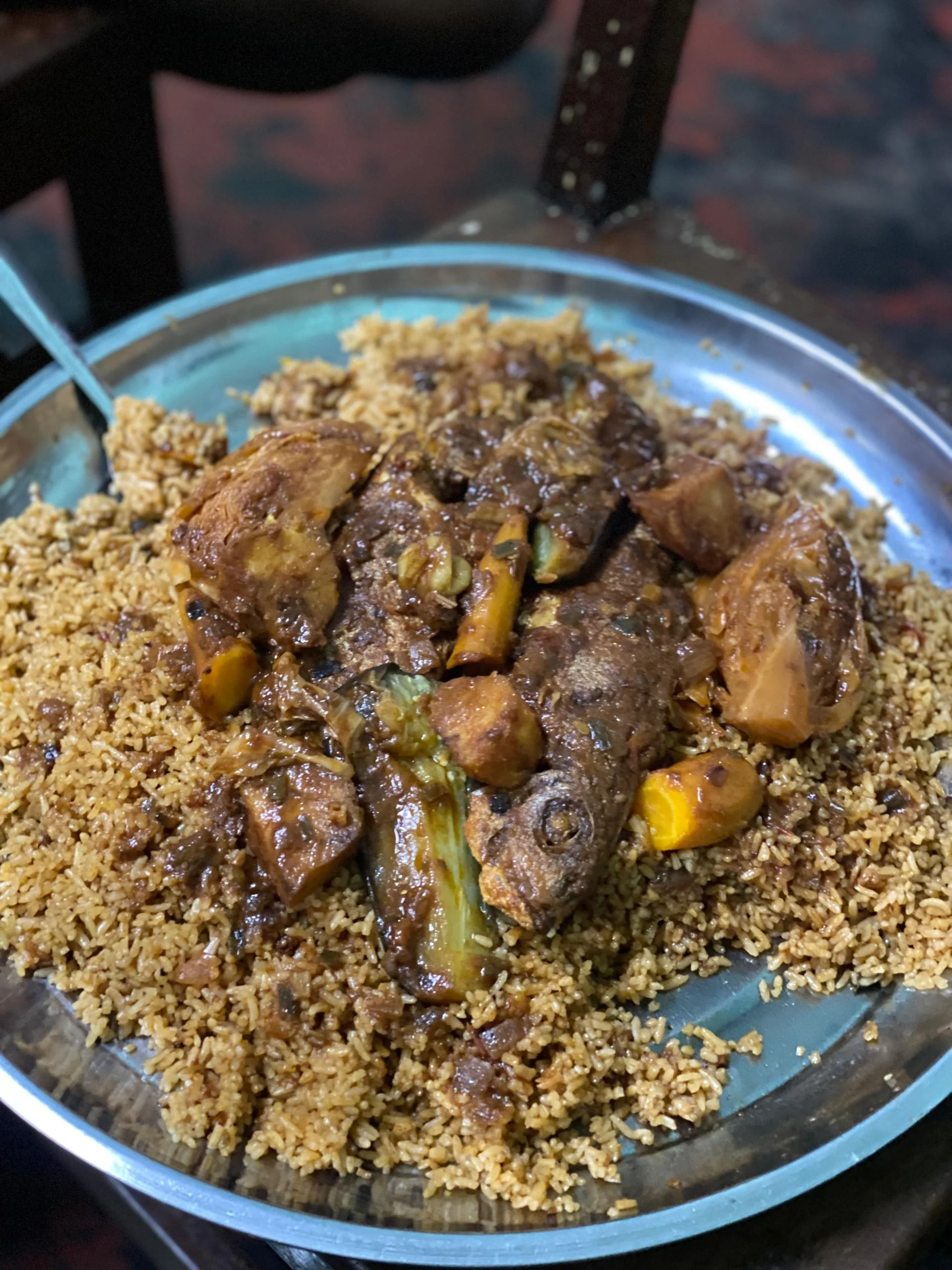
Traditional Senegalese dish with fish, rice, and vegetables. In 2021, the dish was classed by UNESCO as an intangible cultural heritage.
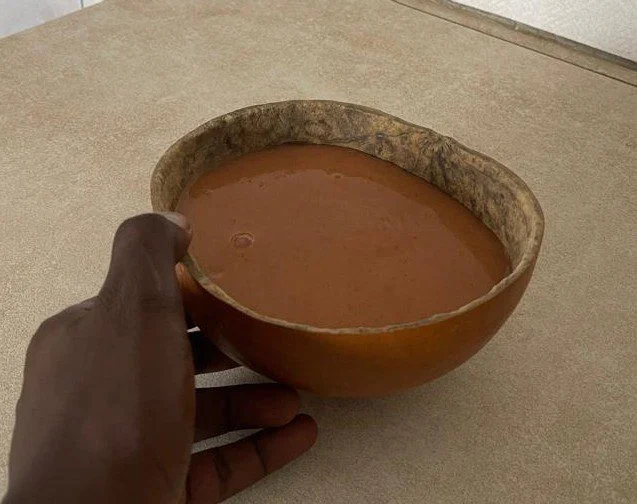
Porridge made with 'Sunguf' cereal flour, such as millet. The term Sunguf is also used to refer to any kind of flour.
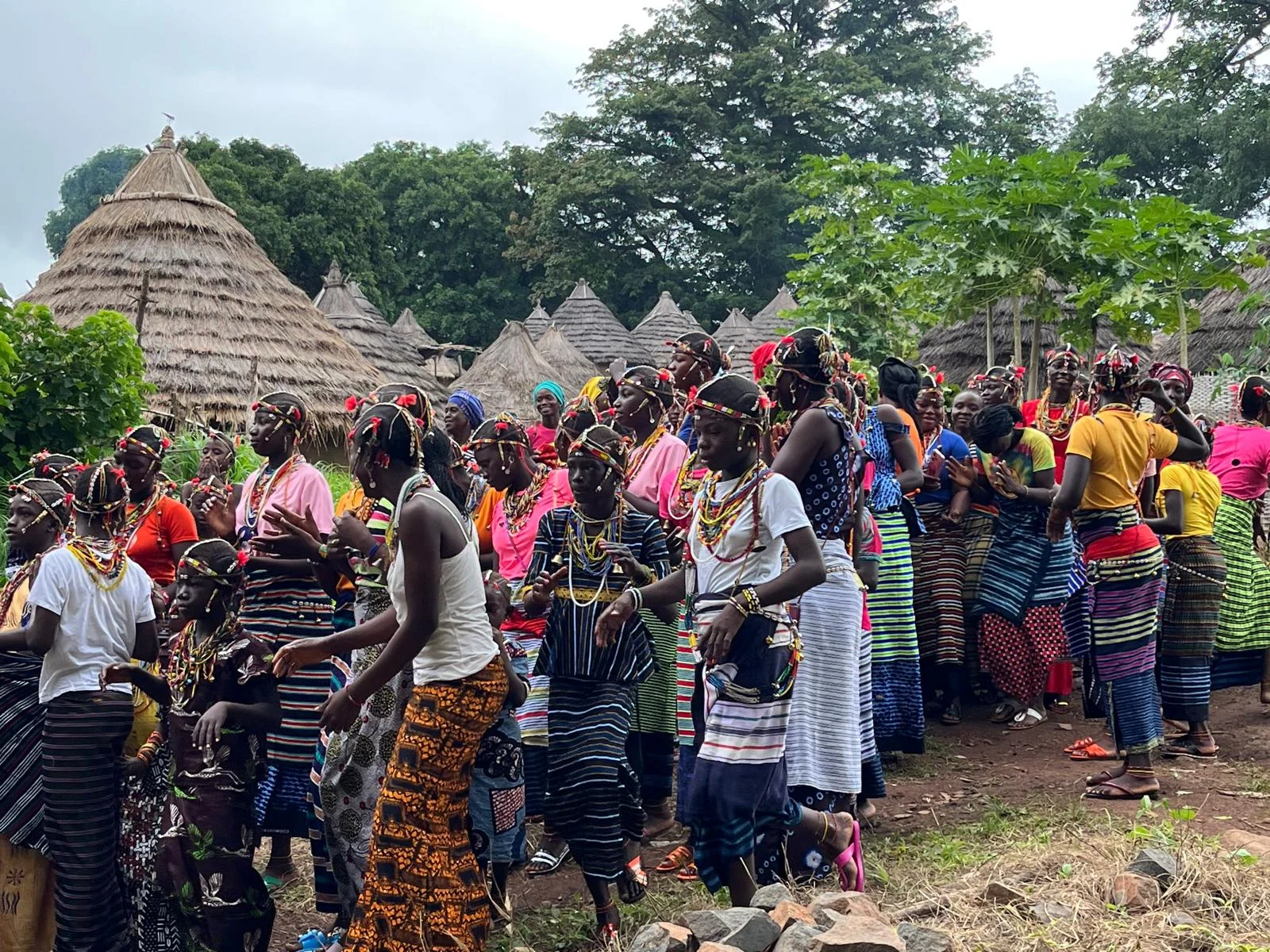
Animist people from the Kédougou region (South-East Senegal). Their religion is subject to stereotypes, as is the case for other religions, such as Vo...
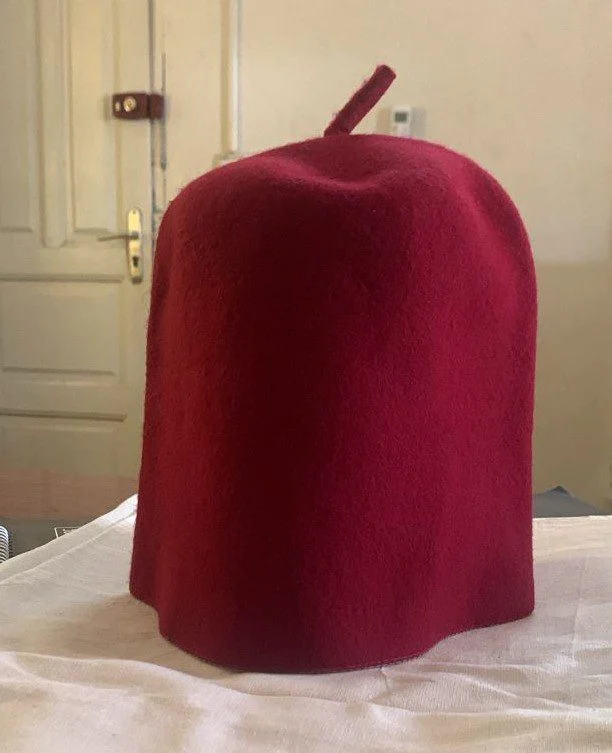
Square cap worn by men and women alike. This word, of North African origin, is rejected by certain Senegalese socio-cultural groups, who use Mbakhana*...
Conical straw hat often used by Fulani people when accompanying their herds.
This website uses strictly necessary cookies to function. We would also like to use functional and analytical cookies to improve your experience. You can choose to accept or decline.