锔补/jū bǔ

Pronunciation: /dʒy bu/
Language: Mandarin
Contributors: JIA PENG
Also known as: Réparation à l’aide d’agrafes métalliques; Process of repair using metal staples

Description

The term 锔补/jū bǔ is made up of two Chinese characters: 锔/jū and 补/bǔ. The character锔first appears in the phonology dictionary of Chinese characters 玉篇/yù piān (顾野王 543), compiled by Gu Yewang during the Liang dynasty in 543 AD. The original text states: “鋦,君玉切,以铁缚物,” which means that the pronunciation of the character锔is formed from the initial and final sounds of the words 君/jūn and 玉/yù. This character refers to the action of binding objects with iron.

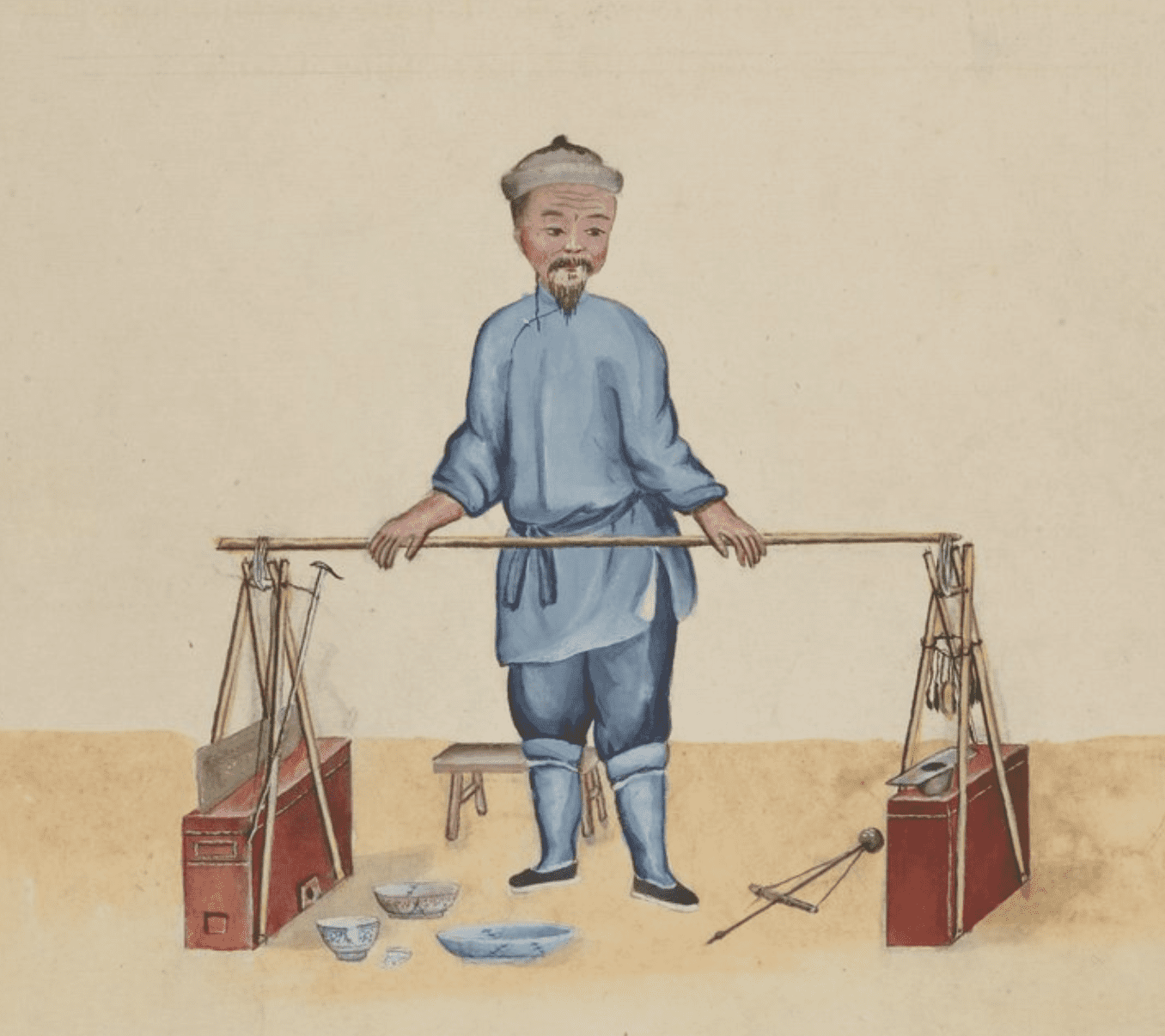
In modern Chinese, 锔 can be used as either a noun or verb (漢典 2016). As a noun, it refers not only to a chemical element, curium, but more commonly to a metal tool—often made of copper or iron—with hooks at both ends for joining cracks in objects. This tool is also known as a 锔子/jū zi, translated as “rivet” in English or “agrafe” in French. As a verb, it refers to the action of joining broken objects using this tool, as in the expressions 锔碗/ jū wǎn (repairing a bowl with staples), 锔铁锅/jū tiě guō (repairing an iron pot with staples), and 锔瓷/jū cí (repairing porcelain with staples).

As for the character 补/bǔ, used as a verb, it generally means repairing broken or damaged objects by adding material of a different nature (漢典 2016). For example, 锔补 denotes the process of repairing broken or damaged objects using staples.

Read more
Date of entry: March 31, 2025
The name you would like to be credited with for your contribution.
The word you wish to contribute
Your email for contact and updates regarding your submission.
The language you are contributing the word in
Maximum file size: 3 MB
Maximum file size: 5 MB
By proceeding, I acknowledge and agree to GloCo's Legal notice and Terms of use
and the Guidelines for Contributors *

Related Words

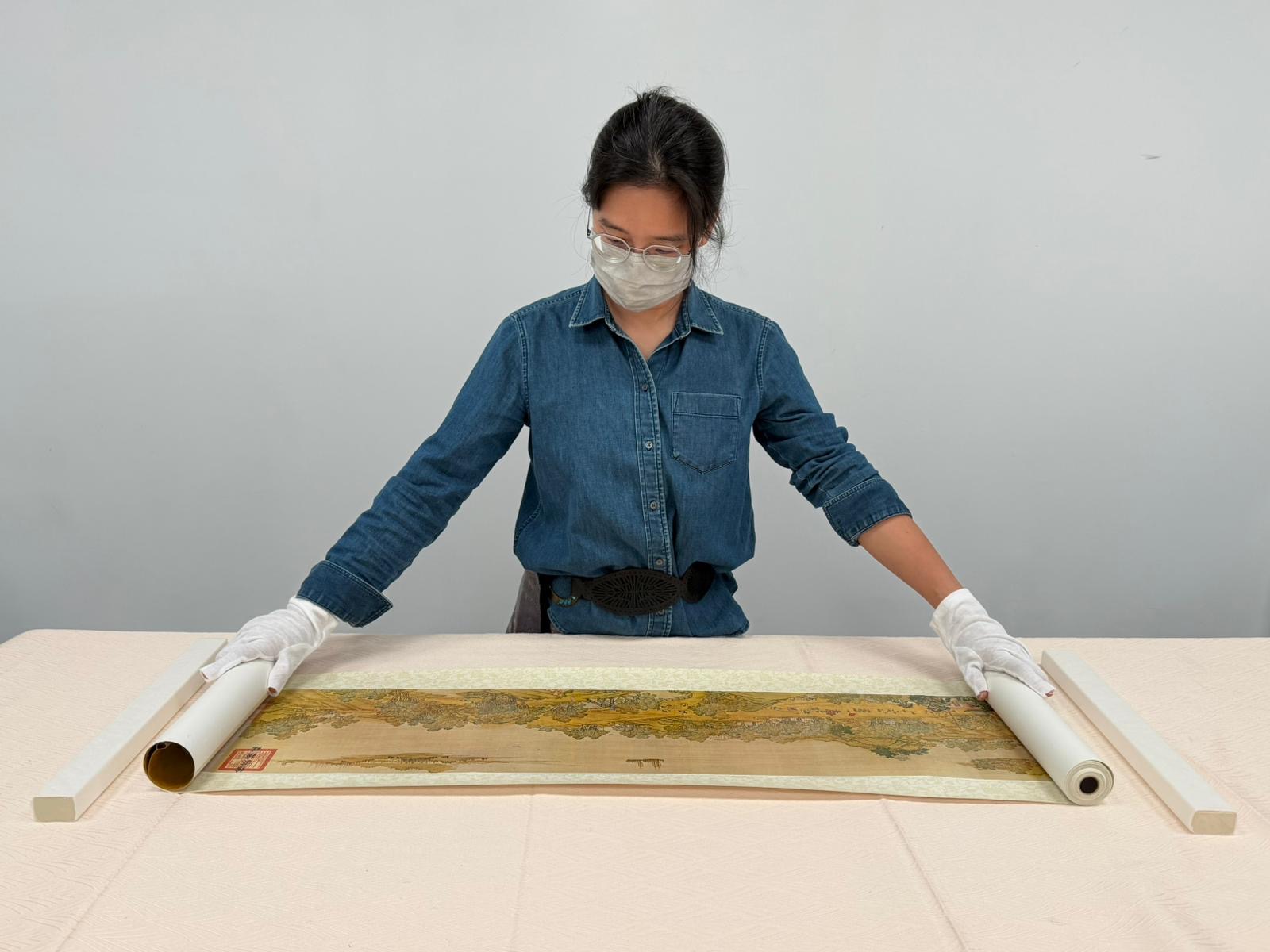
Chinese Handscroll
手卷/shǒu juàn
Chinese
shǒu juàn

在东亚和部分东南亚文化中,手卷是重要的绘画或书法装裱形式(另一种为立轴)。手卷一般由右自左横向展开,其长度通常可达数米,高度约为25至40厘米。 动态的观...

chawan_W
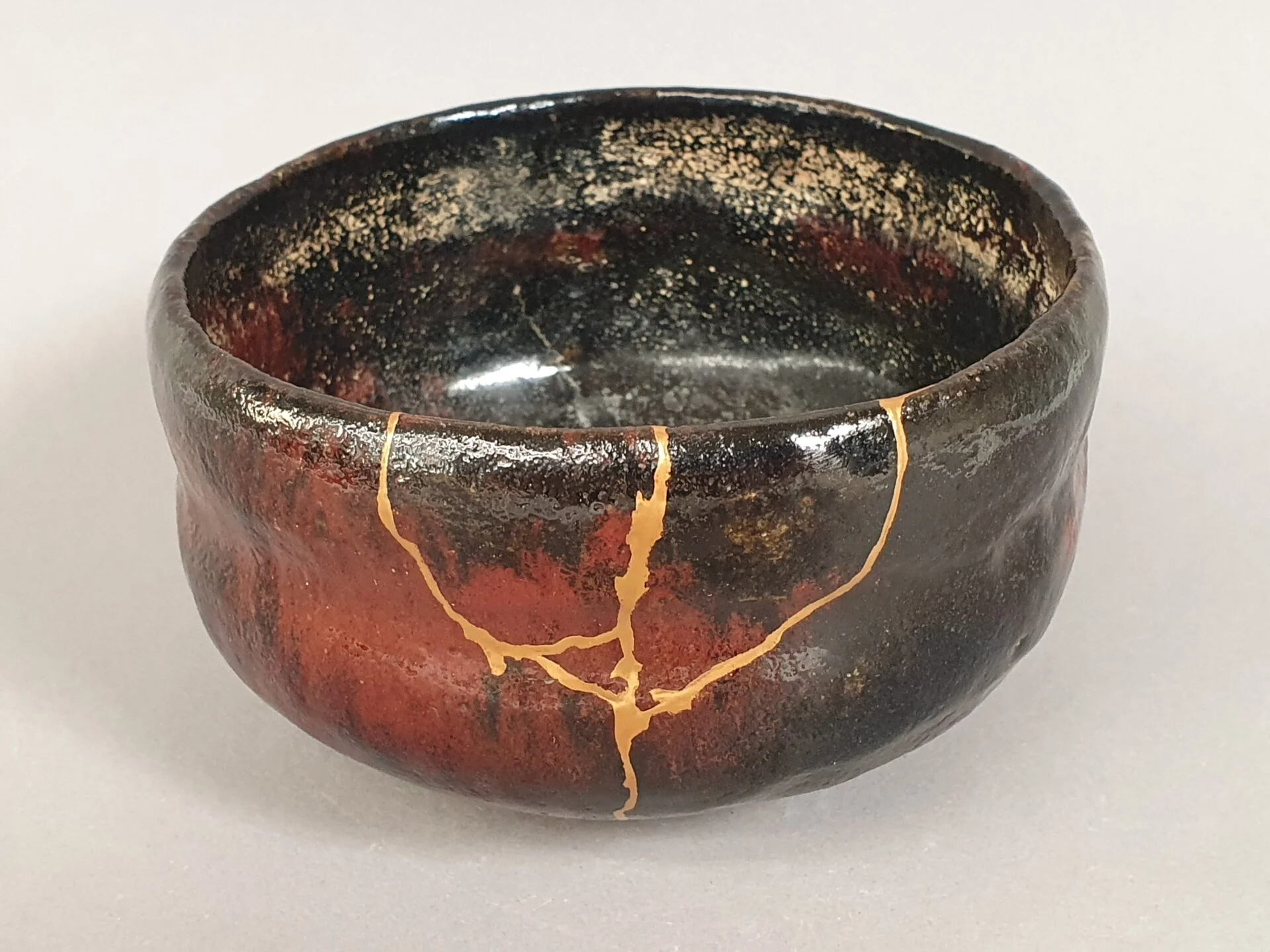
Kintsugi (金継ぎ)
Japanese
/kɪnˈtsuːɡi/

Kintsugi setzt sich aus folgenden Zeichen zusammen: 金 (kin) – Gold, Metall, Geld und 継ぎ (tsugi) – Verbindung / Reparatur / Zusammenfügen Kintsugi i...

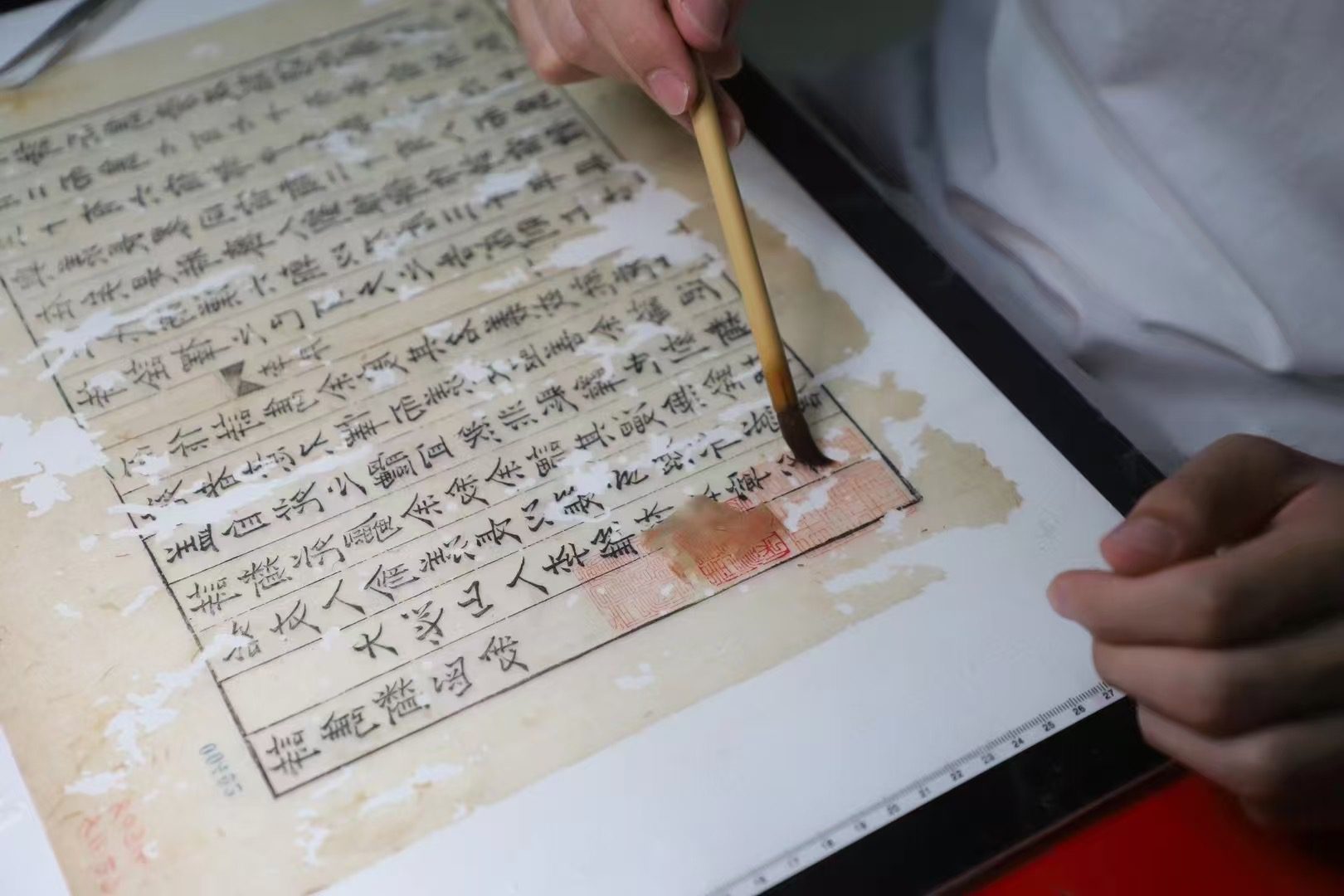
Figure 8: Brush wetting during the restoration of an ancient painting, known as 补水/bǔ shuǐ, as part of the 装潢 process. By He Liang Ren Pucheng.
装潢/ zhuāng huáng
Mandarin
/tʂwaŋ/ /xwaŋ/

Dans la langue chinoise moderne, le terme « 装潢/ zhuāng huáng » (zhuānghuáng) revêt trois sens, dont l’un fait référence à l’utilisation de papier te...

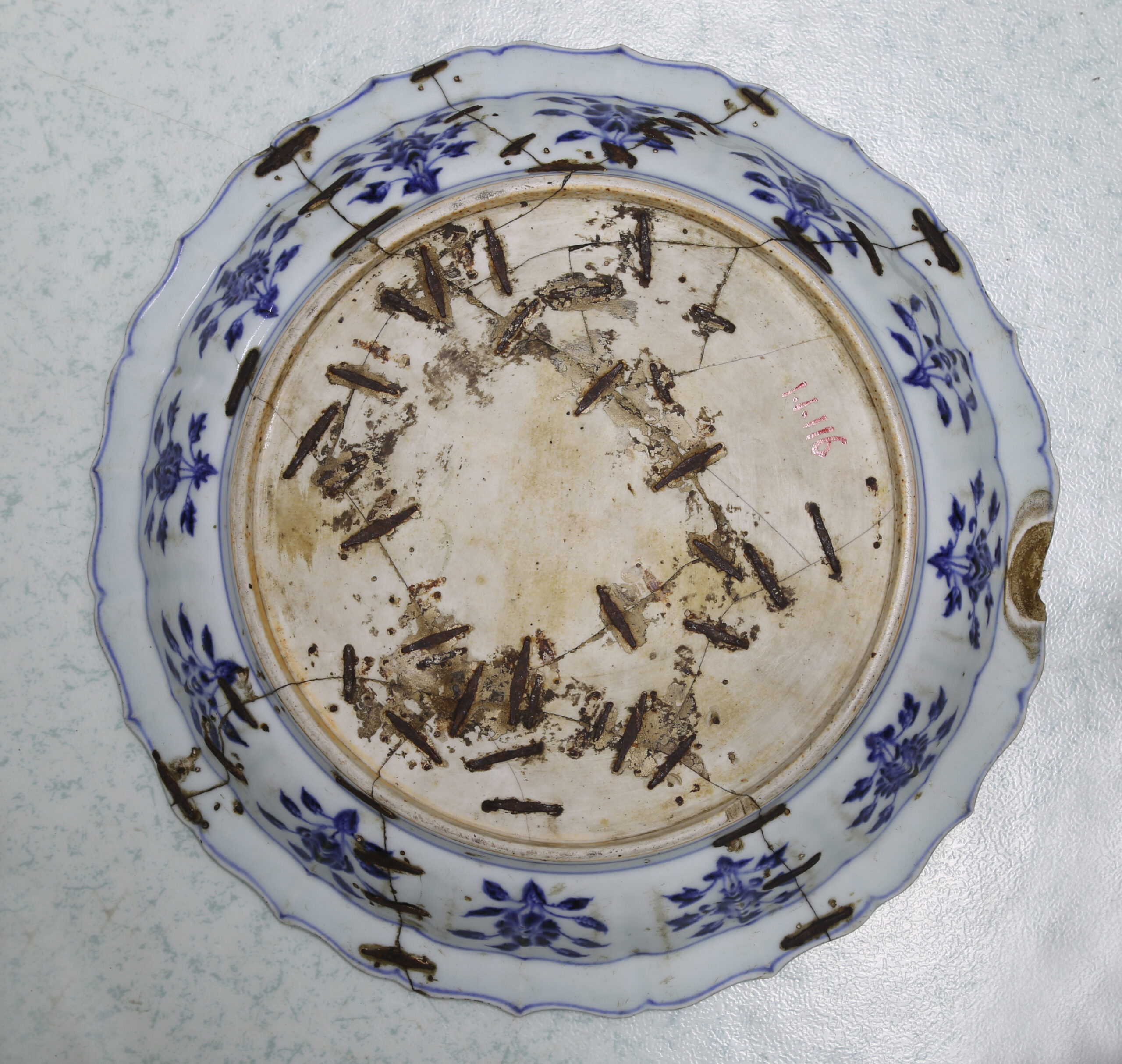
Figure 7: Blue and white porcelain dishes with floral decoration, intended for everyday use, dating from the Ming dynasty during the reign of Emperor Yongle (1403–1424) (朱 & 李 2022). The staples themselves have undergone several repairs. The Wanlin Museum of Art, Wuhan University, China, by Qi Li.
锔瓷/jū cí
Mandarin
/dʒy tshɨ/

In contemporary Chinese, the term 锔瓷/jū cí refers to a traditional technique for repairing ceramics using metal staples. Prior to the twentieth cent...

锔子/jū zi
Mandarin
/dʒy tsɨ/

According to modern Chinese language dictionaries, the term 锔子/jū zi refers to an instrument, usually fashioned from copper, iron, or another materi...

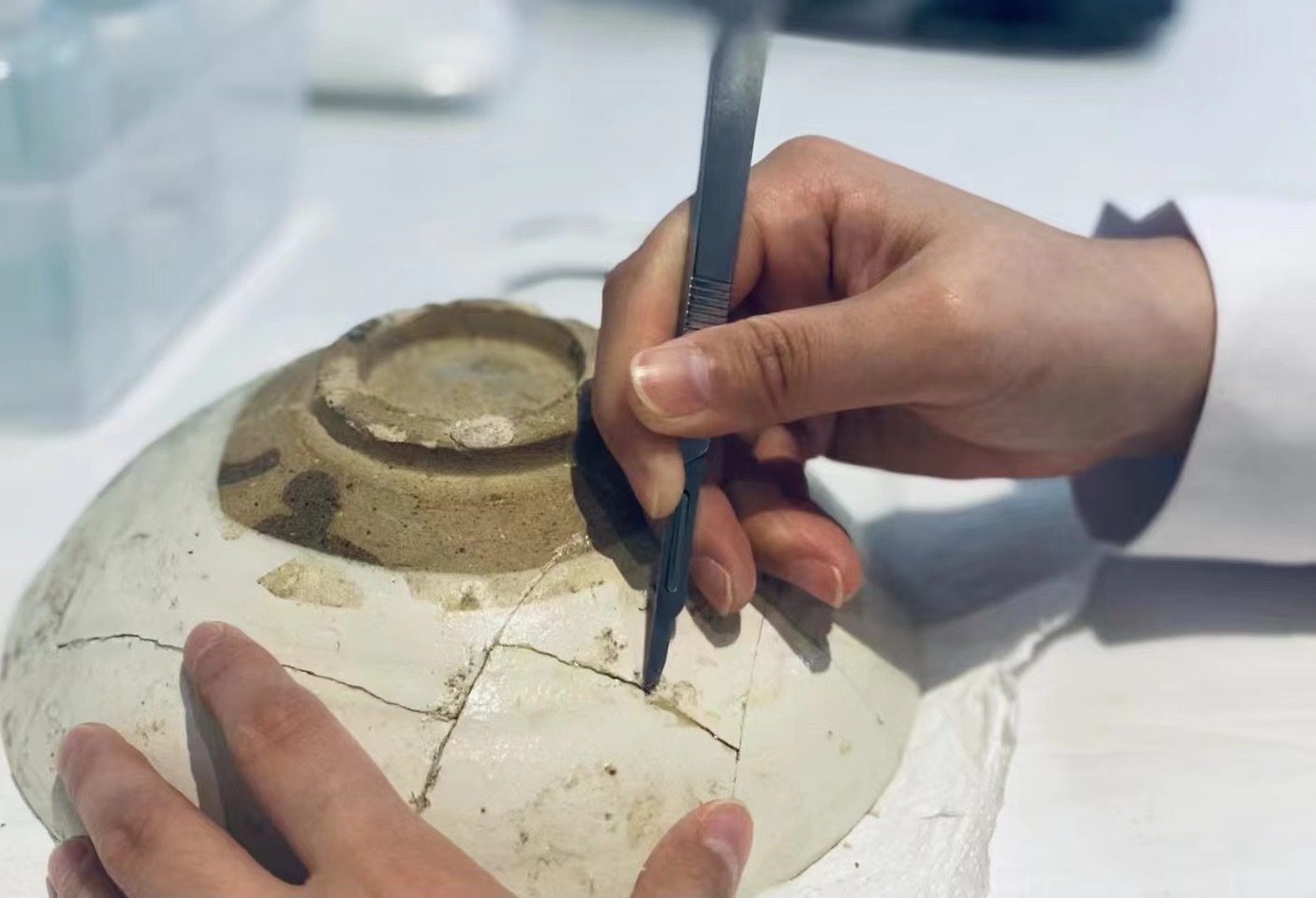
Figure 4: Cleaning during the restoration of a glazed stoneware bowl from the Jin dynasty (1115-1234). Jingdezhen, China, November 22, 2021, by Jia Peng.
修补/ xiū bǔ-修缮/xiū shàn-修复/ xiū fù
Mandarin
/ɕju bu/

In Chinese, the three terms 修补/xiū bǔ, 修缮/xiū shàn, and 修复/xiū fù all express the idea of making a damaged or incomplete object whole. However, ...

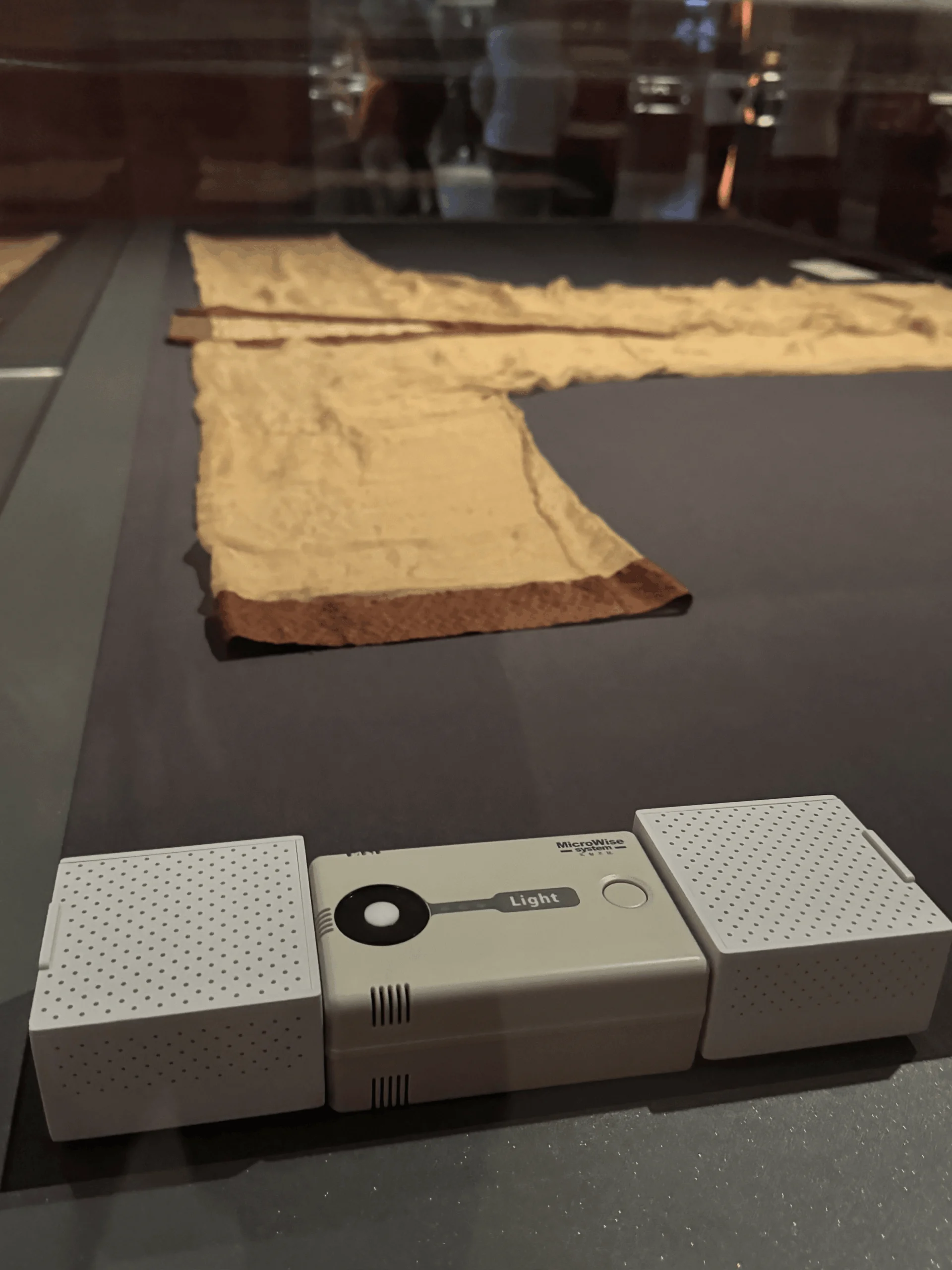
A view of a display case housing a Han Dynasty silk robe, integrated with a light, temperature, and humidity monitoring system to ensure an optimal environment for the preventive conservation of the cultural object, on February 7, 2025. Photograph by CHEN Zoe.
保护/bǎo hù
Mandarin
/baw.hu/

According to the Dictionary of Modern Chinese (漢典 2016), the term 保护/bǎo hù refers to the action of taking care of something, by protecting it fro...

博物馆_bó_wù_guǎn
博物馆/bó wù guǎn
Mandarin
/bo wu gwan/

In contemporary Chinese dictionaries, the term 博物馆/bó wù guǎn refers to a place devoted to the permanent preservation and study of animals, plants,...

error: