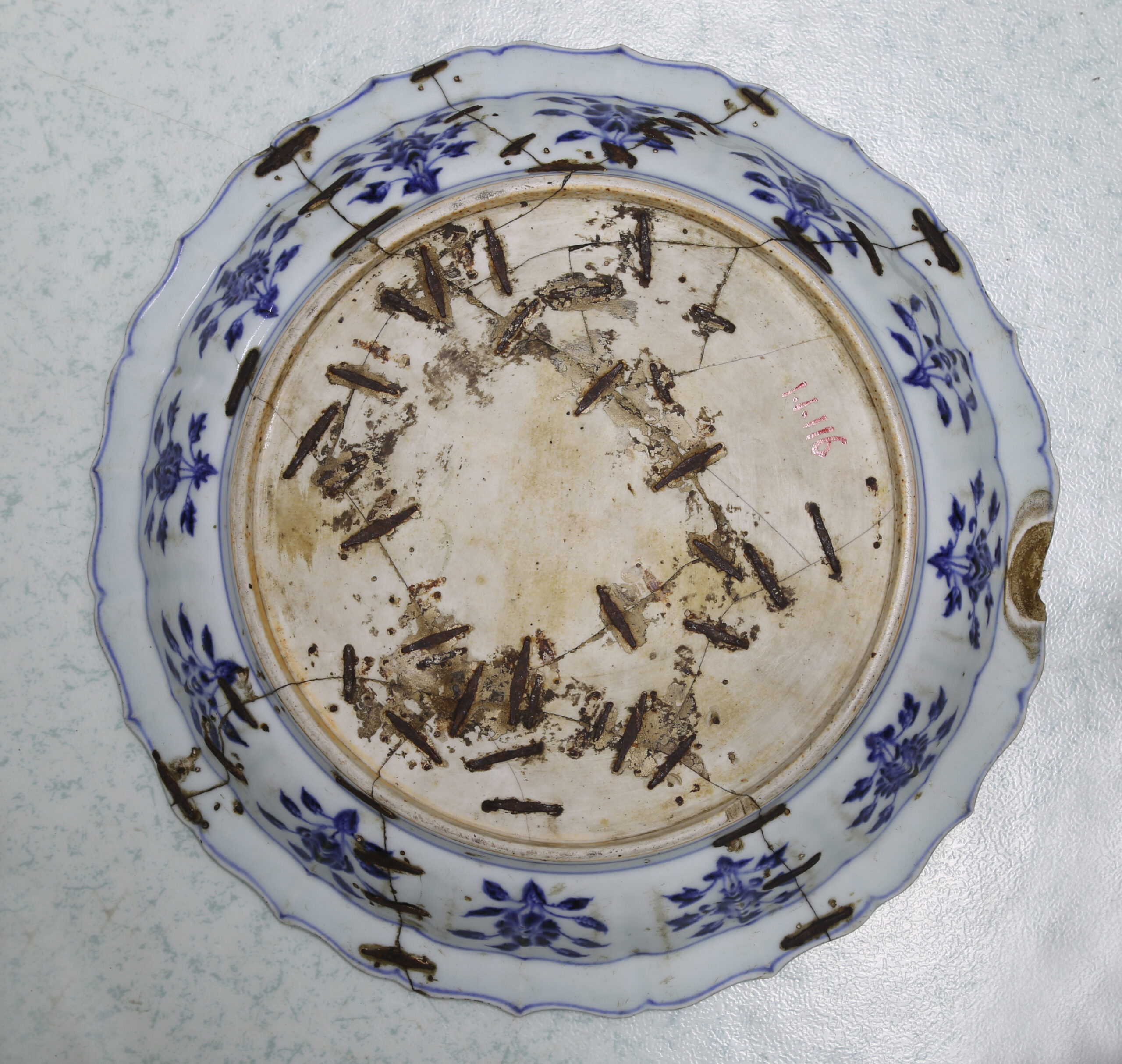
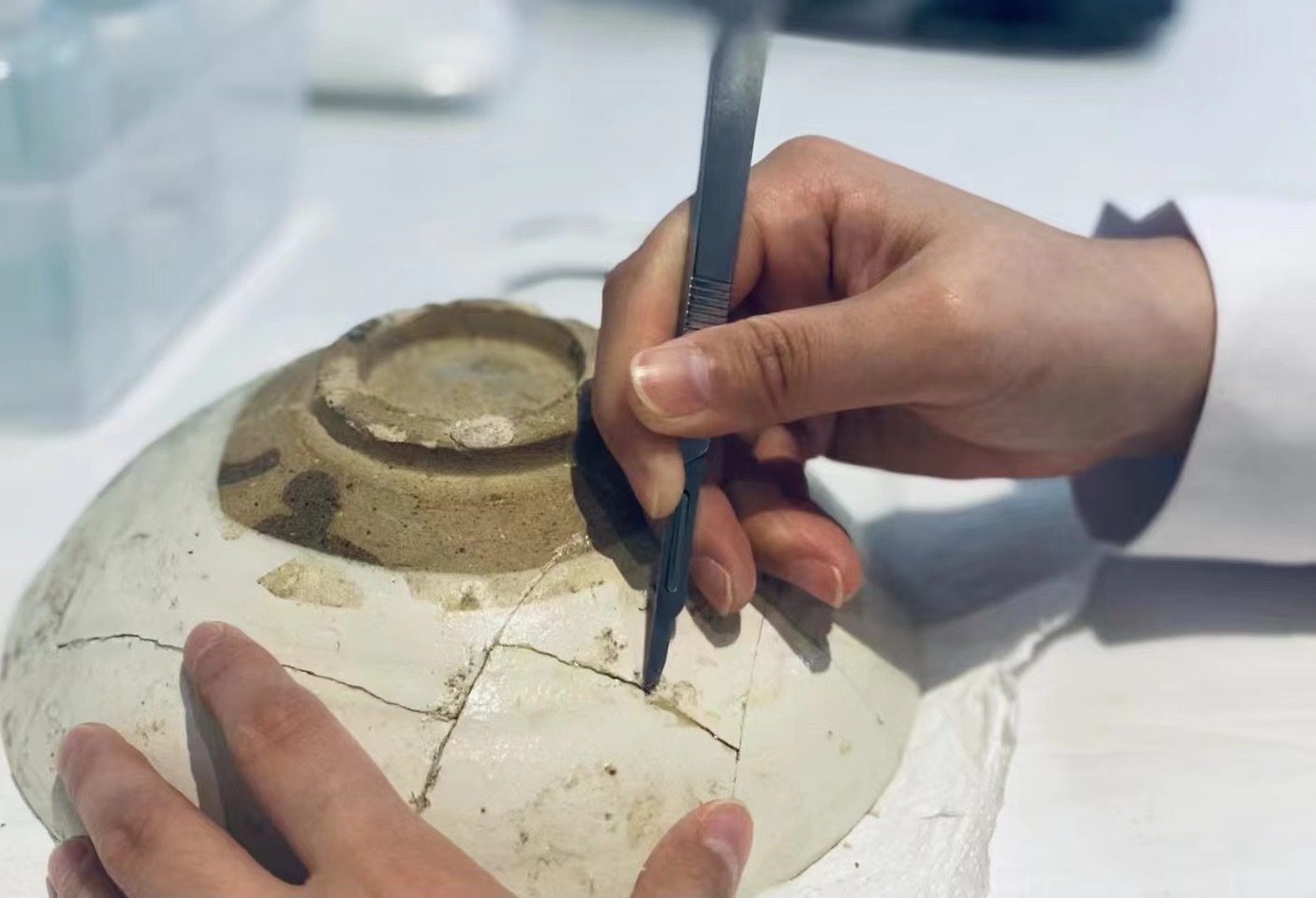
In contemporary Chinese, the term 锔瓷/jū cí refers to a traditional technique for repairing ceramics using metal staples. Prior to the twentieth century, this method was widely employed in several regions of the world (Garachon 2010).
Its basic principle involves drilling holes into damaged ceramics, then inserting metal staples (often made of iron or copper) to close cracks or breakages. In China, this practice was first used to restore the functionality of everyday ceramic objects. During the Ming (1368–1644) and Qing (1644–1911) periods, as the demand for collecting ceramic objects and precious pieces intensified in the upper echelons of society, the technique split into two orientations (Peng 2024):
– 粗活/cū huó (everyday work): aimed at repairing everyday objects for the masses;
– 细活/xì huó (delicate work): dedicated to the restoration and ornamentation of precious ceramics, this practice is characterized by a heightened attention to the choice of materials and master workmanship. The metal used for the staples may be gold or silver, and decorative staples (called 花钉/huā dīng) often feature symbolic and auspicious motifs.
Today, in China, the锔瓷 technique is still considered a traditional skill and is classified as an Intangible Cultural Heritage in several regions (向怡泓 & 王云庆 2017).
Dans le contexte du chinois contemporain, le terme 锔瓷/jū cí désigne une technique traditionnelle consistant à réparer la céramique grâce à des agrafes métalliques. Avant le XXᵉ siècle, cette méthode était largement employée dans plusieurs régions du monde (Garachon 2010).
Son principe de base consiste à percer des trous dans la céramique endommagée, puis à y insérer des agrafes façonnées à partir de matériaux métalliques (tels que le fer ou le cuivre) afin de rassembler les fissures ou les bris. En Chine, cette pratique répondait d’abord au besoin de restaurer la fonctionnalité des objets en céramique utilisés au quotidien. À l’époque des Ming (1368–1644) et des Qing (1644–1911), au fur et à mesure que la demande de collection d’objets en céramique et de pièces précieuses s’intensifiait dans les hautes sphères de la société, la technique de锔瓷/jū cí connut une différenciation en deux orientations (Peng 2024) :
De nos jours, en Chine, la technique du锔瓷est toujours considérée comme un savoir-faire traditionnel et est classée comme Patrimoine Culturel Immatériel dans plusieurs régions (向怡泓 & 王云庆 2017).

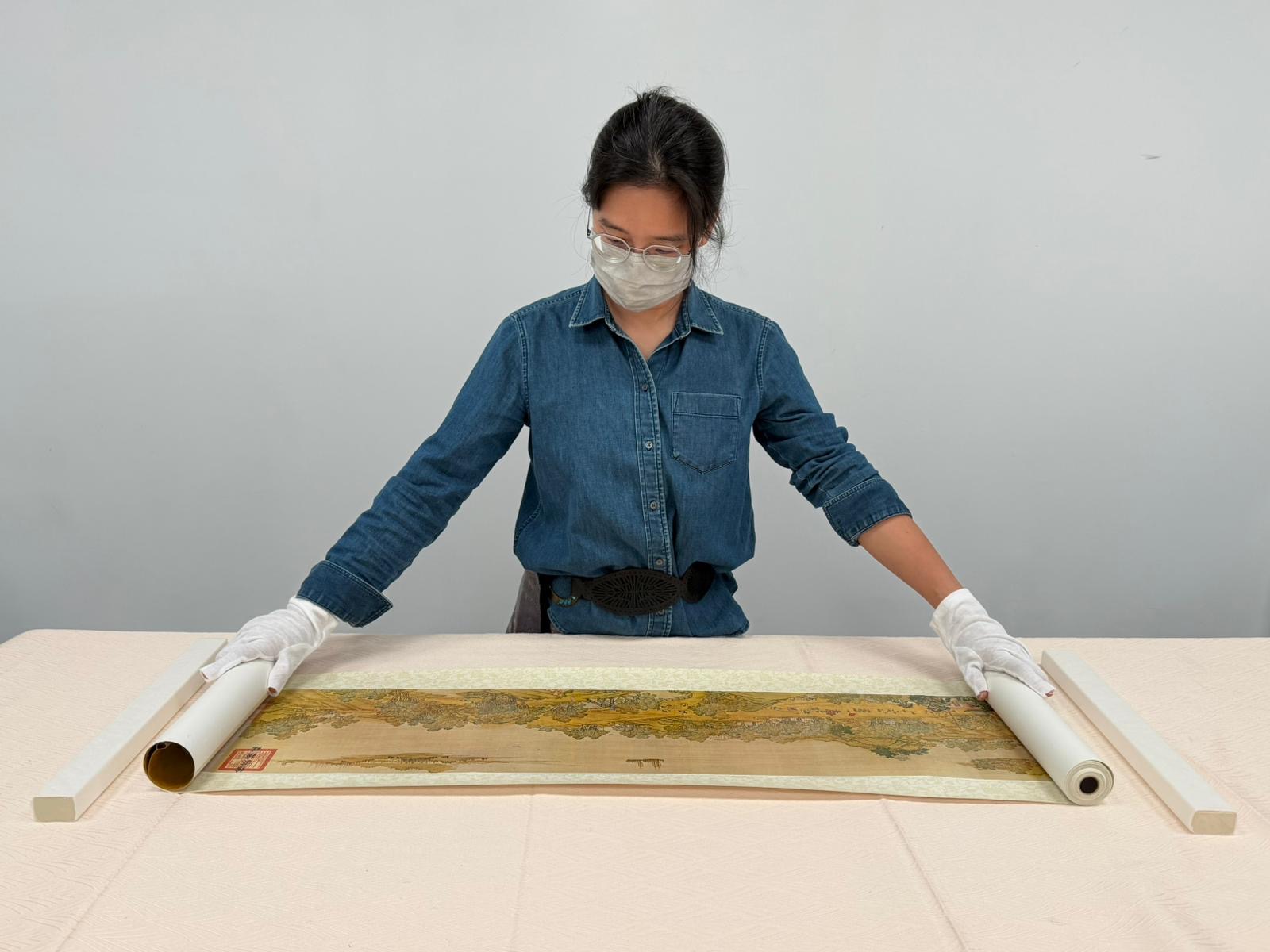
在东亚和部分东南亚文化中,手卷是重要的绘画或书法装裱形式(另一种为立轴)。手卷一般由右自左横向展开,其长度通常可达数米,高度约为25至40厘米。 动态的观...
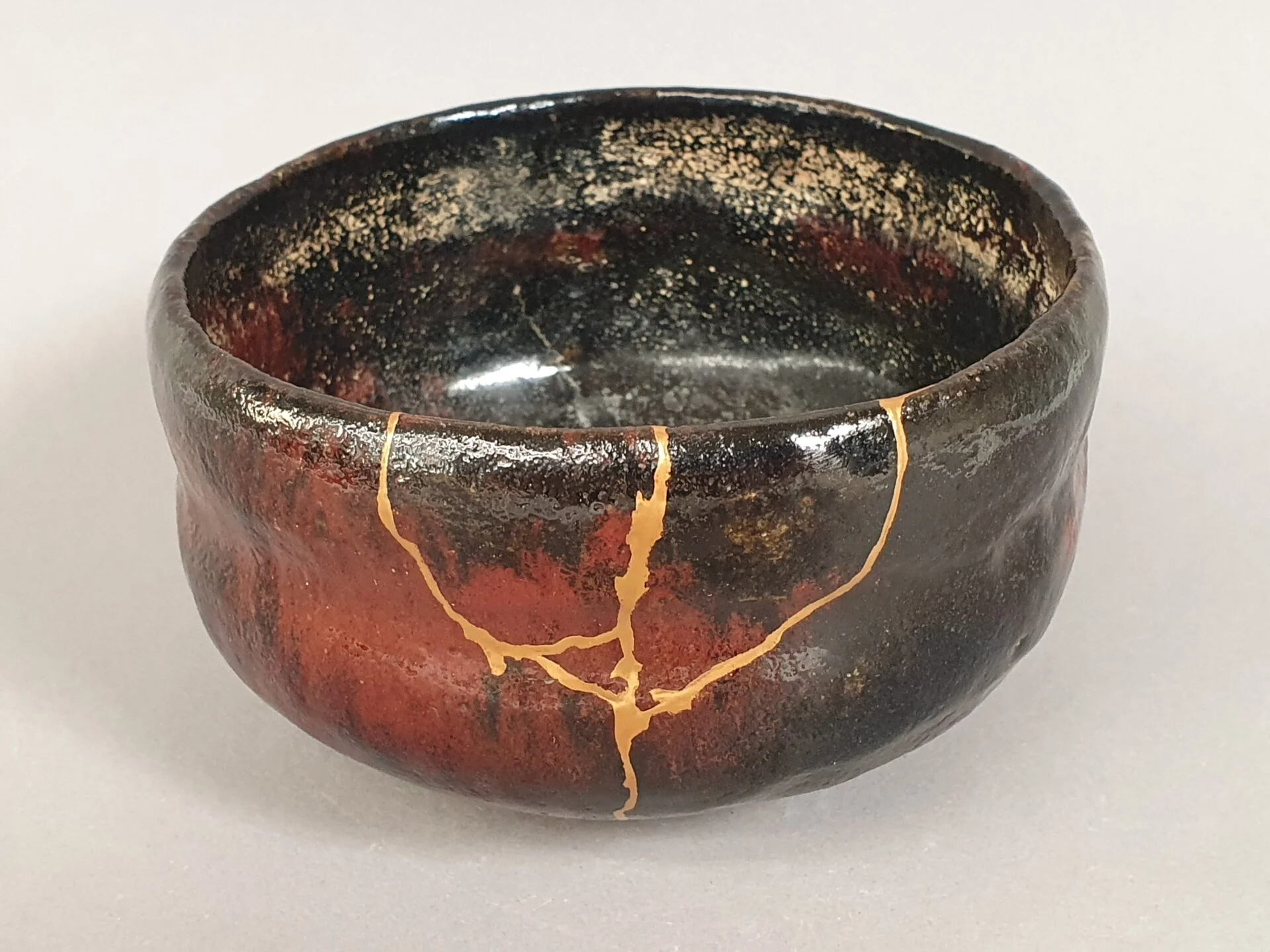
Kintsugi setzt sich aus folgenden Zeichen zusammen: 金 (kin) – Gold, Metall, Geld und 継ぎ (tsugi) – Verbindung / Reparatur / Zusammenfügen Kintsugi i...
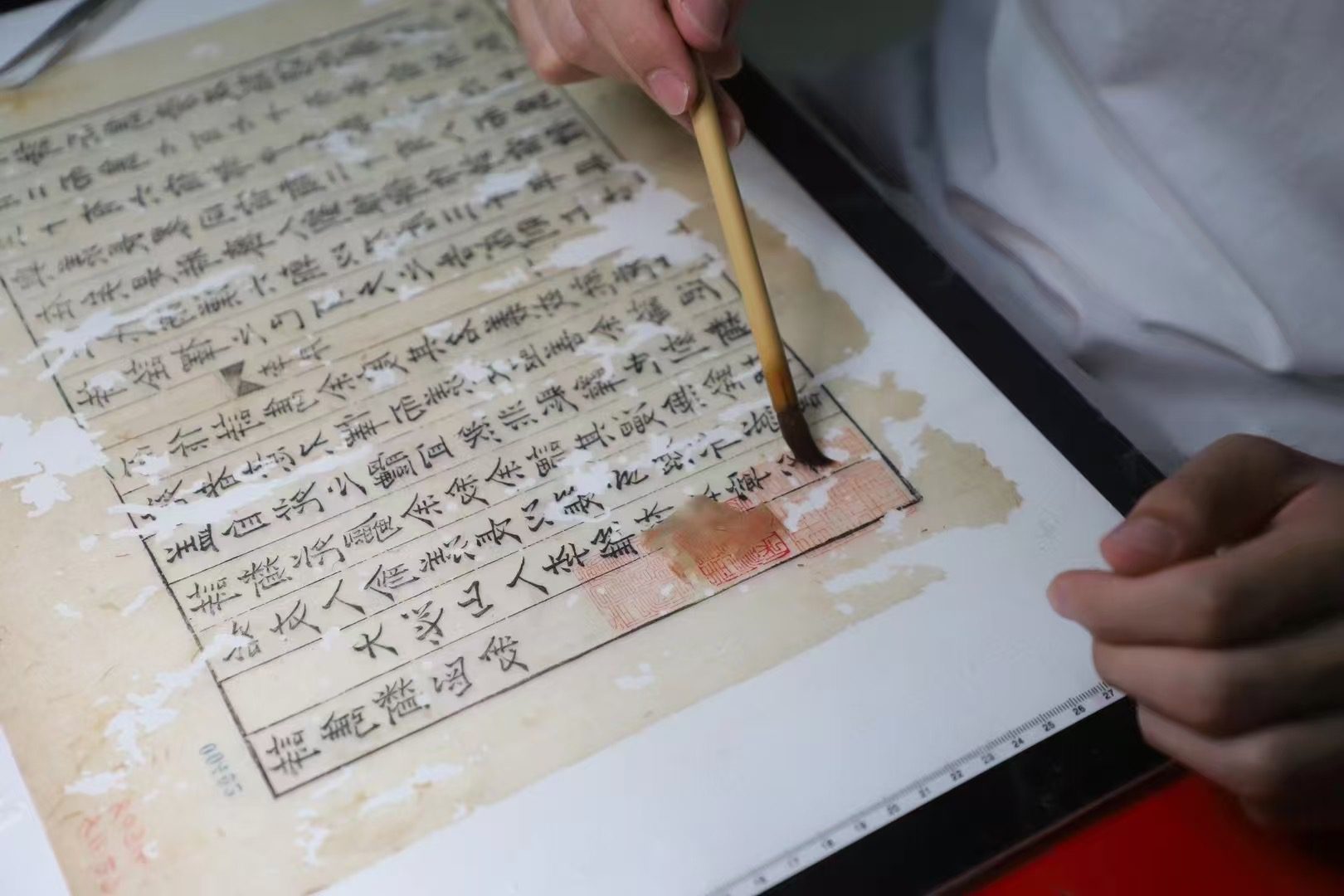
Dans la langue chinoise moderne, le terme « 装潢/ zhuāng huáng » (zhuānghuáng) revêt trois sens, dont l’un fait référence à l’utilisation de papier te...
According to modern Chinese language dictionaries, the term 锔子/jū zi refers to an instrument, usually fashioned from copper, iron, or another materi...
The term 锔补/jū bǔ is made up of two Chinese characters: 锔/jū and 补/bǔ. The character锔first appears in the phonology dictionary of Chinese charact...
In Chinese, the three terms 修补/xiū bǔ, 修缮/xiū shàn, and 修复/xiū fù all express the idea of making a damaged or incomplete object whole. However, ...
According to the Dictionary of Modern Chinese (漢典 2016), the term 保护/bǎo hù refers to the action of taking care of something, by protecting it fro...
In contemporary Chinese dictionaries, the term 博物馆/bó wù guǎn refers to a place devoted to the permanent preservation and study of animals, plants,...
This website uses strictly necessary cookies to function. We would also like to use functional and analytical cookies to improve your experience. You can choose to accept or decline.