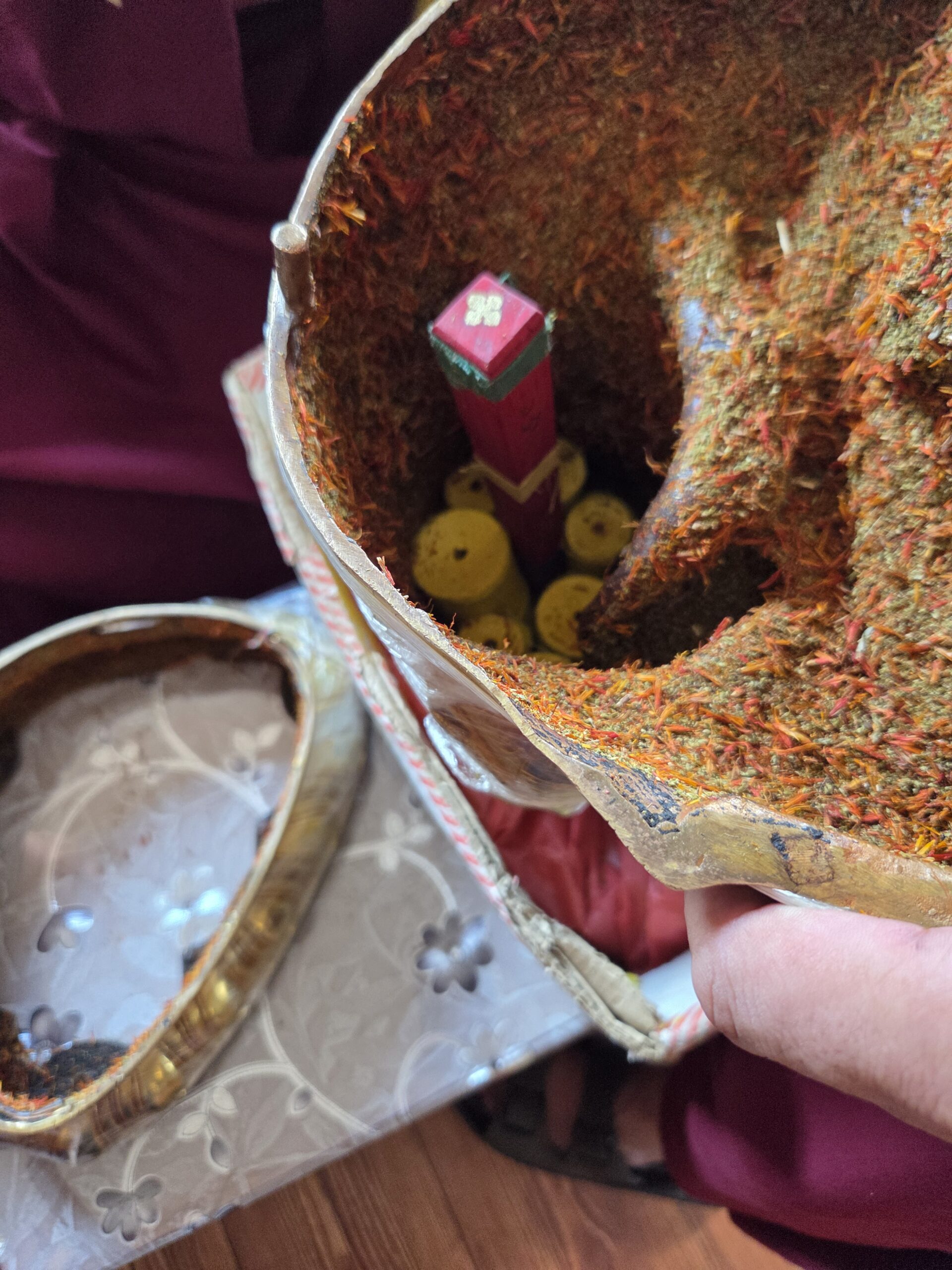
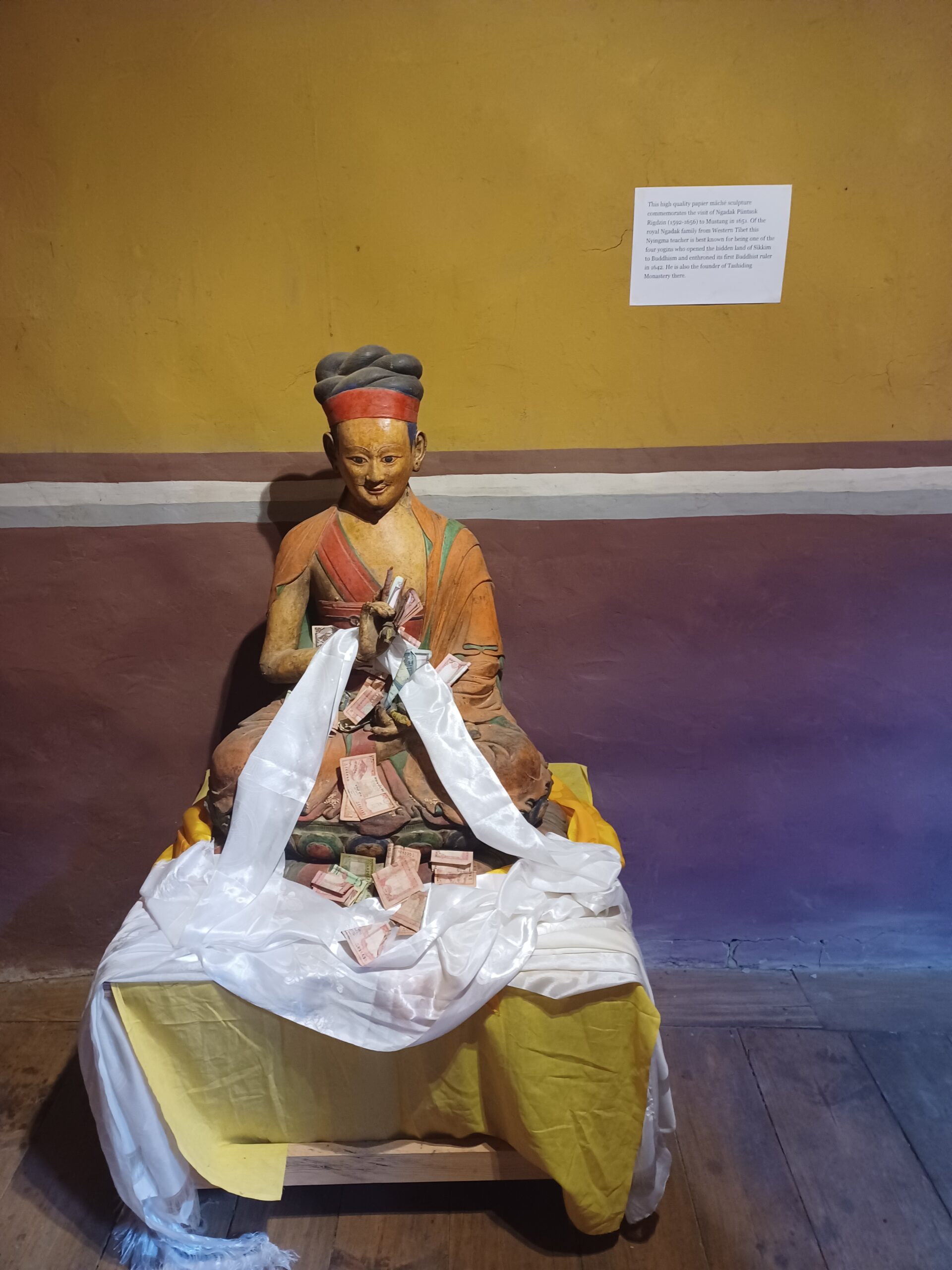
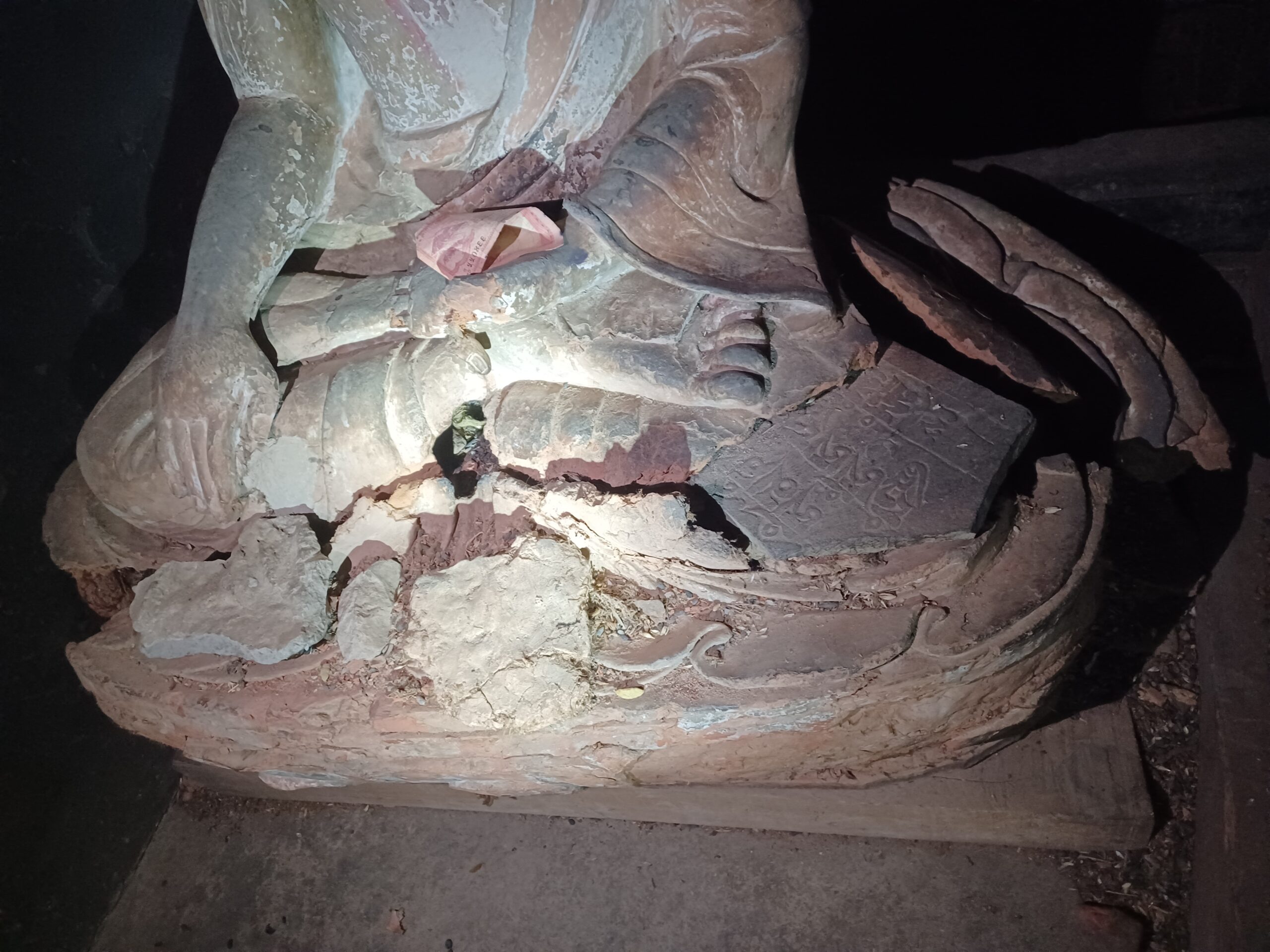
Tibetan and Himalayan Buddhist three-dimensional figures, sculptures and monuments often contain materials – collectively referred to as ‘zung’, in Tibetan བཟུངས, or bzungs in the Wylie transliteration system – inserted as part of their consecration. The term zung is related to the verb ‘to hold, grasp or conceive’ and this material enables figures or monuments to function as ‘ten’ (རྟེན་, rten), platforms or supports for connecting with the deities, teachings and aspects of Buddha-nature that they have been constructed to embody. The types of materials inserted can vary according to the figure, teachings, resources, intended function and/or ritual specialisation of the patron or religious authority who places them inside and can include written texts and diagrams, incense, precious stones, textiles, seeds and grain, or relics, a large and ambiguous category that may include bone but also hair, fragments of text, clothing and post-cremation ash. Zung almost always includes a ‘tshok shing’ (Tib. འཚོག་ཤིང, ‘tshog shing), a wooden stick that connects and activates the figure or monument along a central access. This tshok shing can be thinner than a pencil or as large as a whole tree, depending on the size of the object or monument.
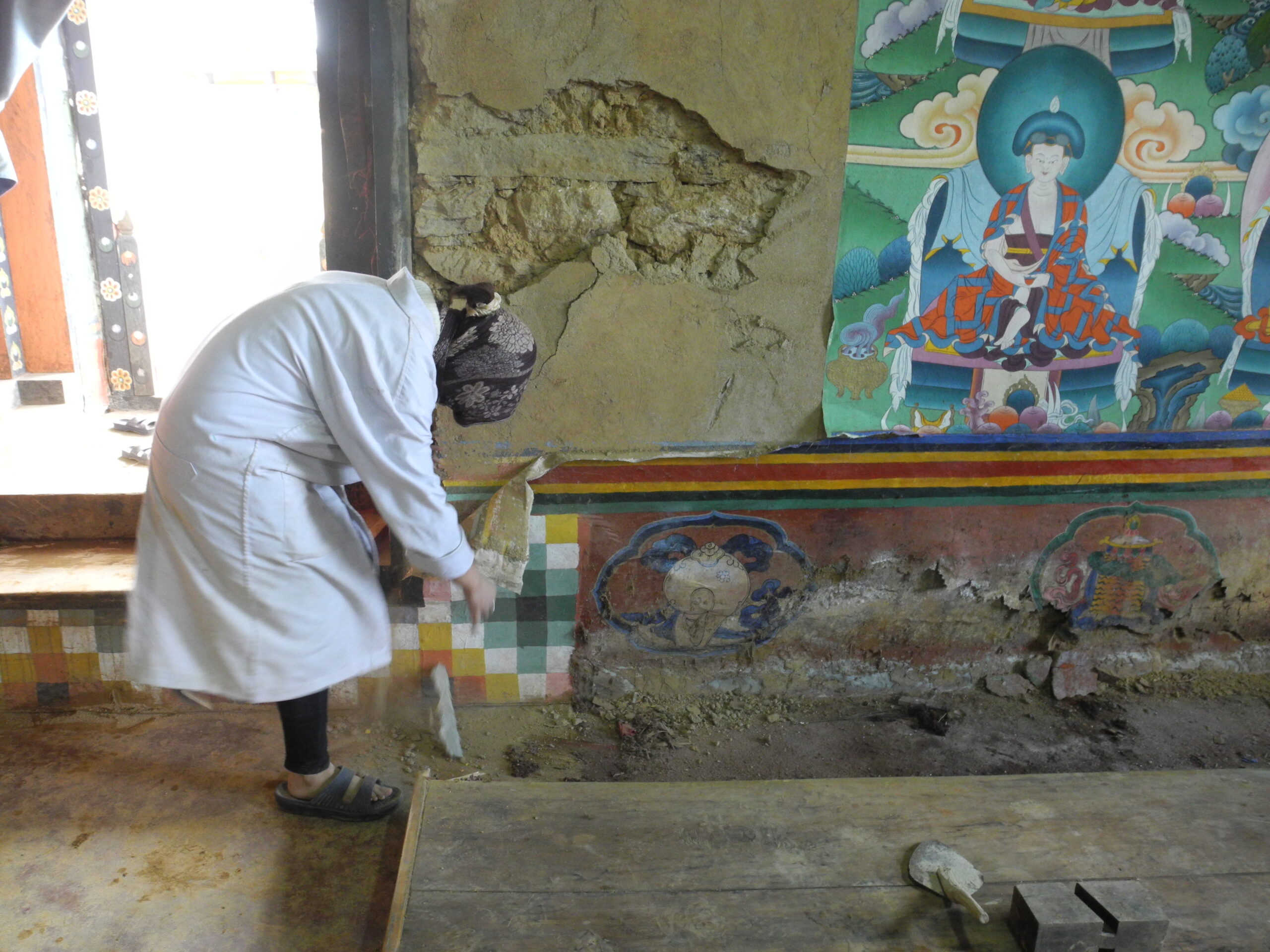
Zung is often replaced or renewed by religious custodians and patrons who see it as an opportunity to cultivate merit by investing in the continuing efficacy of the figure or monument. Replacing zung is the work of ritual and material specialists who invite deities residing in the object to shift temporarily to a mirror while work is performed. They can then remove the older material – and frequently burn it to dispose of it – clean the internal cavity, repack, seal and reconsecrate it.